THE GIRL VANISHED ON A SHORT HIKE. ONE WEEK LATER, SEARCHERS FOUND HER CLOTHING HANGING 13 FEET UP A SMOOTH TREE, DRY IN THE RAIN, FIVE MILES FROM WHERE SHE WAS LAST SEEN
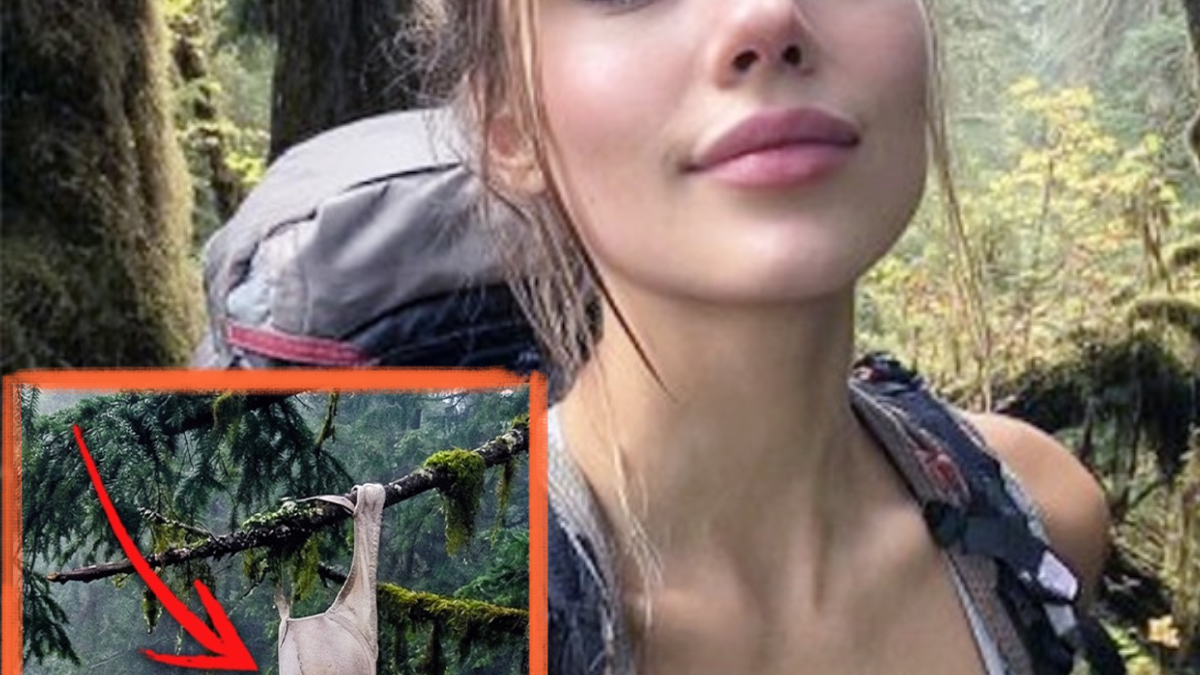
THE GIRL VANISHED ON A SHORT HIKE. ONE WEEK LATER, SEARCHERS FOUND HER CLOTHING HANGING 13 FEET UP A SMOOTH TREE, DRY IN THE RAIN, FIVE MILES FROM WHERE SHE WAS LAST SEEN
Part 1
One week after Ruby Rivera disappeared, a volunteer lifted his binoculars to a hillside and saw something swaying in the wind.
It hung from a thin branch of an old spruce, higher than any person could reach.
When the four searchers walked closer, no one spoke. 🌙
A piece of her clothing dangled thirteen feet above the ground. It was clean. It was dry. It had rained for sixteen hours straight, the moss was soaked, and the needles were black with mud, yet the fabric was spotless, as if it had been hung there that morning.
The tree trunk was smooth. The lowest branch began at ten feet. Ruby was five-foot-six.
She could not have put it there. And it was five miles from the trail where she had last been seen.
A week earlier, the morning of September 15, 2013, had begun cool and wet in Olympic National Park.
Fog sat low over the rainforest. Ruby Rivera, a twenty-year-old biology student, parked her blue sedan near the trailhead and zipped her jacket. Her friends described her as disciplined, almost to a fault. She never broke promises. She planned every step of every hike, because to her, the mountains were an escape from a brutal semester.
She carried a small pack and a printed map covered in her own handwriting. Her destination was the waterfalls, a short walk through ancient trees whose crowns blocked out nearly all the sun.
At 10:00 a.m., she texted her parents. Starting the climb. Home by seven.
It was the last word they ever received from her. 🕯️
By 9:30 that night, she wasn’t home. Her father called her phone ten times. Each call dropped straight to an automated voice that said there was no network.
At 6:45 the next morning, the state police began to search. Rangers checked the parking lot first. Ruby’s car sat exactly where she had left it, untouched. On the front seat were a thermal mug, a spare sweater, and the map with her careful markings.
She had gone up the trail. She had not come back down.
Fog thickened. The temperature fell to forty-five degrees. Dog teams arrived and found nothing, because the scent dissolved in damp air and in the footprints of weekend tourists. Rangers considered a fall, a cliff, an animal.
But there was no blood. There was no sign of struggle anywhere along the marked trail. 😨
Then, more than eight hundred meters off the path, a searcher found Ruby’s sun hat.
It lay on the moss deep in a thicket, in a direction opposite to where she was heading. The ground there crumbled underfoot. There was no reason for a careful girl to step into that brush.
And the hat looked wrong. It was not thrown. It was not dropped. It had been placed, gently, like something left for someone to find.
“She wouldn’t go in there,” one coordinator said quietly. “Not on her own.”
Her parents already knew it. Ruby’s mother told every reporter who would listen that her daughter would never leave the trail.
For seven days, hundreds of searchers worked the forest. Professional rangers, dog handlers, and National Guard members combed every sector around the falls. Helicopter cameras were useless under the thick spruce canopy.
On the evening of September 21, the official count was zero. No new clue. No footprints. No Ruby.
Resources ran out. Most of the units were sent home. Funding for the active search ended.
But a few volunteers refused to stop. One of them was a former military tracker. They chose to search the remote areas nobody thought she could have reached, and on the morning of September 22, they climbed into a rocky basin of lakes and deep shade.
At about 11:15, someone looked down the hillside and spotted the strange object swaying on the spruce.
Ruby’s parents identified it that night. They knew the brand. They knew the store in Seattle where she had bought it.
When detectives arrived and carefully lowered it, they found no blood and no tears. But the strap had been wrapped around the branch with care, by a hand that knew what it was doing.
Someone had climbed that tree.
Someone had stood thirteen feet above the forest floor, in the rain, five miles from the trailhead, and tied a message for the searchers to find.
And the investigators, standing at the base of the trunk, suddenly realized what that meant. Whoever had done this had known exactly where the search would go next.
Part 2
Whoever had done this had known exactly where the search would go next.
The detectives sealed off the area and brought in professional tree climbers. The lead arborist, a forestry veteran with fifteen years of experience, studied the trunk through high-powered optics and shook his head.
The tree was completely smooth. Even a trained athlete could not have climbed it without equipment. And the branch showed no damage. Nothing had been tossed up from below. Someone had reached that spot and hung the object by hand. 🕯️
Then he examined the bark at fourteen feet under a handheld microscope.
There were tiny flecks of blue.
A lab in Seattle identified the substance. It was a cobalt-colored coating used on steel climbing hardware. It was not sold in outdoor shops. It was made under special contract for government agencies, the kind of equipment used by park crews to maintain remote routes and high lookouts.
The lab found something else. Smeared into the bark was a heavy industrial lubricant, the kind used on winches and hydraulic lifts.
The circle of suspects shrank in a single afternoon. This was no random stranger. It was someone with a park badge, a key to the tool sheds, and the legal right to drive any road in the forest at any hour. 🌙
Twenty-two men worked in the maintenance department. Every one of them was now a suspect.
The detectives pulled the GPS records for every work vehicle on the day Ruby vanished. Several white trucks were in the area. But one van caught their attention.
For four hours and eighteen minutes, it disappeared from the tracking system.
It had been logged for a routine rope inspection in the north sector. There was no report of any work performed. There was no breakdown, no complaint, no weather delay. The dispatcher had heard nothing from the driver all day.
That gap lined up almost perfectly with the hours Ruby’s father had spent calling a phone that no longer answered. 😱
The driver was a twenty-nine-year-old seasonal worker named Brian Torres. He specialized in high-altitude maintenance. His supervisors described him as quiet, reliable, and always by the book. He had no criminal record.
On September 25, a judge approved a warrant for his cabin, a small wooden shack six miles from the main base. Inside an old tool chest, investigators found a silver flashlight, and Ruby’s parents confirmed the serial number. It was the one she had carried on her last hike.
It had been wiped, but there were fine scratches along its side, the kind a fall on rock would leave.
Then the lab compared the blue paint on the spruce with the carabiners in Torres’s gear.
They matched.
In his company van, behind the driver’s seat, a tiny scrap of pale blue fabric lay wedged in a gap in the floor. It matched the material of Ruby’s athletic top. It had been scrubbed with something harsh. The whole cargo area reeked of chlorine bleach, an odd smell for a forestry truck.
Why would a careful man wash a vehicle that thoroughly?
On September 26, at 8:20 a.m., detectives arrested Torres. He sat in the interrogation room for hours, perfectly calm. He explained that he had found the flashlight on a trail days earlier and forgot to turn it in. He blamed the missing GPS time on bad signal under the trees.
He never once asked whether Ruby had been found.
And when detectives turned off the recording and simply stared at him, he looked away toward the mirror.
They needed something he could not explain. And somewhere inside that van, under the steel and the bleach, the investigators now believed there was still a secret.
Part 3
On September 27, the crime lab brought in ultraviolet lights and chemical reagents and took the van apart one more time.
The first inspection had taken hours. This one took more than six. Near the end, a technician noticed a faint irregularity in the metal beneath a fixed rack for climbing gear. Under the rack, the floor did not sit flat.
They unbolted it with hydraulic tools. Beneath it was a hidden compartment. 🕯️
Under the ultraviolet beam, the compartment lit up with traces that no bleach had reached. Microscopic drops of blood were lodged in the crevices around the fasteners. A few strands of hair were caught there as well.
The DNA came back that night. It matched samples from Ruby Rivera’s parents.
The compartment was one that only Torres could open. There was no other explanation.
When detectives walked back into the interrogation room, they laid the photographs on the metal table, one at a time. The lab results. The match graphs.
For the first time in two days, Brian Torres stopped talking about carabiners.
His story changed. The calm man who had played a casual witness began, piece by piece, to describe what had really happened on September 15.
He had met Ruby near the waterfalls, he said, wearing his official uniform and carrying his park ID. He told her he was checking trail safety. He needed her to fill out a registration form, and it would only take a minute, and the paperwork was in his van.
She trusted him, because he looked exactly like the people who were supposed to keep her safe. 💔
Ruby’s father would later tell a courtroom that his daughter was careful and would never have gone with a stranger. But Torres wasn’t a stranger. He wore the uniform.
In the investigators’ protocol, the man explained his motive with a flat, technical calm, the way he might have explained a repair on a lookout platform. He said he wanted control. He wanted to feel that another person’s fate rested in his hands. He said the four hours and eighteen minutes with his tracker silent had been the highest moment of his life.
He said Ruby had refused to give him the submission he wanted. That was why she did not survive.
Detectives sat very still.
Then he explained the tree.
The clothing hanging thirteen feet up the spruce had been placed there deliberately, he admitted, with his climbing gear. It was a diversion. He knew the searchers would pour their effort into the basin where it hung, and that every minute they spent there was a minute they were not near the place where he had left her.
Five miles from the trailhead, he said, in a stretch of forest so dense that visibility drops to fifteen feet even at noon.
He gave the coordinates. He asked for nothing, hoping that honesty might bring leniency.
At the very end, according to the report, he asked a single question. Would he be allowed to keep his tools in prison? 😨
Investigators needed only fifteen minutes to complete the paperwork for first-degree murder.
A helicopter team lifted off that night. When the ground crews reached the coordinates, the forest was exactly as he had described: dark, close, and silent. They found Ruby there.
After seven days of hope, a week of helicopters and dogs and volunteers who would not quit, the search was over.
The little hat on the moss had been a message too, the first of many. A careful girl lured off a trail by a man in uniform, and a hat laid down to suggest that she had wandered off alone.
Nothing about it had been random. Nothing was lost.
The trial opened in late November 2013 in Port Angeles. Courtroom Three was filled with Ruby’s family, reporters, and dozens of volunteers who had walked the mountains for her.
The prosecutor laid out the case step by step. The blue paint on the bark and the carabiners. The grease. The flashlight. The bleach. The silent GPS. The hidden compartment and the blood within it.
Experts confirmed the DNA matched. The defense had almost nothing to answer with.
Ruby’s father took the stand. He said his daughter was careful, and that she had trusted a badge.
Throughout the weeks of testimony, Brian Torres sat motionless. He showed no remorse, not even when the video of the place where Ruby was found was played in court.
The jury deliberated for more than fourteen hours, studying every page of the arborist’s report and every ultraviolet photograph. On January 14, 2014, they returned their verdict.
Guilty of first-degree murder and aggravated kidnapping.
The judge said the crime struck at the heart of public trust, that Torres had betrayed the oath of a protector of the land and become the most feared predator in it.
He was sentenced to life in a maximum-security federal prison, with no possibility of parole. 🌙
The park changed after Ruby.
By 2014, every maintenance vehicle carried a backup tracker that could not be switched off. New panic buttons and warning systems appeared along the trails. Rules for personnel with access to dangerous equipment tightened.
Ruby’s family turned their grief into something that could help others. They founded a charity that funds the training of search dogs for missing hikers in mountain terrain.
The sun hat that had lain on the moss is still kept in the department archives. It is a reminder that the smallest detail can open the biggest mystery.
Brian Torres lives in an isolated block of a prison, where four hours of freedom have become decades of silence.
And in the forest, hikers who climb toward the waterfalls often feel an odd tension as they look up at the old spruce crowns. Thirteen feet above the ground, a man once left a signal he was sure no one could read.
It was the very thing that destroyed him. 🕯️
This story is entirely fictional and created for entertainment purposes only. It does not represent any organization or individual, nor does it encourage inappropriate behavior. The content was generated with AI assistance.








