THE HUNTER VANISHED ON A TWO-DAY TRIP. A MONTH LATER, STUDENTS FOUND HIM IN A CAVE, BURIED IN BLACK SALT, WITH TWO PERFECT HOLLOWS WHERE HIS EYES SHOULD BE
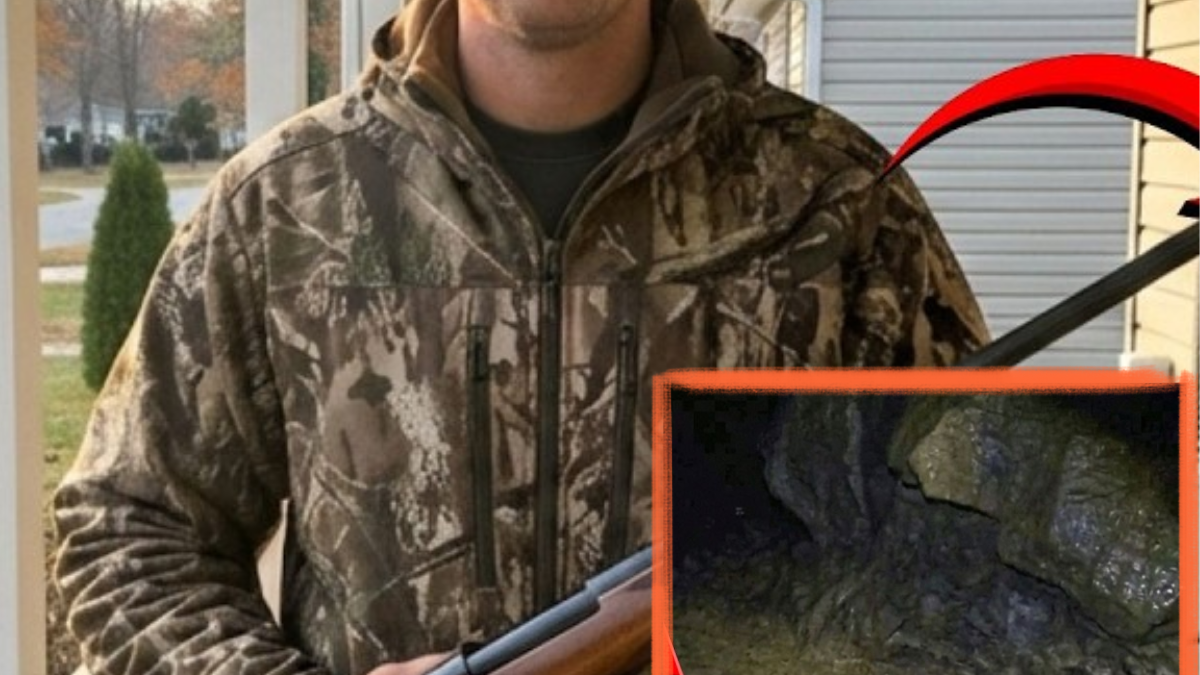
THE HUNTER VANISHED ON A TWO-DAY TRIP. A MONTH LATER, STUDENTS FOUND HIM IN A CAVE, BURIED IN BLACK SALT, WITH TWO PERFECT HOLLOWS WHERE HIS EYES SHOULD BE
Part 1
Forty feet down a limestone shaft, the air changed.
The three geology students felt it before they saw anything. The smell of damp stone vanished, replaced by something sharp and wrong. One of them would later describe it to detectives as ammonia and old ash, braided with the sweet rot of decay.
They told themselves it was a dead animal. They kept going.
At 2:40 p.m. on November 14, 2016, one student swung his headlamp into a recess at the back of the cave, and all three of them stopped breathing. 🕯️
A man lay on the stone floor, stretched out in a perfectly straight line. He was buried from neck to boots in thick, coarse salt.
The salt was black.
One month earlier, the same man had been alive, laughing at a gas station counter.
Mark Hoffman was thirty-four, an engineer who lived for the wilderness. His friends called him almost boringly careful. He navigated by the stars. He carried a compass, paper maps, and more supplies than any trip required. Mark never took chances.
On October 14, 2016, he left for his usual solo weekend in the Custer Gallatin National Forest, three million acres of dark pine and cold rock. At 6:45 a.m., security cameras caught him filling his blue Dodge Ram in Red Lodge, Montana. He bought black coffee and two packs of dried meat. He paid in cash. He chatted with the cashier about the weather and told her he’d be out for exactly two days.
At 7:12, a traffic camera watched his truck turn onto the dirt road that led to the East Rosebud Trail.
After that, nothing. 🌙
He was due home by Sunday night. By 10 p.m., his phone was sending every call straight to voicemail. His wife, Sarah, called more than twenty times through the long dark hours. At 7 a.m. on Monday, she called the sheriff.
Within two hours, rangers found Mark’s truck alone in the gravel lot at the trailhead.
It was locked. An empty coffee cup sat on the passenger seat. There was no blood, no sign of a struggle, and no drag marks.
His boot prints led from the driver’s door to the forest path, steady and unhurried, and then vanished into a carpet of fallen needles.
Whatever Mark Hoffman had done next, he had walked into those trees on his own.
For fourteen days, the mountains were turned inside out.
More than fifty volunteers and professional rescuers combed the sectors. Two helicopters with thermal cameras circled the treetops every day. Search dogs picked up a faint trail near the parking lot, followed it for two miles, and lost it on hard rock.
Rescuers dropped on ropes into deep cracks in the earth. They searched the banks of every freezing stream.
They found no backpack, no torn clothing, and no scrap of evidence that Mark had ever existed out there. 😨
On October 28, an early snowstorm no forecaster had predicted slammed into the range. The temperature fell to fifteen degrees. Winds hit forty miles an hour. Within hours, a thick white blanket buried any trace the forest might have kept.
The search was called off.
Officials told Sarah what they believed. He had fallen from a cliff, or a predator had taken him. It was a tragedy of the mountains, nothing more.
Sarah didn’t believe it. Mark never took chances. 💔
Exactly one month after he vanished, three students set out five miles from his parked truck, deep into a pocket of rock so steep and tangled that the searchers had written it off as too dangerous to cross. They were mapping limestone fissures that appeared on no official map.
That is how they found the hidden sinkhole. That is how they found the smell.
And that is how they found Mark.
By 5:30 that evening, the cave was blazing with halogen floodlights and ringed with yellow tape. Reporters had already gathered at the cordon, and by nightfall the anchors on local television were whispering about satanic cults and ritual sacrifice.
The detectives who climbed down in sealed white suits saw something else.
A forensic expert knelt beside the body and brushed away a thin layer of black crystals from the face.
Mark’s skin was unnaturally pale. His expression had been frozen into a terrible calm.
But where his eyes should have been, there were two dark, empty hollows.
The edges of the wounds were so clean that no animal on earth could have made them.
Part 2
The edges of the wounds were so clean that no animal on earth could have made them.
The chief detective stood over the body for a long time. This was not the work of fanatics. Fanatics were messy and loud. Whoever had done this had been careful, quiet, and patient.
Someone had brought Mark here. Someone had spent long hours with him in the dark. And then they had left him, preserved and perfect, like a trophy. 🌙
At the county morgue, the pathologist spent more than three hours studying the empty sockets. His conclusion was blunt. The cuts were smooth, with no tearing and no bite marks. There was no bleeding around them at all.
The eyes had been removed after death, by a steady hand, with something as fine as a surgeon’s scalpel or a taxidermist’s knife.
The cause of death was simpler, and almost worse. One crushing blow to the back of the skull. Mark never saw it coming. He never had a chance to turn around.
Then the lab finished with the black salt.
It was no ritual powder and no occult relic. It was a homemade mixture of three ordinary things: industrial rock salt, sodium nitrate, and finely ground ash from hardwood.
Wildlife investigators knew exactly what that recipe was for. Poachers and backcountry tanners used it to cure animal hides fast, before they rotted on the long, secret journey out of the woods. 😱
The investigation swung sharply. The detectives stopped hunting cultists and started hunting people who knew how to skin, cut, and preserve.
They raided an abandoned shop called Bear Creek Taxidermy, shut down three years earlier for toxic chemical violations. Inside, they found empty barrels of sodium nitrate, bags of salt, and skinning tools. But the owner was long gone.
For days, they leaned on poachers, ex-convicts, and hermits, men who lived by a code of silence.
On the night of November 21, one of them finally cracked. He was terrified. He kept looking at the locked door.
He gave them a single name.
Elias Thorne. 😨
A former butcher and master taxidermist who had slipped off every radar four years earlier. Hunters who’d crossed paths with him said he was a tall, wasted man who defended the wilderness as his own private kingdom. He carried an old, heavy rifle. He smelled of raw, rotting meat. And his hands were always stained with dark, dried blood and fine gray ash.
Before dawn on November 22, an analyst found a gray blotch on an old geological map. It was a poisoned, abandoned quarry, near Mystic Lake, where no one had set foot for decades.
A tactical team hiked five miles through frozen brush to reach it. Hidden beneath rust and tarps, they found a camp that reeked of wet ash and chemicals, the same stench that had filled the cave.
Inside the main shelter, a young detective pulled back a pile of filthy rags and found a dark green backpack. Sewn on the pocket was the name Mark Hoffman.
Beside it lay Mark’s own rifle.
The embers in the stove were still glowing. Elias Thorne had left only hours ago.
Then, under the workbench, in a metal box wrapped in oily tarp, someone found three black notebooks.
Their pages were crammed with tiny, shaking handwriting. They had been hidden for years.
The detectives opened the last one and began to read the entry dated October 15, 2016, the day after Mark vanished.
And what the first line said made the room go silent.
Part 3
The entry began calmly, which was the most frightening thing about it.
Elias Thorne wrote the way a man writes a work log. He recorded that a stranger in a bright orange vest had trespassed on his land.
For years, the notebooks showed, Elias had been coming apart. The early pages were thick with paranoia. He believed a shadow government watched him through invisible drones. He believed the local water was poisoned to control his mind. He fled society, first into the woods and finally into the deepest corner of them, living off poaching and selling skins on the black market.
Isolation did the rest. Two years before Mark Hoffman set foot on the East Rosebud Trail, the pages changed. Elias began to write about preserving beautiful things from decay in a “toxic and dead world.” His taxidermy was no longer a trade. It had become a religion. 🕯️
Then, on October 14, a tall man with an optical rifle wandered close to the hidden steel traps Elias had set along an old animal trail.
Mark had no idea. He was only a careful hunter walking through the woods.
Elias saw something else entirely. He was sure the stranger would photograph the traps, mark the coordinates on his GPS, and report him to the rangers. It would mean losing his freedom and being dragged back into the world he hated.
So he followed Mark.
For almost two hours, the notebook said, he moved through the pines like a shadow. He waited. When Mark stopped on a high ledge to check his paper map, Elias struck him once from behind.
That was the whole reason. A trap. A map. A man in an orange vest.
The detectives sat very still in the cold field tent. 🌙
The entries that followed were the ones that haunted them for years. In Elias Thorne’s mind, the line between a man and a deer had simply disappeared. He wrote about the body as material to be saved.
He dragged Mark to a hidden limestone cave, one cold enough to serve as a natural refrigerator. He mixed his preservative with a proud, precise hand: more than forty pounds of rock salt, sodium nitrate, and wood ash, to draw out every drop of moisture and halt the decay.
And then the last paragraph explained the thing that had shocked the local press more than anything else.
It had nothing to do with ritual. It was not a sacrifice.
Elias believed human eyes were recording devices. He believed they kept the image of a person’s killer forever, even after death. He believed Mark’s eyes had seen his face.
So he removed them, with a scalpel, and kept them. 💔
When the detectives closed the notebook, they understood what was now loose in the mountains. A dangerous, armed, delusional man who knew every trail, had read nothing but his own certainty, and had just learned the police had found his lair.
On November 23, the largest manhunt in Montana’s recent history began.
The commanders refused to use patrol officers or civilians. Only the best trackers, veteran rangers, and elite cold-weather tactical units were sent in. They followed a fresh trail from the quarry up into the high country, where there were no tourist paths and nothing but the wind.
For three days, Elias Thorne made them pay for every step.
He waded in icy streams until they were up to his knees, so the dogs lost his scent. He leapt across bare granite where no tracks could stay. He doubled back on his own trail and laid false ones. The snow was three feet deep on the ridges, and the temperature fell to ten degrees after dark. Every fallen trunk and snowdrift might hide a muzzle.
But even a predator needs warmth. 😱
On November 25, at two in the afternoon, a helicopter camera caught a thin thread of gray smoke rising above the trees. It marked the Blackwood Timber Outpost, a ghost logging station abandoned fifty years before, sunk in a gorge fifteen miles from the quarry.
The commander made the hardest call of all. They would wait for dark.
An assault across open snow would have given Elias a perfect shooting range. So thirty special forces officers sat in the freezing woods for hours, without fire, without food, without a word.
At ten that night, a heavy snowfall began to fall. It swallowed the sound of their boots.
They moved in like ghosts, in white camouflage and night vision, closing a ring around the dark barracks. Through the cracks in the old walls, they could see the faint glow of a makeshift stove.
At exactly midnight on November 26, a battering ram tore the door from its hinges.
Elias Thorne was crouched beside the stove, trying to warm his frostbitten hands. His rifle lay on a table three feet away. He never reached it.
The click of handcuffs echoed through the cold room. The hunt was over, and not a single shot had been fired.
In a far corner, on a rough shelf, detectives found what could only be called a field laboratory, with scalpels laid out in perfect order. Beside them stood sealed glass containers. Inside them were the things Elias had taken from Mark Hoffman.
The jars were bagged, sealed, and carried out under armed guard.
At dawn, Elias sat in a windowless interrogation room with a perfectly straight back. He was not afraid. He did not feel remorse.
In a voice as calm as a lecturer’s, he explained that he had simply been saving valuable material from decay.
Five of the state’s leading psychiatrists spent months examining him. Their verdict surprised many. Elias Thorne suffered from a severe, progressive mental illness, but he was sane under the law at the time of the crime.
Their reasoning was chilling. He had not left Mark for the animals. He had carried him a great distance, treated the body, and hidden it in a cave where no one would look. A man who hides his crime knows it is a crime.
At the end of 2017, the trial opened in a courtroom packed with reporters, locals, and Mark’s grieving family. The prosecution laid out a wall of evidence: the notebooks in the killer’s own hand, the scalpels with traces of Mark’s DNA, and the glass jars.
The defense pleaded insanity and pointed to the hallucinations.
The jury took just three hours.
The courtroom was perfectly silent when the guilty verdict was read. The judge called the crime an act of absolute, primordial evil.
Elias Thorne was sentenced to life in a maximum-security federal prison, without any chance of parole.
Sarah finally had her answers. She had a name, a reason, and a grave to visit. It was not the ending anyone would have chosen, but it was an ending.
The forest returned to its great silence. The wind still moves over Bear’s Tooth, and the animals still follow their own old laws.
But experienced trackers who know the story of the black salt and the empty hollows now glance over their shoulders when they step onto an unmarked trail.
They have learned the thing Mark Hoffman never had the chance to learn. In the wild, the most dangerous creature is not always the one with claws. Sometimes it is the one who has lost every boundary, and who has been watching you from the trees all along. 🌙
This story is entirely fictional and created for entertainment purposes only. It does not represent any organization or individual, nor does it encourage inappropriate behavior. The content was generated with AI assistance.








