They Vanished Without a Trace in the Amazon — 7 Years Later Photos Surfaces With Eyes Cut Out… But What They Found Hidden Beneath the Jungle Was Far Worse
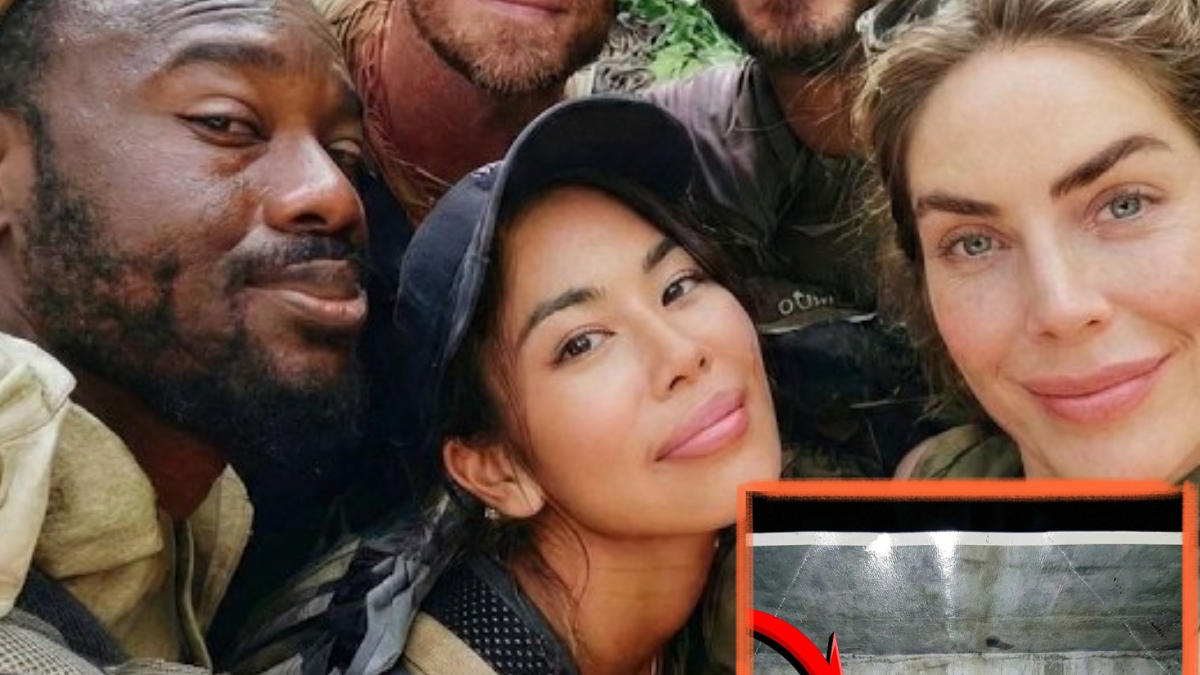
On October 12, 2010, five American tourists walked into the dense, steaming embrace of the Brazilian Amazon — and simply ceased to exist.
Not a scream, not a distress call, not a single solid lead remained.
They had not fallen prey to wild beasts, nor drowned in rushing waters, nor lost their way in the tangled green maze.
They had just… vanished.
Julie Gordon, 30; Angela Carson, 31; William White, 33; John Ball, 29; and Brian Blake, 33 — close friends who had spent eight months planning this journey of a lifetime — touched down in Manaus on October 10, where the air hung thick and heavy, ninety-five degrees with humidity climbing toward ninety percent.
They collected their pre-booked silver Toyota Highlander, loaded it with tents, backpacks, and hiking gear, and turned onto Highway BR-174, heading north toward Presidente Figueiredo — a land of thundering waterfalls, deep gorges, and ancient, unbroken forest.
At 10:15 a.
m.
on October 12, they pulled into a gas station miles outside the city limits.
Surveillance footage would later capture the last known images of them alive: William White paying cash at the register; Julie Gordon tucking a detailed topographic map and three large bottles of strong repellent into her bag; the group clustered near the open vehicle doors, laughing, relaxed, utterly unaware of the darkness closing in.
At 10:32 a.
m.
, the SUV pulled away and faded into the shimmering heat haze.
Their destination: a hiking trail leading to the Cava Domaga cave system, three days’ trek deep into the jungle.
They signed the ranger’s logbook at 1:45 p.
m.
that same afternoon.
Brian Blake’s handwriting was clear and steady.
They noted they had hired a local guide — informally, off the books, to avoid agency fees — someone who knew hidden paths and secret caves.
No name was recorded.
No contact information.
Just that single, fateful line.
By October 15, the date they were due to return, no one had come back.
On October 19, a patrolling ranger found their Highlander exactly where they had left it, coated in dust and fallen leaves, doors locked, nothing missing but the people themselves.
Phones were dead — there was no signal this far in.
That evening, they were officially declared missing.
What followed was one of the largest search operations in Amazonian history.
Hundreds of square miles were scoured by helicopters, thermal imaging, tracker dogs, soldiers, and volunteers.
Temperatures soared past one hundred degrees; the air was so thick and damp it felt like breathing water.
Day after day, hope dwindled — until November 2, when rescuers found something: a backpack tangled in mud on the bank of a nameless stream, four and a half miles northeast of the vehicle.
It belonged to John Ball.
The fabric was torn, pockets open — yet there was no blood, no sign of struggle, no footprints, no tracks of any animal.
It looked as though it had been cast aside in a single, desperate motion.
The trail ended there.
The dogs lost the scent at the water’s edge.
Beyond that — nothing.
By mid-December 2010, the search was called off.
The case was filed as unsolved.
Families returned home, left with only empty chairs and endless, aching questions.
The world moved on.
Seven long years drifted by.
Then, on November 14, 2017, during a dawn raid on an illegal logging and mining camp hundreds of miles from where the tourists had disappeared, federal police captain Thiago made a discovery that tore the case wide open.
Hidden inside a rusted iron warehouse, behind a pried-open safe, lay a sealed plastic container wrapped in electrical tape.
Inside — an old film camera and fifty-two glossy color photographs.
They were pictures of Julie, Angela, William, John, and Brian.
The images showed them emaciated, their skin caked with dirt, their hair wild and matted, strapped to heavy metal chairs in a dim, windowless concrete room.
They were alive — years after they had supposedly vanished into the jungle.
But the most horrifying detail burned itself into every officer’s mind: in every single photograph, someone had used a sharp, precise blade to cut out their eyes directly from the paper.
Perfect, black, empty holes stared back — deliberate, chilling, impossible to misunderstand.
Forensic analysis confirmed the photos had been taken and printed between 2011 and 2013.
They had not died in those first few days, as everyone had feared.
They had been kept — imprisoned — for years.
Someone had held them.
Watched them.
Photographed them.
And then sent these grotesque reminders out into the world, like a taunt.
The investigation shifted from a missing-person file to a manhunt for a monster who had kept five people hidden in the dark — and no one had noticed.
The spectral analysis of the glossy photo paper as well as a detailed study of the chemical degradation of the colored ink allowed the forensic experts to draw an absolutely conclusive conclusion: these images were taken and printed between 2011 and 2013.
They had not died in those first few days, as everyone had feared.
They had been kept — imprisoned — for years.
Someone had held them.
Watched them.
Photographed them.
And then sent these grotesque reminders out into the world, like a taunt.
Investigators turned their focus to the only clues visible in the photographs themselves: the room where the pictures were taken.
Digital enhancement revealed aged red brickwork laid in lime mortar, and rusted cast-iron ventilation pipes with riveted joints — construction styles used in remote Amazonian structures at the very beginning of the twentieth century, specifically as underground storage cellars during the great rubber boom.
Deep, cool, windowless chambers built to preserve latex in the tropical heat — perfect for hiding something, or someone, far from prying eyes.
After combing through land records and archives for weeks, they found one single match: Casarão das Águas Negras — House of Black Waters — a sprawling, isolated estate of more than four thousand acres, surrounded on three sides by impassable swamps and deep river channels, unreachable by land.
Purchased in 2004 by a man named Hector Silva.
His file sent a cold shiver down even seasoned investigators’ spines.
Fifty-eight years old, once a brilliant ophthalmologist — a specialist in vision — stripped of his medical license in 2002 after a disciplinary inquiry found he had conducted unauthorized, unethical experiments on patients.
He was obsessed with fringe theories: that visual input overloaded the human brain, that blocking sight could unlock hidden perception, that total sensory deprivation was the key to a higher state of being.
The pieces began to snap together with terrifying clarity.
A former eye doctor.
A hidden underground bunker from the rubber era.
Photographs where every eye had been cut away.
It was not a random act of cruelty — it was a signature.
On the night of December 2, 2017, an elite tactical team approached the estate by boat, moving silently through the dark river waters with lights out, engines muffled.
They found the mansion rotting and overgrown, windows boarded, porch collapsing, swallowed by encroaching jungle.
Thermal scans showed no signs of life above ground — but a massive industrial generator hummed hidden in the brush, its heavy power cable leading directly into the foundation, behind a bookcase nailed to a study wall.
When they pulled the bookcase aside, they found what they had been searching for: a heavy, hermetically sealed steel door set into the brick, fitted with a modern electronic keypad.
Somewhere behind it — deep underground — the air was warm, recycled, and occupied.
They breached the lock with a controlled charge at 3:12 a.
m.
The heavy steel groaned open, releasing a rush of cold, stagnant air thick with the scent of damp concrete, old mold, antiseptic — and something faintly, sickly sweet.
A narrow concrete staircase plunged fifty feet downward into near darkness.
Flashlight beams cut through the gloom, revealing long, low corridors lined with the same aged red brick seen in the photographs.
Rusting ventilation pipes hummed overhead beneath vaulted ceilings lit only by dim lamps behind red glass.
Heavy metal doors lined both sides, each fitted with an external bolt — cells.
They opened them one by one.
The first three were empty — but the brick walls were scored deep with hundreds of fingernail scratches, as though someone had clawed at them for months, desperate enough to tear their own skin.
At the far end of the corridor lay the last door, wrapped in thick rubber seals for total soundproofing.
Inside, the bulb had been unscrewed.
When the beam fell across the room, a figure huddled in the darkest corner screamed — a raw, terrified sound — and shielded her face with bony, trembling hands.
It was Julie Gordon.
Thin, gaunt, her hair streaked gray, her skin translucent and pale after years without sunlight, she was alive — but barely.
She screamed at the light, begging them to turn it off, terrified of the brightness that had become her worst torment.
Medics moved gently, covering her eyes, administering a sedative, shielding her from the glare.
As they carried her out, another team found the final room — a makeshift darkroom, lit by a single red lamp — where Hector Silva sat calmly at a table, sorting through negatives with metal tweezers.
He did not run.
He did not fight.
He simply set down his tools, stood, and held out his wrists for the cuffs, his expression one of mild irritation at being interrupted.
Nearby, a map marked with coordinates led searchers three miles through the jungle to an abandoned stone quarry.
There, beneath the gravel and dry earth, they found four unmarked graves.
The remains of Angela Carson, William White, John Ball, and Brian Blake.
They had not vanished into the wild.
They had been murdered — slowly, cruelly — inside a man-made dungeon.
It took weeks of careful therapy and gradual, gentle preparation before Julie was well enough to speak.
When she did, her account unfolded like a nightmare from which she could never fully wake.
The “local guide” they had hired off the books had been Silva’s accomplice — a man he had placed to lure groups he deemed “suitable” deep into the forest.
At a rest stop, he had offered them water laced with a sedative.
Julie’s last memory before blacking out was the faint, bitter taste on her tongue.
When they woke, they were strapped to chairs in the very room seen in the photographs, and Hector Silva stood before them in a clean medical coat, speaking calmly, as though delivering a lecture.
He told them they were not hostages — they were participants.
He believed the human eye was an evolutionary flaw, that sight cluttered the mind and blinded people to deeper truths.
Total darkness, he claimed, would strip away the distraction of vision and awaken untapped potential.
For years, he kept them in absolute blackness — days merging into nights, time measured only by the faint, distant hum of fans and the sound of his approaching footsteps.
Periodically, he would enter, secure their heads in clamps, and blast them with blinding, searing light — photographing their terror, documenting the physical and psychological effects — before cutting out the eyes in every print, a symbolic erasure of the very sense he blamed for their perceived limitations.
One by one, they had broken.
John Ball was the first to go, his mind unraveling after eighteen months in the dark; he refused food and simply wasted away.
Angela followed, then Brian, then William — each claimed by starvation, illness, or the crushing weight of sensory isolation.
Silva had carried their bodies away in the dark, alone, and buried them where no one would ever look.
Only Julie remained — surviving by sheer force of will, counting every second of every day, building an entire world inside her mind: walking the streets of her hometown in Seattle, recalling the faces of her family, the shape of each building, the cracks in the sidewalk — anything to keep her mind from dissolving into the void.
When investigators searched Silva’s study, they found thirty-four black-bound notebooks hidden behind a panel in his desk — thousands of pages in his neat, precise handwriting, recording every detail of their captivity: heart rates, sleep patterns, signs of mental deterioration, weight loss.
He had treated their suffering not as crime, but as data.
He showed no remorse at his trial.
He called the deaths “unfortunate side effects” of “weak genetics” and claimed the police had interfered just as his breakthrough was within reach.
The jury found him sane — fully aware of his actions, fully in control.
The evidence was overwhelming: the soundproofed cells, the hidden generator, the careful concealment, the diaries.
He had not acted in madness — he had acted with cold, calculated purpose.
He was sentenced to more than one hundred and fifty years in prison, with no possibility of release.
The estate was confiscated and bulldozed, the underground chambers filled with concrete, erased from the landscape as thoroughly as Silva had tried to erase his victims from the world.
The remains of the four who died were returned home and buried with honor.
Their families finally had a place to go, a place to lay flowers, a place to grieve openly rather than in the limbo of uncertainty.
But for Julie, true healing has been slow and agonizing.
She returned to Washington, but the light of the sun — once something she longed for — now terrifies her.
Every ray, every reflection, every sudden brightness sends her back to that chair in the dark.
She lives in a house shuttered and dim, surrounded by heavy curtains, living in the twilight that keeps the memories at bay.
She survives — quiet, fragile, indomitable — a living reminder of the darkness that can hide beneath the canopy, and of the strength it takes to hold on to light when you have been kept in the dark for seven long years.
And sometimes, in the quiet hours, she still counts the seconds — eighty-six thousand four hundred of them each day — and reminds herself: she is here.
She is free.
And no one will ever lock her in the dark again.
“This story is entirely fictional and created for entertainment purposes only.
It does not represent any organization or individual, nor does it encourage inappropriate behavior.
The content was generated with AI assistance.
”








