TWO FRIENDS WALKED INTO A JUNGLE FOR A DAY HIKE. TEN WEEKS LATER, THEIR BACKPACK WAS FOUND COMPLETELY DRY, AND THE CAMERA INSIDE HELD 84 NIGHT PHOTOS THAT SOMEONE HAD TAKEN IN THE DARK
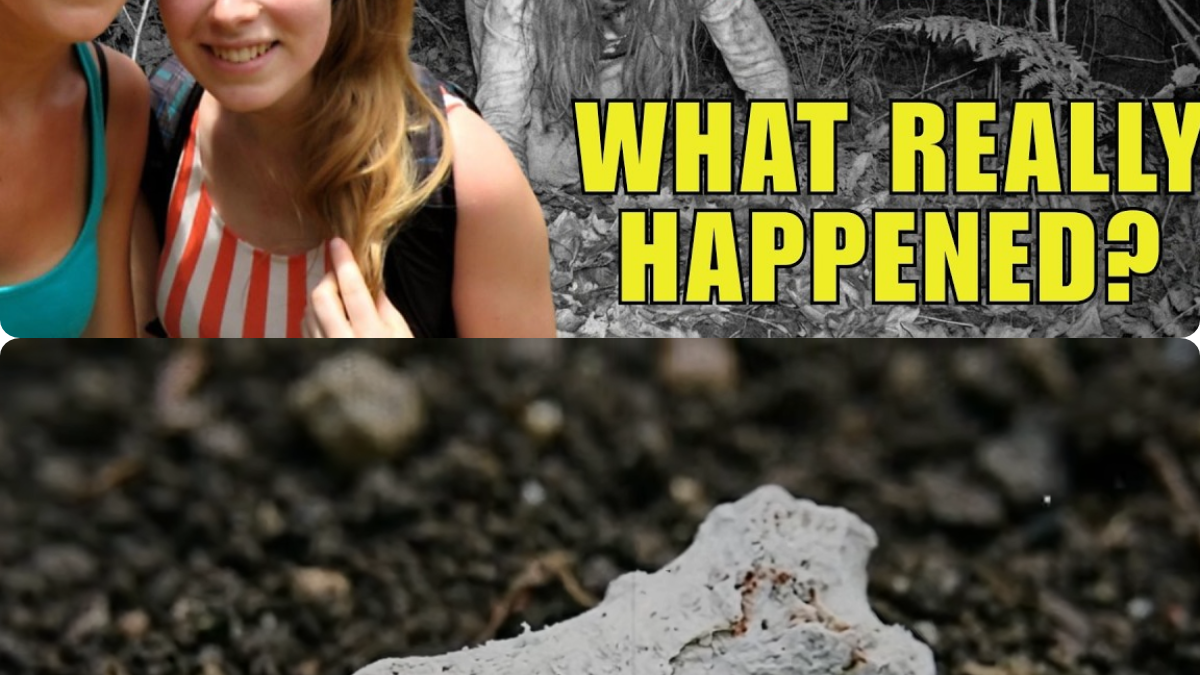
TWO FRIENDS WALKED INTO A JUNGLE FOR A DAY HIKE. TEN WEEKS LATER, THEIR BACKPACK WAS FOUND COMPLETELY DRY, AND THE CAMERA INSIDE HELD 84 NIGHT PHOTOS THAT SOMEONE HAD TAKEN IN THE DARK
Part 1
The backpack had been missing for ten weeks of tropical downpours. When a local woman lifted it from the rocky bank of the Río Culebrón, it was bone dry.
Inside were two phones, a camera, a pair of sunglasses, eighty-eight dollars in neatly folded bills, an insurance card, and an empty water bottle.
The phones still worked. Not a single drop of water had touched them. 🌙
In a cloud forest where wet leaves rot in days and electronics corrode within hours, the bag looked as if it had spent those weeks on a shelf.
It had not been lost to the river. Someone had placed it there.
It had started as the happiest trip of two young lives.
Anke Verhoeven was twenty-one and studied social education. Maren Duyck was twenty-two, a psychology graduate and a volleyball player with a stubborn streak. Both were from Leuven, Belgium. They had saved for months by waiting tables, and their parents described them as responsible, almost boringly so.
They landed in the mountain town of Santa Brisa at the end of March, in a region wrapped in fog at the foot of Cerro Alto. They rented a room in a family home and planned a short, easy hike along a path called El Violinista.
On the morning of April 7, 2015, they ate breakfast with two young men and set off around eleven. A dog from a local restaurant trotted along behind them.
They carried one small blue backpack, one bottle of water, two phones, and a camera.
They had no jackets, no compass, no flashlight, and no machete. They were dressed in shorts and light shoes. Their plan was to be home for dinner. 🕯️
At 1:54 p.m., the camera caught Anke crossing a rocky creek near the lookout that marks the continental divide. It was the last ordinary photograph she would ever take.
In it, she looks uneasy.
That evening, the dog came home alone.
The girls did not.
The next morning, they missed a prepaid meeting with their guide, Feliciano. At eight o’clock, he went to the police.
Within hours, locals began walking the trail. One neighbor swore that around four that afternoon, he had seen two tall, fair-haired girls standing in a pasture at the foot of the slope.
A man was standing beside them.
No one ever identified him.
On April 9, the official search began. That same day, neighbors noticed a red pickup parked outside the house where the girls had rented their room.
Thirty-two minutes after it drove away, someone dialed an emergency number from one of the girls’ phones.
Nobody answered. 😨
A local anti-crime group demanded the case be treated as a kidnapping. The police refused. They insisted two foreign tourists had simply wandered off and fallen.
For ten days, the mountain was searched inch by inch. Dutch-trained search dogs came. Helicopters with thermal cameras swept the canopy. Volunteers and police combed the ravines. Parents arrived from Belgium. The families offered a thirty-thousand-dollar reward, a fortune in that region.
The result was zero.
There was no torn clothing, no campfire ashes, and no snapped branch. The dogs picked up a scent on the main path, then lost it, as if the girls had stepped off the ground.
Search teams were looking for two cold, injured, desperate women. They found nothing, because they were looking in the wrong place.
Then, on June 20, the dry blue backpack surfaced on the riverbank.
The police said the river had carried it down from the place where the girls had died. The families asked a simple question.
How does a river carry a backpack for ten weeks without getting it wet?
The camera inside held a memory card. The card held photographs in numbered order. Number 412 was the picture of Anke at the creek, taken in daylight on April 7.
Number 414 was the first in a long series of night photos, each lit by a harsh flash, each taken in total darkness.
But there was no number 413.
Between those two frames lay an empty gap, and someone had made very sure no one would ever see what had filled it.
Part 2
Between those two frames lay an empty gap, and someone had made very sure no one would ever see what had filled it.
Forensic specialists dug into the memory card, and they were stunned.
When a person deletes a photo on a camera, the file usually leaves behind traces. A trained technician can often bring it back. Not this time.
The space where photo 413 should have been had been overwritten at the deepest physical level, scrubbed so thoroughly that nothing could be recovered.
That cannot be done in a jungle. It requires taking out the card, plugging it into a real computer, and running specialized software.
Someone had sat in a room with electricity and quietly erased a single picture. 🕯️
What had that picture shown? A face? A truck? The moment two girls were stopped on a trail?
The phones began to talk next, and what they said was worse.
At 4:39 p.m. on the first day, Anke’s iPhone tried to call an emergency number. Twelve minutes later, at 4:51, Maren’s phone tried again. Neither call connected.
Then came a strange silence. Lost hikers in panic call again and again, pressing for any flicker of signal. These phones switched on for a few seconds at a time and then went dark. No flashlight was ever turned on in the pitch-black jungle. No goodbye message was ever written to a parent. 🌙
On April 9, at 4:01 p.m., the same afternoon the red truck was seen, Anke’s phone opened the contact page of her landlady. The number was not saved in the phonebook. Someone had searched for it by hand.
Then, on April 12, the phone recorded sixty-one failed attempts to enter the passcode in a row.
It was a brute-force attack. Someone was desperately trying to break in.
Even stranger, the signal strength on the phone read minus 113, the reading of a device sealed inside a basement or a concrete bunker. A forest cannot do that.
On April 17, the phone woke up for the last time. For about an hour, eleven new system files appeared on it, even though no correct passcode was ever entered. Older files were rewritten. Everything about it said the phone had been plugged into a computer and cleaned out. 😱
And then there were the night photos.
At 1:29 a.m. on April 14, a week after the girls vanished, the camera began to flash. Over eighteen minutes, it fired eighty-four times, capturing black cliffs, rain, wet leaves, and a ravine.
For years, people took them as the final cries of two lost girls signaling for help.
But an expert photographer studied the flashes and saw something wrong. The shots came exactly nine seconds apart or more, the time the camera needed to recharge. This was not panic. It was patience.
Comparing the rocks across the frames, he noticed the angle barely changed. The person holding the camera had stayed in one spot, leaning on a boulder, pressing the button like a clock.
One image seemed to show a mass of thick, clean, reddish hair under the flash. The hair was dry and spotless, though the girls had supposedly spent a week in mud and rain.
Experts studied the shadows. They concluded that it was not the back of Anke’s head. It was Maren’s face, hidden under Anke’s hair.
Neither of them moved. Neither of them blurred.
Part 3
If the girls were already gone when those flashes lit the ravine, then someone had staged a performance for the people who would come looking.
And the bones told the rest of the story.
Over the following weeks, search teams found small fragments along the river. First, Anke’s jean shorts, found on a polished boulder far from where the backpack had been. They were zipped, buttoned, and folded high above the waterline.
A flood does not fold shorts.
Then came a pelvic bone. Then Maren’s hiking boot, still holding part of a foot.
In the end, thirty-three small bone fragments were recovered, scattered over miles of riverbank. DNA proved they belonged to the girls. But anthropologists estimated they had found only about five percent of Anke and perhaps ten percent of Maren.
The other ninety percent never came home. 💔
The bones of the two girls looked completely different. Maren’s showed ordinary jungle decay, with traces of soft tissue. Anke’s were unnaturally white, stripped clean, with an unusually high level of phosphorus on a rib fragment.
A forensic anthropologist from a neighboring country looked at them and said they should not look like that. Something had interfered with the natural process.
The official explanation was sun bleaching. The scientists did not accept it. Quicklime and phosphorus compounds are known tools of criminal groups who want to destroy a body fast and erase every trace of DNA.
And then came the cruelest detail. Human bones are heavier than water. They sink into the silt. They do not float downstream and settle side by side on the same sandbank, two bones from two different people, as if they had been laid out together.
Someone had placed them there. 🕯️
Investigators began to look again at the trail. The official story said it was a lonely wilderness where two tourists could go missing for days without meeting another soul.
That was false.
The path beyond the lookout is a working road for the indigenous families who live in the hills. Herders and farmers walk it every day, crossing suspended cable bridges and sleeping in rain shelters. It would be nearly impossible to wander there for ten days without meeting a single living person.
And then the timeline began to line up, in a way that made the investigators uneasy.
It took the girls exactly two hours and forty-five minutes to walk from the trailhead to the creek in photo 412. From that photo to the first emergency call, exactly two hours and forty-five minutes passed again.
A local taxi driver, Leonardo, told the police that he had dropped the girls at the trailhead at 3:02 p.m. But the photographs’ hidden data proved they started walking around eleven that morning. The gap was exactly two hours and forty-five minutes.
He changed his story several times. Not long after the case went quiet, he died under circumstances no one ever fully explained.
Neighbors had seen two fair-haired girls in a pasture with an unknown man. A red truck had stopped outside the landlady’s house. Someone had opened a contact on a phone that was no longer in the hands of its owner.
This was not a mountain killing two lost tourists. It was a place where someone felt completely safe. 😨
Here is how the investigators believe those days unfolded.
On April 7, shortly after 1:54 p.m., the girls crossed the divide and began to descend. Between two and four o’clock, they crossed paths with men who controlled the hidden trails. A confrontation began. Terrified, the girls fled and hid. At 4:39 and 4:51, they tried to call for help, and there was no signal. They were found. They were taken.
From April 8 to 11, they were held in a sealed, windowless place that blocked every radio wave, which explains the minus 113 reading.
On April 12, as helicopters filled the sky, the kidnappers panicked. They needed to know whether the girls had sent out a photograph of their faces. They did not know the passcode. They tried sixty-one times.
By then, the girls were probably dead or unconscious.
On the night of April 14, fearing the dogs would find their hiding place, the men took the camera to a ravine in the dead of night. They sat against a rock, fired the flash eighty-four times, and photographed broken branches and scraps of red plastic bag. They wanted the world to see two frightened tourists going mad in the dark.
And photo 413, the one that held their faces, they destroyed.
On April 17, they cleaned the phones. Then the bodies were placed in sealed containers with quicklime and chemicals. In a few days, almost everything dissolved.
Ten weeks later, when the search had long ended, they left a dry backpack by the river. They scattered the few remaining bones and laid out a pair of shorts.
It was a perfect illusion of an accident. 🌙
The authorities never accepted it.
The region lives off ecotourism and wealthy foreign retirees. To admit that organized criminals had kidnapped two young women and dissolved them in chemicals would mean the end of everything the region had built.
So the prosecutors ignored the missing flesh, the phosphorus, the dry bag, and the sixty-one passcode attempts. They told the world the jungle had simply done what jungles do.
The families were left staring at a wall.
It took years, and independent investigators who walked the trail again and again, to prove that the phones and the camera had not been silent witnesses. They had been used to lie. The digital evidence that was supposed to save the girls had been rewritten by the people who killed them.
No one has ever been arrested. The people who took Anke and Maren have never been named.
Today, hundreds of hikers walk El Violinista every week, laughing, wearing light backpacks, taking photos at the lookout where the girls took theirs. Few of them know what happened there.
And somewhere beyond the divide, in the wet green thickets, someone may still be watching the trail. 🕯️
This story is entirely fictional and created for entertainment purposes only. It does not represent any organization or individual, nor does it encourage inappropriate behavior. The content was generated with AI assistance.








