TWO GIRLS VANISHED IN ALASKA—AND EVERYONE BELIEVED THEY HAD DROWNED. TWO YEARS LATER, THEY WERE FOUND CHAINED IN A RANGER’S BASEMENT… BUT THE MOST TERRIFYING SECRET WAS WHO HAD BEEN SEARCHING FOR THEM ALL ALONG.
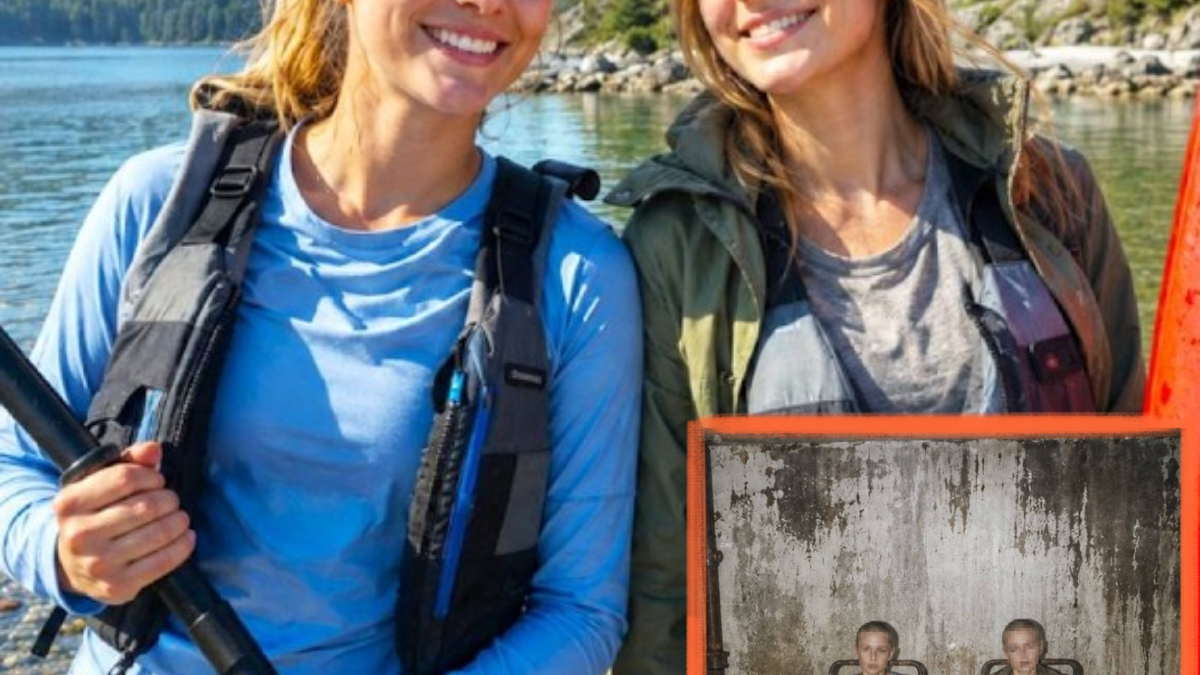
TWO GIRLS VANISHED IN ALASKA—AND EVERYONE BELIEVED THEY HAD DROWNED. TWO YEARS LATER, THEY WERE FOUND CHAINED IN A RANGER’S BASEMENT… BUT THE MOST TERRIFYING SECRET WAS WHO HAD BEEN SEARCHING FOR THEM ALL ALONG.
Part 1
For two years, their mothers had prayed for a miracle.
For two years, the police had insisted that the freezing waters of Alaska had claimed their daughters.
And for two years, the man responsible for their disappearance had been living an ordinary life, smiling at neighbors, speaking politely to investigators, and pretending to care about the tragedy.
Then, on an August afternoon in 2021, four teenagers stumbled upon an abandoned cabin deep in the Alaskan wilderness.
What they discovered beneath its wooden floor would turn a forgotten missing-person case into one of the most horrifying investigations imaginable.
But the greatest shock was still waiting.
Because the person everyone would eventually suspect wasn’t necessarily the person who had committed the crime.
And the truth had been hiding in plain sight since the very first morning.
🌲 JULY 14, 2019 — THE DAY EVERYTHING CHANGED
Katie Thompson and Emma Clark were both twenty years old.
They were college students, best friends, and young women who believed that the world was filled with beautiful places waiting to be discovered.
For months, they had dreamed about kayaking through one of Alaska’s most breathtaking coastal wilderness areas.
They studied maps, researched the currents, checked weather reports, and carefully planned their route.
Their families knew exactly where they intended to go.
It was supposed to be a simple, unforgettable adventure.
Nothing more.
That Sunday morning, the sky was clear, the water was calm, and the temperature hovered around 55 degrees Fahrenheit.
At approximately 8:20 a.m., Katie and Emma arrived at a local kayak rental station.
They collected two bright red kayaks, paddles, life jackets, and waterproof backpacks containing food, water, and their phones.
A young employee helped them prepare their equipment.
His name was Dylan Peterson.
He appeared friendly, attentive, and knowledgeable about the surrounding wilderness.
He explained the safety procedures, helped adjust their life jackets, and discussed their planned twelve-mile route.
At one point, he recommended a quiet cove where they could stop and rest.
Katie thanked him.
Emma smiled.
Neither woman had any reason to imagine that this ordinary conversation might later become crucial to a criminal investigation.
Before leaving, Katie sent her family a final message.
She promised they would return by six that evening.
Then the two friends pushed their kayaks into the sparkling water.
They laughed as their paddles broke the surface.
The forest rose around them like a green wall.
Within minutes, they disappeared around a bend.
It was the last time anyone could confirm seeing them freely enjoying their adventure.
By 6:00 p.m., neither girl had returned.
At first, their families tried not to panic.
Perhaps the current had slowed them down.
Perhaps they had stopped to take photographs.
Perhaps their phones had simply lost reception.
But as daylight faded, those explanations became harder to believe.
At 7:30 p.m., the rental station contacted the sheriff’s office.
Two kayaks were overdue.
Two young women were missing.
And neither phone could be reached.
The next morning, a massive search began.
Police officers, park rangers, volunteers, search dogs, and rescue helicopters combed the remote coastline.
They searched rocky beaches, dense forests, narrow channels, and dangerous underwater depressions.
Then, at approximately 2:15 p.m., a helicopter spotted something red on a deserted stretch of shoreline.
It was one of the missing kayaks.
Rescuers rushed to the location.
The kayak lay above the high-tide line, neatly pulled onto the pebbles.
It was not shattered.
It had no major cracks.
Inside were a paddle and Emma’s waterproof backpack.
Her spare clothes were dry.
Her water bottles were unopened.
But Emma was gone.
So was Katie.
And the second kayak had vanished.
One investigator stared at the abandoned boat.
Something about it bothered him.
If the girls had drowned in an accident, why had this kayak been pulled safely onto land?
Who had placed it there?
The search continued for ten exhausting days.
Divers explored the riverbed.
Helicopters circled overhead.
Search teams fought through thick undergrowth.
But they found nothing.
No second kayak.
No clothing.
No footprints that led anywhere useful.
No evidence that either girl had survived.
On July 25, the active search was suspended.
Investigators concluded that a boating accident was the most likely explanation.
Perhaps a sudden current had overturned one kayak.
Perhaps the other girl had tried to save her friend.
Perhaps the freezing water had taken them both.
Their families were devastated.
Yet one question refused to disappear.
Why had the only recovered kayak been carefully dragged onto shore?
Katie’s mother could not stop thinking about it.
Neither could Emma’s family.
But without new evidence, the investigation slowly faded from public attention.
Weeks became months.
Months became years.
Birthdays passed without celebrations.
Christmas dinners had two empty places.
Their parents learned to live with a grief that had no answers.
Then came August 23, 2021.
At 3:45 p.m., an emergency dispatcher answered a call from a terrified teenage boy.
He and three friends had been exploring a remote forest area near the national park.
Four miles from the nearest road, they discovered an old wooden cabin hidden among the trees.
Its windows were boarded up.
Moss covered the roof.
The porch was collapsing.
Inside, broken furniture and abandoned objects littered the floor.
The teenagers were about to leave when one noticed a torn tarp covering something unusual.
Beneath it was a heavy wooden trapdoor.
A thick metal bolt held it shut.
Curiosity overcame their fear.
They slid the bolt aside.
Lifted the wooden cover.
And shone their phone flashlights into the darkness below.
A terrible smell rose from the opening.
Then the beam of light struck something metallic.
Chains.
Two wooden chairs.
And two human figures.
The teenagers froze.
The figures were young women, frighteningly thin, with shaved heads and pale faces.
Their wrists and ankles were secured to the chairs.
For a moment, nobody moved.
Then one of the women slowly lifted her head.
Her lips trembled.
She was alive.
The boys scrambled backward and called the police.
Within an hour, rescuers were fighting their way through the forest.
When officers entered the basement, they discovered a tiny windowless room containing water containers, food bowls, medical supplies, and two women who could barely react to their presence.
Their bodies were weak.
Their eyes struggled against the sudden light.
Their wrists bore scars from prolonged restraint.
Medical crews rushed them to a hospital.
Investigators collected their fingerprints.
And when the identification results arrived, the entire sheriff’s department was stunned.
The women were Katie Thompson and Emma Clark.
The two students presumed dead in 2019 had been alive for the entire two years.
But that wasn’t the most shocking discovery.
When detectives checked the ownership and access records for the cabin, they found that it belonged to the park’s inspection facilities.
Only one senior ranger had been assigned responsibility for it.
A respected forty-seven-year-old man named Jeffrey.
And according to the original investigation records, Jeffrey had personally helped lead the search for the missing girls.
The man who had spent days searching for Katie and Emma was also the man entrusted with the cabin where they had been imprisoned.
👇 Find Part 2 in the comments, or leave ANY WORD below to receive the next part privately. The truth about the ranger will change everything.
Part 2
The man who had spent days searching for Katie and Emma was also the man entrusted with the cabin where they had been imprisoned.
When investigators discovered Jeffrey’s connection to the cabin, suspicion immediately fell on him.
For more than twenty years, he had served as a respected park ranger.
He knew every hidden trail, river crossing, and abandoned building in the reserve.
He had access to restricted service roads.
He possessed keys to remote facilities.
And his government vehicle could travel through the wilderness without attracting attention.
But one detail was particularly disturbing.
During the original search, Jeffrey had repeatedly urged authorities not to give up.
Had he been trying to help?
Or had he been controlling where the search teams looked?
On August 24, 2021, detectives summoned him for questioning.
Jeffrey appeared unusually nervous.
His hands trembled as he shuffled through paperwork.
He avoided eye contact.
When asked about the cabin, he insisted he hadn’t visited it in four years.
Then, twenty minutes later, he contradicted himself.
He admitted entering the building the previous year to inspect its roof.
The detectives exchanged glances.
His explanation no longer made sense.
The investigation intensified.
Records revealed that shortly after the girls disappeared, Jeffrey had signed out chains, batteries, mounting brackets, and portable lights.
He claimed they were needed for repairs at a remote observation post.
But investigators found no evidence that those repairs had occurred.
Surveillance records also showed his vehicle traveling through restricted roads late at night.
Then forensic specialists discovered a length of park-service rope inside the basement.
Laboratory analysis identified biological material consistent with Jeffrey’s DNA.
Investigators believed they finally had their answer.
On August 26, Jeffrey was arrested in front of his stunned colleagues.
The community was horrified.
A trusted ranger.
A man who had participated in the search.
A man who had supposedly devoted his life to protecting visitors.
Could he really have hidden two young women underground?
But Jeffrey denied everything.
And then the evidence began to collapse.
Investigators discovered surveillance footage and witness testimony proving he had been approximately twenty miles away during the critical period of the disappearance.
The rope had come from an old batch of discarded equipment accessible to many people.
His DNA could have been deposited years earlier.
Then came the most important moment.
Doctors finally permitted Katie and Emma to participate in a carefully supervised identification procedure.
The women looked through a one-way viewing panel at Jeffrey.
Katie studied his face.
Emma listened to his voice.
Neither hesitated.
“That’s not him,” Katie said.
Emma shook her head.
“We’ve never seen that man before.”
The investigators were stunned.
The women explained that their captor was younger, slimmer, and moved differently.
But there was something else.
Something that had haunted them since the first day.
“His voice,” Emma whispered. “We knew it.”
Katie nodded.
“It sounded familiar before he ever took us.”
Jeffrey was released.
The case had returned to the beginning.
Investigators now faced a terrifying possibility.
The real kidnapper had deliberately used the ranger’s cabin and discarded park equipment to direct suspicion toward an innocent man.
And the person responsible might have been someone Katie and Emma had met on the morning of their disappearance.
Months later, detectives reopened the original witness statements.
They studied the rental records.
They examined every conversation the women had before entering the water.
And one name kept appearing.
Dylan Peterson.
The friendly kayak rental employee.
The young man who had personally prepared their equipment.
The person who knew their exact route.
And the employee who had called the police when they failed to return.
Detectives invited Dylan back for another interview.
He arrived smiling.
He answered every question confidently.
For nearly two hours, nothing seemed unusual.
Then an investigator asked about the difficulty of identifying the rescued women.
Dylan leaned back.
“Well,” he said casually, “considering their heads were completely shaved, recognizing them must have been difficult.”
The room fell silent.
Neither detective moved.
Because one detail about Katie and Emma’s captivity had never been released to the public.
Nobody outside the investigation was supposed to know their heads had been shaved.
And Dylan had just mentioned it without being told.
👇 LIKE or COMMENT “REVEAL” to see Part 3, which will be posted after enough comments. One careless sentence was about to expose a secret hidden for years.
Part 3
Nobody outside the investigation was supposed to know their heads had been shaved.
And Dylan had just mentioned it without being told.
For several seconds, the interrogation room was completely silent.
The clock on the wall continued ticking.
Dylan Peterson looked from one detective to the other.
The confident smile that had remained on his face throughout the interview slowly disappeared.
One investigator lowered his pen.
“Can you repeat what you just said?”
Dylan swallowed.
“I said it must have been difficult to identify them.”
“Why?”
“Because of their condition.”
“What condition?”
Dylan shifted in his chair.
“Well… you know. After everything they went through.”
The detective leaned forward.
“You specifically mentioned that their heads had been shaved.”
Dylan blinked.
“I suppose I did.”
“How did you know that?”
For the first time, Dylan seemed unable to find an answer.
He glanced toward the door.
Then at the recording equipment.
Then back at the detective.
“I heard people talking about it.”
“Who?”
“People around town.”
“Give us a name.”
Dylan rubbed his palms against his trousers.
“I don’t remember.”
The second investigator opened a folder.
“Dylan, that information was never made public.”
A long silence followed.
“Their families weren’t even given those details immediately,” the detective continued. “The information was restricted to investigators and medical personnel.”
Dylan’s face turned pale.
“Maybe I guessed.”
“You guessed that both women had been completely shaved?”
He said nothing.
The investigator closed the folder.
“Then you need to explain how you knew.”
For the first time since Katie Thompson and Emma Clark disappeared, the man who had seemed so helpful no longer looked comfortable answering questions.
His words became tangled.
His timeline changed.
He could no longer explain exactly where he had been during the evening of July 14, 2019.
The detectives ended the voluntary interview and informed him that he was now suspected of involvement in the kidnapping.
Dylan was advised of his rights.
And the friendly rental employee who had helped organize the original search was taken into custody.
But his arrest was only the beginning.
Because investigators still needed to understand how one man had managed to steal two years of freedom from two young women without anyone discovering what he had done.
🌲 THE FRIENDLY STRANGER
To understand what happened, investigators returned to the morning of July 14, 2019.
Katie and Emma had arrived at the kayak rental shop excited about their adventure.
Dylan Peterson was twenty-six years old.
He had worked at the station for several years and knew the coastal waterways extremely well.
He was familiar with isolated coves, service trails, and the schedules of local patrols.
Most customers remembered him as polite and attentive.
But beneath that pleasant appearance, Dylan carried a deep resentment toward people he believed looked down on him.
He felt invisible.
Unimportant.
Ignored.
And he interpreted ordinary social rejection as humiliation.
When Katie and Emma arrived, Dylan became particularly interested in Katie.
He asked questions that went beyond the equipment rental.
Where was she from?
How long would she be visiting?
Was she traveling with anyone else?
At first, Katie answered politely.
But when Dylan asked for her phone number, she declined.
She had come to enjoy a kayaking trip with her best friend, not to meet someone.
To Katie, it was a small, ordinary interaction.
To Dylan, it became something entirely different.
He convinced himself that Katie had deliberately embarrassed him.
He believed she considered herself better than him because he worked at a rental station.
That interpretation was his own.
Katie had done nothing wrong by refusing his attention.
But Dylan transformed the rejection into a personal grievance.
And in his distorted thinking, he decided that the two women needed to be punished.
Investigators would later discover that Dylan knew exactly where the girls intended to travel.
He had discussed their route.
He knew their estimated arrival time.
He knew when they would lose cellphone reception.
And he knew about a secluded cove where they might stop.
He had even recommended it himself.
What appeared to be a helpful suggestion was later understood as part of a calculated trap.
The girls had trusted the wrong person before their kayaks ever touched the water.
According to Dylan’s later account, he used a service boat to get ahead of the women along their route.
He waited near an isolated stretch of shoreline where help would be difficult to summon.
He created a situation that appeared to require assistance.
When Katie and Emma encountered trouble, he presented himself as someone who could help.
They recognized him.
He was the same employee who had prepared their kayaks that morning.
The same friendly young man who had explained the currents.
The same person who had assured them they were taking a safe route.
That familiarity made the situation even more dangerous.
The women believed they were accepting help from someone they already knew.
Instead, Dylan overpowered them and transported them away from the river.
He arranged the scene so that investigators would suspect a boating accident.
One red kayak was left on the shoreline.
The other disappeared.
And the women were taken to an isolated cabin deep in the forest.
A cabin that Dylan knew was rarely visited.
A cabin officially associated with a senior park ranger.
A cabin with a basement hidden beneath a heavy wooden trapdoor.
That was where their nightmare began.
TWO YEARS WITHOUT SUNLIGHT
When Katie and Emma first regained their awareness inside the basement, they were terrified.
The room was small.
Cold.
Windowless.
Their wrists and ankles were restrained.
They had no idea where they were.
Katie called for help.
Emma screamed until her throat hurt.
But outside the cabin, the forest swallowed every sound.
There were no nearby houses.
No busy roads.
No one passing close enough to hear them.
Their captor controlled their food, water, medication, and access to light.
He rarely spoke.
When he did, his voice was sometimes deliberately quiet.
But Katie and Emma never forgot its rhythm.
There was something familiar about it.
Something connected to the day they disappeared.
At first, they tried to count the hours.
Then the days.
They whispered memories to each other.
Their families.
Their college lives.
Their plans for the future.
Emma spoke about the people waiting for her at home.
Katie remembered the promise she had made before leaving.
She had told her family she would call by six.
That promise haunted her.
But the two friends found strength in one another.
Whenever one began to lose hope, the other reminded her that they were still alive.
They were not alone.
And as long as they could hold on to that truth, they had something worth fighting for.
Their captor wanted the opposite.
Dylan later admitted that he had shaved their heads to strip away the identities he believed made them confident.
He wanted them to feel powerless.
He wanted to control how they looked, when they ate, and what they could do.
To him, captivity became a way of satisfying his obsession with power.
But the cruelty revealed something important about his character.
He had confused control with respect.
Fear with importance.
And another person’s suffering with personal victory.
For Katie and Emma, survival became an act of resistance.
Even when they could not escape, they tried to preserve the smallest pieces of themselves.
Their memories.
Their friendship.
Their names.
The knowledge that they were daughters, students, and young women whose lives mattered beyond the walls surrounding them.
Days became months.
The seasons changed outside.
Snow fell.
Ice formed along the river.
Spring returned.
Then another summer.
And still the basement remained their entire world.
They had no way of knowing that their families believed they had died.
No way of knowing that search teams had once passed through the surrounding wilderness.
No way of knowing that the man responsible had been speaking to investigators and pretending to help.
Dylan had made himself part of the investigation from the beginning.
He was the employee who reported the overdue kayaks.
He provided rental records.
He answered questions.
He described the girls’ clothing, equipment, and mood.
He even offered theories about how the accident might have happened.
Investigators initially saw his cooperation as evidence that he was a concerned witness.
They did not realize that he was also learning what the police knew.
And what they did not know.
THE CABIN THAT ALMOST REMAINED HIDDEN FOREVER
On August 23, 2021, four teenagers entered the forest looking for an adventure.
They were not searching for missing people.
They were simply exploring.
When they discovered the neglected cabin, they nearly walked away.
Its collapsing porch and boarded windows made it look unsafe.
But curiosity brought them inside.
One teenager noticed the heavy trapdoor beneath a torn tarp.
When they opened it, the darkness below seemed endless.
Then their flashlights revealed two figures sitting motionless in wooden chairs.
The boys initially struggled to understand what they were seeing.
One stepped closer to the opening.
“Hello?”
There was no immediate response.
Then one of the figures moved.
A young woman slowly raised her head.
Her eyes narrowed against the light.
She was alive.
The teenagers backed away in shock.
Within minutes, they had called emergency services.
When rescuers arrived, they found Katie and Emma suffering from extreme physical exhaustion, malnutrition, and severe psychological trauma.
Medical specialists carefully removed their restraints.
The women were taken to a hospital, where doctors began the long process of stabilizing their condition.
Their identification shocked the entire community.
The missing students were alive.
After more than two years, their families received a telephone call they had stopped believing would ever come.
Their daughters had been found.
Not their belongings.
Not remains.
Their daughters.
Alive.
For Katie’s mother, the news was almost impossible to understand.
For so long, she had imagined every possible ending.
None had included a hospital room where she might finally see her daughter breathing.
When the families were allowed to reunite, the moment was overwhelming.
Katie was weak.
Emma was frightened.
Neither could simply return to the people they had been before the disappearance.
But they were no longer trapped in the darkness.
They could hear familiar voices again.
They could feel the warmth of people who loved them.
They could begin to understand that the nightmare had ended.
The recovery ahead would be long.
But for the first time in two years, the future existed again.
❤️ THE INNOCENT RANGER
While the women received treatment, investigators pursued the man whose name appeared in the cabin records.
Jeffrey.
His access to the building, his nighttime patrols, and the equipment associated with him seemed suspicious.
When forensic specialists found rope containing biological traces consistent with his DNA, the case appeared nearly solved.
But a proper investigation required more than appearances.
The evidence had to withstand examination.
And Jeffrey’s apparent guilt began to unravel.
Witnesses and surveillance footage confirmed that he had been elsewhere during the crucial period of the disappearance.
The rope came from discarded equipment that numerous people could access.
And most importantly, the victims themselves said he was not the man who had held them captive.
Katie and Emma described someone younger.
Someone slimmer.
Someone with a voice they recognized.
Jeffrey was released.
The accusation had damaged his reputation, but the new evidence made it clear that the investigation had followed the wrong man.
His connection to the cabin had been a circumstance the real offender could exploit.
The person responsible had used a location associated with a trusted ranger, helping divert suspicion away from himself.
And that mistake cost investigators valuable time.
Only when they returned to the original records did the overlooked details begin to form a different picture.
THE ONE PERSON WHO KNEW TOO MUCH
Dylan had been the last confirmed person to speak with the women before they entered the water.
He knew their route.
He knew their schedule.
He knew where they planned to stop.
And his account of his whereabouts during the disappearance was not independently confirmed.
Investigators also discovered that a secluded trail connected the area behind the rental station with the forest leading toward the cabin.
Witnesses had previously reported seeing a tall, slender young man near the supposedly abandoned building.
Those observations had not seemed important when the case was treated as a boating accident.
Now they mattered.
The detectives invited Dylan to another interview.
They deliberately approached the conversation as a routine review of old records.
Dylan arrived confident.
He spoke calmly about the kayaks.
The weather.
The equipment.
The girls’ departure.
He repeated details he had given years earlier with remarkable precision.
Then he mentioned the shaved heads.
One sentence.
A detail that had never been publicly disclosed.
A fact he could not reasonably explain knowing.
When questioned, Dylan claimed he had heard rumors.
But he could not identify anyone who had told him.
His answers became increasingly inconsistent.
His confidence disappeared.
And investigators recognized that they had finally found a reason to examine him as more than a helpful witness.
Following his arrest, Dylan eventually agreed to provide a detailed account of his actions.
His statements explained how he had intercepted the girls, transported them to the cabin, and maintained their captivity.
He also admitted why he had targeted them.
It was not money.
It was not a ransom plot.
It was not a secret criminal organization.
It was resentment.
A distorted obsession with being respected.
And a desire to exercise power over two people who had done nothing to deserve his cruelty.
Katie’s refusal to give him her phone number had been an ordinary personal boundary.
Dylan had turned that boundary into an excuse for violence.
His confession exposed the terrible truth behind the case.
The girls had not vanished because Alaska was too dangerous. They had vanished because a man they encountered had chosen to harm them.
The evidence was documented.
Investigators reconstructed the events.
The case was referred for prosecution, bringing the long search for the perpetrator to its legal conclusion.
But the emotional consequences could not be resolved as quickly as the investigation.
🌅 THE LIFE THEY HAD TO REBUILD
For Katie and Emma, being rescued did not mean that everything immediately became normal.
Their bodies needed time to recover.
Their minds needed time to process what had happened.
Ordinary experiences could suddenly feel overwhelming.
A closed door.
A dark room.
The sound of metal moving.
A stranger’s voice.
For two years, they had lived without control over the simplest parts of their lives.
Now they had to learn how to feel safe again.
Their families faced a different kind of challenge.
They had spent years grieving daughters they believed were dead.
Now those daughters were home, but carrying injuries that love alone could not erase.
There were medical appointments.
Therapy sessions.
Sleepless nights.
Difficult conversations.
Moments when memories returned unexpectedly.
And days when simply getting through the morning was an achievement.
But there were also small victories.
Katie could choose when to open a window.
Emma could decide what she wanted for breakfast.
They could step outside and feel sunlight on their faces.
They could sit beside their families without fearing that someone would drag them back into the darkness.
These ordinary freedoms had become extraordinary.
The friendship that helped them endure captivity remained an important part of their recovery.
They had survived the same nightmare.
They understood experiences that others could barely imagine.
And they no longer had to whisper their hopes in a basement.
They could speak freely.
They could be heard.
They could make choices about the lives ahead of them.
Their families also learned that recovery was not a straight line.
There would be good days.
There would be difficult days.
There would be moments of laughter followed by unexpected tears.
And there would be memories that might never completely disappear.
But none of that changed the most important truth.
Katie and Emma had survived.
Their captor had tried to take away their identities.
He had tried to make them powerless.
He had tried to erase the young women who had arrived in Alaska full of excitement and hope.
But he had failed to erase who they were.
THE FINAL LESSON
The case left the community with uncomfortable questions.
Why had the abandoned kayak been treated primarily as evidence of an accident?
Why had the early investigation overlooked the significance of the rental employee’s knowledge?
Why had witnesses’ observations near the cabin received so little attention?
And how had a man who appeared so helpful managed to remain beyond serious suspicion for so long?
There were no easy answers.
But one lesson stood out.
Appearances are not proof of innocence.
And suspicion is not proof of guilt.
Jeffrey had looked guilty because of circumstantial evidence that ultimately failed to establish his involvement.
Dylan had looked innocent because he was polite, cooperative, and willing to help.
Yet the truth was hidden behind the person who seemed least threatening.
For Katie and Emma, however, the story was never simply about the investigation.
It was about the years they lost.
The families who waited.
The friendship that helped them endure.
And the courage required to face life after an unimaginable ordeal.
Their story also carried another essential truth.
A person’s refusal to give someone attention is never a justification for cruelty.
No one is entitled to another person’s affection, friendship, or personal information.
Dylan’s resentment belonged to him.
His decisions belonged to him.
And the responsibility for his actions was his alone.
Katie and Emma had gone kayaking because they wanted to experience the beauty of Alaska.
They had every right to expect that their adventure would end safely.
Instead, their lives were interrupted by a crime that changed them forever.
But their lives did not end in that basement.
That is the part of the story that matters most.
Not the darkness.
Not the chains.
Not the man who believed he could control them.
But the fact that two young women emerged from an unimaginable experience with the possibility of rebuilding their futures.
For two years, their families believed they would never see them again.
Then, one afternoon, a group of teenagers opened a forgotten trapdoor.
And hope returned.
The man who had stolen their freedom was finally exposed.
The innocent ranger was cleared.
And the mystery of the abandoned red kayak was explained.
But the greatest victory belonged to Katie and Emma.
Because after everything that had been taken from them, one thing remained beyond their captor’s control.
Their right to begin again.
❤️ Sometimes the most powerful ending is not revenge, punishment, or even the revelation of a terrible secret.
Sometimes it is simply two people walking back into the sunlight, knowing that the darkness no longer owns them.
And for Katie Thompson and Emma Clark, that was the beginning of a different story.
A story not about what had been done to them.
But about everything they might still become.
This story is entirely fictional and created for entertainment purposes only. It does not represent any organization or individual, nor does it encourage inappropriate behavior. The content was generated with AI assistance.








