Two Sisters Stormed Off in Opposite Directions After a Camping Fight and Vanished. Five Months Later, Police Found Them Alive in a Spotless Steel Cage, and Both Screamed That They Had Never Seen the Other Woman Before
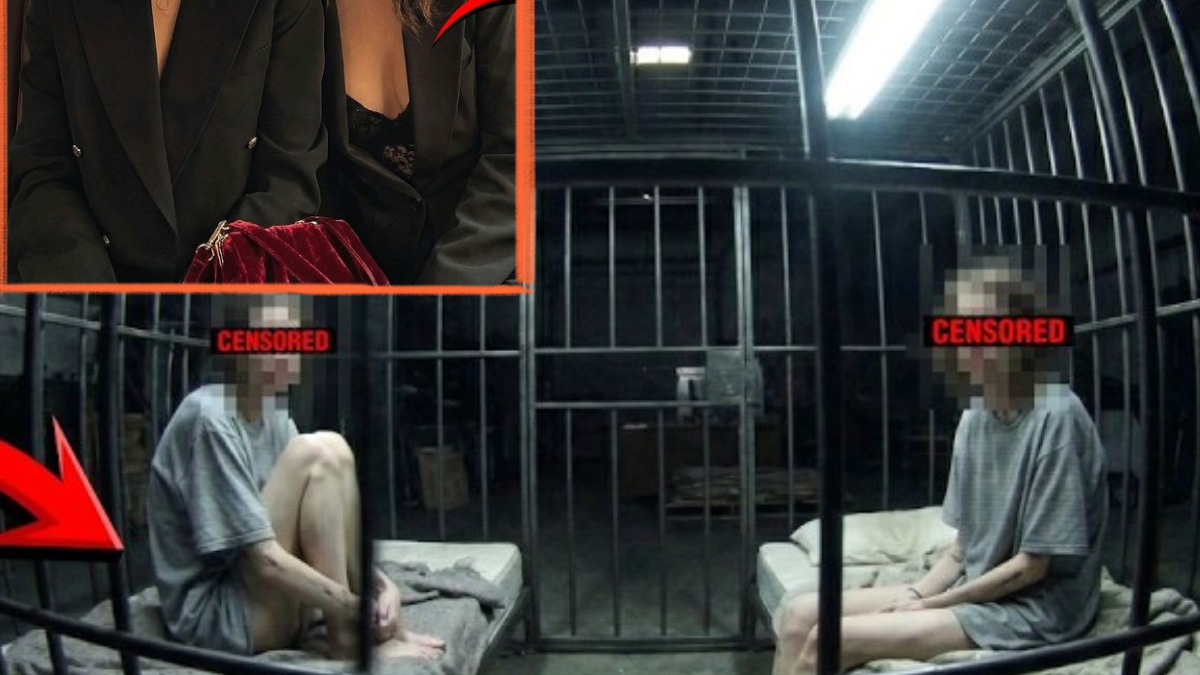
Two Sisters Stormed Off in Opposite Directions After a Camping Fight and Vanished. Five Months Later, Police Found Them Alive in a Spotless Steel Cage, and Both Screamed That They Had Never Seen the Other Woman Before 😨
Part 1
On the morning of December 17, 2016, an inspector from the power company stood outside a lifeless gray warehouse in Troutdale, Oregon, and listened to a sound that should not have been there.
A low, steady hum came through the steel walls.
Unit 118 was listed as empty and disconnected from the grid. Yet for months, the power line serving it had shown a constant, abnormal load. Something inside was running day and night, and the inspector decided it was probably an illegal drug lab.
He backed away and called the police.
Two patrol cars arrived within half an hour. The officers drew their weapons, and cut through two heavy padlocks with hydraulic shears. When the steel door finally groaned open, they were expecting armed men.
There were none.
The hangar was flooded with blinding white light, almost like an operating room. And in the center stood a huge steel cage, spotless and cold, humming with its own private climate control.
Two women sat on thin mattresses behind the bars.
They were skeletal, pale as paper, and dressed in identical gray T-shirts. 🕯️
Five months earlier, on July 20, 2016, sisters Sara Cruz, twenty-four, and Deborah Cruz, twenty-three, had driven into the Deschutes National Forest in Oregon.
They were camping near Cultus Lake to repair a family bond worn thin by months of conflict.
The ranger who checked them in remembered how nervous they both seemed. They barely spoke. Sara paid in cash for three nights and asked for the most remote site available. They got Site 42, half a mile from everyone else, shaded by old pines.
The silence of the woods did not soothe them. It seemed to feed their quarrel.
Around eight that evening, a California family in a van three hundred yards away heard the screaming. Wind garbled most of the words. But one sentence carried clearly. One sister shouted that she did not want to see the other anymore.
Then footsteps. Two figures moved off in opposite directions, one north, one east, into the dusk.
Neither returned.
The next morning, a ranger found Site 42 abandoned. The tent was open and everything inside was in perfect order. Two sleeping bags. Two half-empty water bottles. Wallets, phones, car keys, all in their backpacks.
No blood. No struggle. Sara’s car was parked a mile away.
By eleven, one of the largest search operations in the county’s history was underway. Volunteers swept the forest in lines fifteen feet apart. Three helicopters with thermal cameras circled for twelve hours.
That afternoon, two German Shepherds were given the sisters’ clothing and took off.
Their trails split at the tent, then merged again after two hundred yards. The dogs dragged their handlers through blackberry thickets and over fallen trunks, for nearly two miles, until the trees opened onto an old logging road abandoned since the eighties.
There, the dogs stopped dead.
They circled. They whined. The scent did not drift off to either side. It simply ended in the middle of the gray gravel, as if the sisters had been lifted into the air.
Detectives examined the road. No dropped items. No blood. No sign of an animal.
But deep in the damp soil, they found two parallel grooves.
Fresh tire tracks from a heavy commercial van, where no commercial vehicle had any right to be. 🌙
Now, in the glare of Unit 118, a police sergeant lowered his weapon and recognized the faces from five months of missing-person posters.
Sara and Deborah Cruz.
He stepped toward the bars and spoke softly.
“Sara? Deborah? It’s the police. You’re safe now. You’re sisters. It’s over.”
At the word sisters, Sara recoiled as if she had been struck.
She pressed herself into the far corner of the cage, shaking, her eyes wide with an animal terror. She stared at the woman on the other side and rasped a plea to the officers.
Get this stranger away from me.
She said she had no idea who the woman beside her was.
Deborah’s reaction was worse. She did not try to comfort anyone. She squeezed her eyes shut and clamped her hands over her ears as hard as she could, as if trying to block out the very fact that someone else existed. Her thin body began rocking back and forth in the rhythm of a psychotic episode.
The mere presence of her sister seemed to cause her physical pain.
Both women had survived five months of captivity.
But they had lost something no doctor could easily restore.
At Portland Medical Center the next day, forensic experts braced for the worst: fractures, restraints, signs of abuse. They found none. The toxicology screens came back clean. No drugs, no sedatives. No fresh scars, no bruises.
Only starvation, vitamin deficiency, and a pallor born of months without sunlight.
Then psychologists tried the first step of recovery. They showed each woman an old family photograph from Christmas of 2014.
Deborah looked at her sister’s face on the paper and had a severe panic attack. Even the word sister triggered violent physical rejection.
They did not recognize each other. And it was not an act.
Psychiatrists reached one diagnosis. Deep dissociative amnesia, triggered by unbearable trauma. Their minds had performed an emergency surgery on themselves, and had cut out the idea of sisterhood itself.
Detectives realized the man they were hunting was not a frenzied sadist. He was something colder.
A man who could remove a family bond from two healthy adults in five months, as precisely as a surgeon removes a tumor.
The question was how.
Part 2
The question was how.
On December 20, 2016, the FBI joined the case. The victims had been moved across state lines, nearly 186 miles. Behavioral analysts reviewed the file and the girls’ psychological state, and arrived at a quick conclusion.
This was no chaotic predator. This was a system.
Agents returned to the abandoned logging road off Highway 97, where the dogs had lost the scent. Under the cold gray clouds, forensic specialists studied the tire grooves that had survived beneath the layer of fallen needles. Three-dimensional laser scans and chemical analysis of the soil gave them a precise model of the vehicle.
It was not logging equipment. It was not a hunter’s pickup.
It was a large commercial van with reinforced air suspension, capable of hauling more than fifteen thousand pounds.
On a road no one had officially used in twenty years.
Logistics analysts overlaid that forgotten road onto the state highway network, and the screen told a story. The old gravel track let heavy trucks slip off Highway 97 unseen and reach Interstate 84 by a back route. A driver using it could avoid three major weigh stations and every highway patrol checkpoint.
It was a perfect blind spot.
The forest had never been the hunting ground of a serial killer. It was a staging area for something large, and illegal. 🕯️
The agents reconstructed that night. The sisters had stormed off in anger, ignoring every safety rule. In the fading light they had wandered more than two miles from the camp, lost and cold, and stumbled onto the old road at the worst possible moment.
There, under dimmed headlights, a transfer of contraband was underway.
The sisters had seen faces. They had seen armed men. They had seen the cargo itself.
To kill them in the woods would have meant bodies, and bodies would mean a massive search flooding the forest with dogs, volunteers, and helicopters. It would have destroyed a corridor worth millions every month.
So someone made a cold, pragmatic decision.
They loaded the sisters into the van with the contraband. Two living people became two more items on a bill of lading.
But that raised a new question. Why would a smuggling route have anything to do with a hangar containing a custom-built cage?
On December 21, the investigation moved to Troutdale.
The warehouse complex, known as Pacific Crest Storage, was a bleak maze of hundreds of identical metal sheds behind high barbed-wire fencing. It had a dubious reputation among law enforcement. If rent was paid in cash or through shell companies, no one asked what was behind the steel doors.
But something about Unit 118 troubled the forensic team.
The cage was not a rusty, hastily welded box. It was an engineered isolation cell with industrial ventilation, aluminum ductwork built into the roof, and multi-channel climate control holding a steady seventy-two degrees. Installing it required specialist engineers and heavy equipment. It cost over fifty thousand dollars.
No ordinary smuggler would spend that much to hold two accidental witnesses.
The lease led to a fake corporation in the Caribbean, a dead end. So analysts followed the equipment instead. Serial numbers on fans and heaters led to a distributor in Oregon, and the distributor’s accounting records led to something no one had expected.
Not a cartel. Not a syndicate.
An ordinary tax return.
The owner of the warehouse franchise had bought the climate system openly, through his own company’s bank accounts. His motive was shockingly petty. He had claimed the purchase as a business deduction, labeling it an energy-efficiency upgrade for empty warehouses.
His own greed, and his habit of squeezing every cent out of every expense, had left a paper trail.
It was the fatal breadcrumb.
On December 22 at 2:00 p.m., unmarked black SUVs pulled up to a glass office tower in downtown Portland. Agents rode silently to the fourth floor, walked down a plush carpeted corridor, and stopped at a heavy oak door.
Behind it sat the man who had destroyed two minds.
Digital forensics teams followed, bagging every laptop, phone, drive, and server. Analysts expected the usual horror: trophy photographs, torture videos, a madman’s diary.
They found spreadsheets.
Terabytes of boring corporate paperwork. Vacation schedules. Garbage contracts. Investor slide decks. No hidden browsing history. No dark corners.
Then, at 3:00 a.m. on December 23, a deep-search tool flagged a file buried inside the third-quarter finance folder of 2016. It was password-protected. It took two hours of machine time to crack.
The room went silent when it opened.
There were no names. No photos. No notes.
It was a pedantic monthly financial statement for a secret operation. Electricity. Generator fuel. Bonuses for loyal guards. Supplies.
And, tucked between routine categories, right after sanitation, two small cells.
Object 1: calorie intake.
Object 2: calorie intake.
Beside them lay an automated water-supply schedule, measured in gallons and tied to the municipal cost per cubic foot.
The investigators felt a deeper horror than any bloody crime scene could have given them. There was no theatrical evil here. Only bureaucracy.
To whoever kept this spreadsheet, Sara and Deborah were not people. They were not even test subjects.
They were inconvenient assets.
Then one agent scrolled to the first-quarter projections for 2017.
Against the line for the two objects was a date at the end of February.
And next to it, a single short accounting term.
Part 3
The accounting term was “write-off.”
Agents stared at it. In late February, the man who ran this spreadsheet had planned to close his books on the two women the way a company disposes of obsolete equipment.
The clock on the sisters’ lives had been ticking for five months, one cell at a time.
Inside the corner office, agents had found Daniel Brown, forty-eight, behind a mahogany desk in a pressed blue shirt and thin metal-rimmed glasses. He was drinking cold coffee from a paper cup and glancing at stock reports.
He had no criminal record. He had mild hypertension and took pills each morning. He paid a thirty-year mortgage and alimony to the children of his first marriage.
When agents read him his rights and snapped on the cuffs, he did not resist. He asked for only one thing: permission to take his pills from the desk.
In the FBI interview room, he asked for no lawyer. He did not feign insanity. He spoke in a flat, emotionless voice, like a man reporting quarterly losses to a board.
He was not a sadist. He did not enjoy anyone’s pain. He was a businessman who had gotten into trouble.
Years earlier, bad real-estate investments had pushed him to the edge of bankruptcy. To keep his standing and his lifestyle, he had found a profitable and illegal solution. He rented out empty warehouses in Troutdale and designed secure logistics routes for a major cartel, including the hidden corridor through the Deschutes forest.
On July 20, 2016, he had been there personally, supervising a major transfer on the old gravel road.
Then two women burst out of the twilight.
They had seen the open cargo. They had seen the faces of armed couriers.
Brown calculated the options in seconds. Letting them go meant arrest, and twenty years in federal prison. Killing them in the forest meant two fresh bodies, an enormous search, and the permanent loss of the corridor, which would mean certain death at the hands of the cartel.
He chose a third path, one that shocked even veteran investigators with its cold rationality.
He did not see the sisters as people. They were an operational problem to be shelved.
He ordered them bound and loaded into the van with the cargo. By his arithmetic, he needed five months to wind down his dealings, sell off the legal assets, move his money offshore, and leave the United States for a country with no extradition treaty. Until the end of February, the sisters only needed to remain in a concrete box.
But then there was the question that haunted the agents.
Brown sat in his Portland office, hundreds of miles away. How had he made two adult women lie still all that time, and, more terrifyingly, burn each other out of their own memories?
The answer came on December 23, in hours of questioning.
To Brown, two prisoners who comforted each other were a risk. Solidarity meant noise. Noise meant escape attempts, or attention drawn to Unit 118.
So he did not use torture. He built a management system.
Right after the abduction, he had workers cut the cage exactly in half with a thick, soundproof partition of industrial Plexiglas. Sara and Deborah could see each other. They could see every tear and every flicker of fear.
But they could not speak, touch, or hear a word.
Then he switched on a protocol.
From his comfortable office, he watched them around the clock through hidden cameras on his laptop. The rules were absolute.
If one sister tapped on the glass, mouthed a word, sobbed toward the other, or showed even a sliver of care, the system reacted. With a few mouse clicks, Brown shut off the heat in both halves of the cage for twenty-four hours. If the contact continued, he cut the water. If it persisted, he blocked the food.
Both sisters suffered, every time, for the actions of either one.
But if they sat motionless, if they avoided even a glance at the partition, if they treated the woman behind the glass as if she did not exist, an automated feeder hummed softly and delivered hot food and clean water.
It ran for exactly 150 days.
Each cycle taught their brains the same lesson, again and again. Love is punished. Indifference is rewarded. Any memory of a sister, any impulse of care, became welded to pain, to freezing concrete, to hunger, to the terror of death.
In the end, their minds did what minds do to survive.
They amputated.
They erased the very concept of kinship, cutting out love in order to keep the heart beating.
That was why Sara had screamed that a stranger stood beside her. That was why Deborah had covered her ears. They were not performing. They were following a lesson drilled into them over one hundred and fifty days, the only way their minds had found to stay alive.
Daniel Brown was charged under federal law. The spreadsheet, the purchase records, and his own recorded confession formed a trail of evidence that no lawyer could dismantle. Investigators later said that what chilled them most was how ordinary he had seemed. Pressed shirt. Neat desk. Polite request for his pills.
Sara and Deborah survived. Their bodies recovered slowly from months of malnutrition and sunless confinement. Their minds were another matter. Specialists worked with each sister separately, rebuilding the trust and memory that had been taken apart one cell at a time. Whether the bond can ever be fully restored remains uncertain.
The case changed how law enforcement understands violent crime. It proved that absolute evil does not always wear a monster’s mask or hide in dark woods. Sometimes it wears a tie and an expensive watch. Sometimes it manages human beings with graphs and spreadsheets, and breaks them because it is the most convenient and profitable way to protect a business.
In the end, two sisters who had walked into the forest to repair their relationship had it taken from them. And the only thing that saved their lives was a tax deduction, and a man too greedy to resist claiming it. 🌙💔
This story is based on a real-style criminal case. Names, places, and details have been changed or invented. It is written for entertainment and does not represent any real individual or organization. It was generated with AI assistance.








