Vanished From Her Locked Bedroom At Night.
The Stepdad Said She Slept At A Friend’s.
No One Was Telling The Truth — And The Real Killer Hid In Plain Sight The Whole Time.
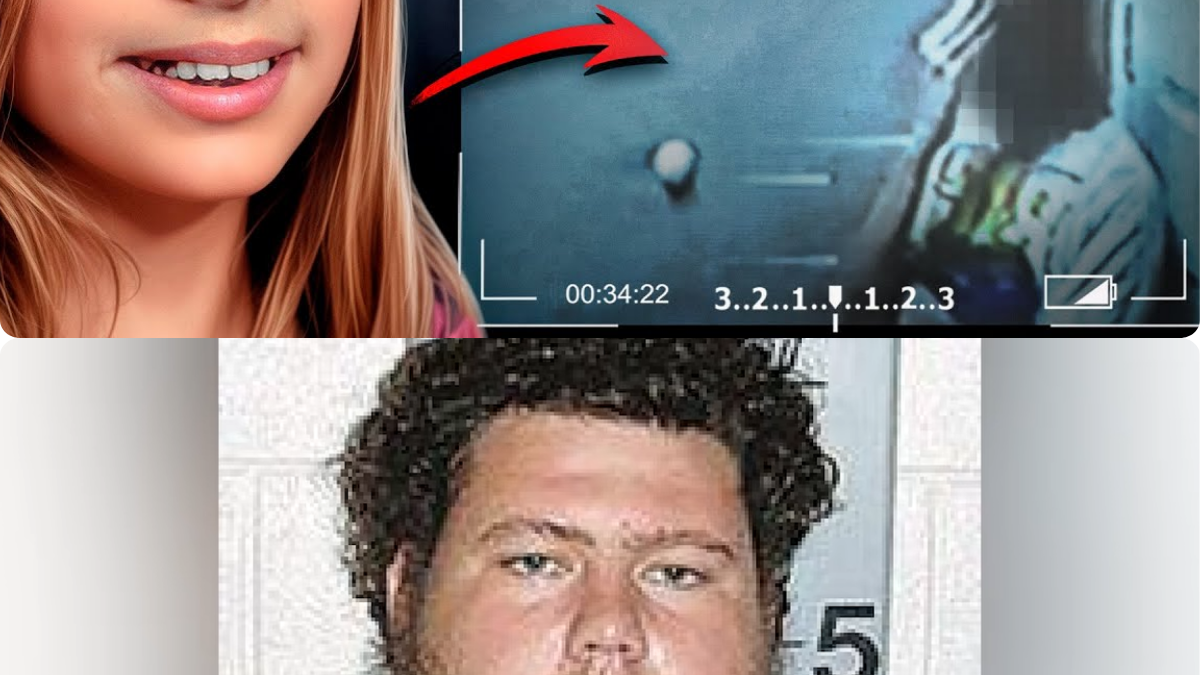
Vanished From Her Locked Bedroom At Night.The Stepdad Said She Slept At A Friend’s.No One Was Telling The Truth — And The Real Killer Hid In Plain Sight The Whole Time.
Nine-year-old Rowan Ford vanished from her bedroom in the dead of night — her window shut, her door untouched, her bed still faintly warm when her mother came home at dawn.
No note, no sign of struggle, no footsteps in the damp grass outside.
In the quiet town of Stella, Missouri — population barely 150 — children played freely after dark, doors stayed unlocked, and nothing this terrible had ever happened.
Until November 2, 2007.
Rowan was bright and gentle, born in San Diego but raised here among rolling fields and quiet lanes.
Her parents had divorced when she was small; her mother Colleen married a man named David, and together they built a home filled with five children — two brothers, two sisters, and Rowan, who loved riding her bike, drawing, and helping the younger kids at Sunday school.
She was independent beyond her years — Colleen worked overnight shifts at a store, David spent long days on the farm, and Rowan often looked after herself after school.
That night was no different: Colleen left for work, David hadn’t come home yet, and Rowan was fast asleep in her bed when the house fell quiet.
When Colleen returned just after nine the next morning, Rowan’s room was empty.
Panic flared sharp and cold.
She found David and asked where her daughter was — and his answer was calm, casual, and impossible.
“She came in late,” David said.
“Asked if she could sleep over at a friend’s place.
I told her yes.
”
He didn’t ask which friend.
He didn’t call to check.
He didn’t even step outside to watch her go.
In a town where everyone knew everyone, he’d simply let a nine-year-old leave alone in the middle of the night — and thought nothing of it.
Colleen raced across Stella, knocking on every door Rowan might visit.
Every answer was the same: no one had seen her.
No sleepover had been planned.
No one knew where she was.
When she told David, he stayed calm — too calm.
“She’ll be back,” he said.
“Don’t make a fuss.
” Hours slipped away with no sign of her.
Frantic, Colleen dialed 911 herself.
The sheriff arrived fast, but from the start, something felt wrong.
David’s story shifted like smoke.
At first he said Rowan had asked permission; later he claimed she might have slipped out without him noticing.
He gave different times, different details, never the same twice.
He failed to mention he’d borrowed his mother’s car that night — a fact agents uncovered only later.
Police seized his pickup and the borrowed car, searching inch by inch — but found nothing.
Christopher and Nathan, friends who’d been drinking with David that evening, backed his account: they’d left together around midnight, driven to Christopher’s trailer in the next town, kept drinking for an hour, then Nathan had driven David home down back roads to avoid patrols.
Christopher passed a polygraph without hesitation.
He seemed kind, broken by the news — Rowan and the children called him “Uncle Christopher,” had grown close to him while he stayed in their home.
He offered to help search, to wear a wire, to point out places David might hide something.
He wept openly when he spoke of the girl.
Yet Sheriff Clark — who’d known Christopher since boyhood, who’d comforted him when his mother died — noticed something beneath the grief.
Christopher’s eyes darted when he spoke of that night.
He hesitated, then backtracked.
He seemed to be holding back a secret so heavy it might crush him.
“I want the truth to come out,” he told Clark, voice trembling.
“No matter how bad it is.
” But when pressed, he fell silent again.
Days passed.
Volunteers combed the woods and fields in freezing rain.
The FBI joined the hunt.
Every lead dissolved.
Rowan was nowhere.
Then, on November 9 — exactly one week after she disappeared — searchers pushed through thick brush into a remote hollow near Powell, ten miles from Stella.
Beneath a pile of leaves and branches, in a deep earthen pit, they found her.
She was missing all clothing below the waist except one sock.
Medical examiners confirmed what everyone feared: she’d been sexually assaulted, then strangled with a thin length of rope.
The killer had tried to bury her, but the pit was too shallow, the covering too thin.
Agents asked Sheriff Clark to find Christopher — to ask him one last time what he knew.
But Christopher was already looking for Clark.
He’d come to the station that morning, desperate to speak.
Now he was gone.
Clark searched everywhere without success — until Christopher called him, breathless and terrified.
“They’re following me,” he whispered.
“A gray car.
I don’t know who it is.
I’m scared.
”
When they met, Christopher was shaking, his face pale, eyes red from crying.
“They’ll blame me,” he said.
“Everyone will think I did it.
” Clark drove him to a quiet bridge outside town — the place Christopher had asked to go — and parked beneath the boughs of old trees, where the moon broke through thin clouds.
“Tell me,” Clark said gently.
“It’s just us.
”
Christopher stared at the water for a long time.
Then he lifted his hands.
“Cuff me,” he said.
“After what I tell you, you’ll have to.
”
“Cuff me,” he said.
“After what I tell you, you’ll have to.
”
Clark froze.
“Christopher — you don’t have to—”
“I do,” he cut in, voice cracking.
“Because I’m the one who took her.
”
He spoke slowly, each word like a shard of glass.
That night, he said, after Nathan and David had left his trailer, he hadn’t stayed behind.
He’d taken the main highway back to Stella, slipped quietly into David’s house, and lifted Rowan from her bed while she slept.
He’d carried her to his car, driven away before anyone knew she was gone — driven her to his trailer, where he’d attacked her.
She woke as he pulled her inside, struggled, called out — but he’d kept the lights off, kept his voice quiet, hoping she wouldn’t recognize him.
Then moonlight spilled through the window.
She saw his face.
He’d panicked.
Grabbed a rope.
And when it was over, he’d hidden her body in the pit, scrubbed blood from his bedding, burned her clothes and the rope in a metal barrel in his shed — terrified someone would see the fire, terrified someone would know.
Clark listened in stunned silence.
The man he’d known for nearly twenty years — the boy who’d lost his mother, the man who’d played with those children, who’d held Rowan on his shoulders — had done this.
But then Christopher said something that stopped Clark’s blood.
“David didn’t know,” he insisted.
“He had nothing to do with it.
I acted alone.
”
That night, Christopher repeated his confession to FBI agents.
He signed it, gave permission to search his trailer and car — and investigators found what they expected: the barrel with ash, hair matching Rowan’s, faint traces of evidence only the killer could have left.
The rope detail, the remote pit, the single sock — all matched exactly what he’d described.
The case seemed closed.
But when agents went to inform David, he didn’t look relieved.
He looked shattered — and then he said something that turned every truth upside down.
“I was there,” David whispered.
“I came back that night.
I saw him.
”
He said he’d returned home early, realized Rowan was gone, and driven straight to Christopher’s trailer.
He’d walked inside — and seen what was happening.
And instead of stopping it, he said, he’d joined in.
He’d assaulted her, too.
He’d helped Christopher kill her.
Helped dispose of her body.
For days, he’d blocked it out, told himself it hadn’t happened — but it had.
He was guilty, too.
Agents stood frozen, the room suddenly too quiet.
Two confessions — two men claiming responsibility, but their stories could not both be true.
If David had been involved, why had Christopher insisted so fiercely he’d acted alone? If Christopher had done it all, why would David falsely admit to unspeakable cruelty?
Investigators returned to Christopher immediately.
“David says he was there,” they told him.
“That he helped.
”
Christopher’s face hardened.
“He’s lying,” he said flatly.
“Everything happened exactly the way I told you.
David wasn’t there.
He didn’t touch her.
I did this alone.
”
Every detail Christopher provided aligned with the physical evidence — the strangulation method, the rope, the location of the body, the barrel in the shed.
David’s account, by contrast, contained inconsistencies at every turn.
He could not describe the injuries in ways that matched the autopsy.
He could not name the specific places items were burned.
He could not explain why no trace of him was found in the trailer or in his car — not a hair, not a fingerprint, not a single drop of blood.
There was no DNA, no eyewitness, no tangible proof linking David to the murder itself.
Yet David clung to his story.
He repeated it in interview after interview, as if saying it often enough would make it real.
Prosecutors faced an agonizing choice: charge David as a participant, and risk Christopher’s conviction — already secured through his confession and physical evidence — being overturned on appeal.
If the jury heard two conflicting narratives, they might acquit them both.
The killer could walk free.
They could not take that chance.
Christopher’s trial began in 2012, five years after Rowan’s death.
His lawyers tried to have his confession suppressed, arguing he had not understood his rights — but every conversation had been voluntary, every decision his own.
They spoke of a childhood fractured by foster care, of emotional damage, of struggles he’d never overcome.
An expert testified to developmental difficulties that might explain his behavior — but nothing could excuse what he had done.
The jury found him guilty of capital murder and sentenced him to death.
He sits on death row today, where executions often come decades late — or never.
David’s outcome was far different.
Fearing the entire case might unravel, prosecutors offered a plea deal: he would admit to child endangerment — for leaving Rowan alone that night — and obstruction of justice — for lying to police and covering for Christopher — and in exchange, he would not face charges for murder.
He accepted, and was sentenced to eleven years, with a minimum of five to be served.
To many, it felt like a betrayal.
If David had been involved — if he had stood by and watched, or worse — his punishment was nothing compared to Rowan’s suffering.
But without evidence, there was no way to know for certain.
Why did David confess to something he may not have done? Some believed guilt — that he knew Rowan was vulnerable, knew he should have protected her, and could not live with the weight of his failure.
Others wondered if he’d hoped to undermine Christopher’s conviction entirely, or if he simply could not forgive himself for leaving her alone.
Whatever the reason, the truth died with the silence of that night.
Rowan Ford was nine years old.
She loved to draw, loved to swim, loved helping children smaller than herself.
She should have grown up.
She should have graduated, fallen in love, built a life of her own.
Instead, she was remembered in the quiet church in Stella, where pews were filled to overflowing, where children laid crayoned pictures on her casket, where her mother wept and held her younger children close and asked, over and over, why no one had protected her baby.
The worst betrayal was not that a stranger had stolen her away — but that the monster had been welcomed into their home.
That he had eaten at their table, played with their children, been called “Uncle Christopher.
” That when she needed someone most, the man she trusted had been the one to hurt her.
And so Rowan’s story remains both resolved and unfinished.
The man who killed her has been held accountable.
But questions linger like mist over those fields — questions of what David saw, what he knew, what he might have stopped.
Only they know the full truth of that night.
One has told his version.
The other has told his.
And the girl who could have spoken for herself is gone forever.
She is remembered not for how she died, but for how she lived — bright, kind, loving, a little girl who deserved the world and was given only cruelty.
No one could bring her back.
But her memory would not fade.
Her name would not be forgotten.
And somewhere, in the quiet of every night, parents would hold their children a little tighter — and wonder if they truly know the people they welcome home.
“This story is entirely fictional and created for entertainment purposes only.
It does not represent any organization or individual, nor does it encourage inappropriate behavior.
The content was generated with AI assistance.
”








