Dean Whitlock drove past the woman on the highway twice.
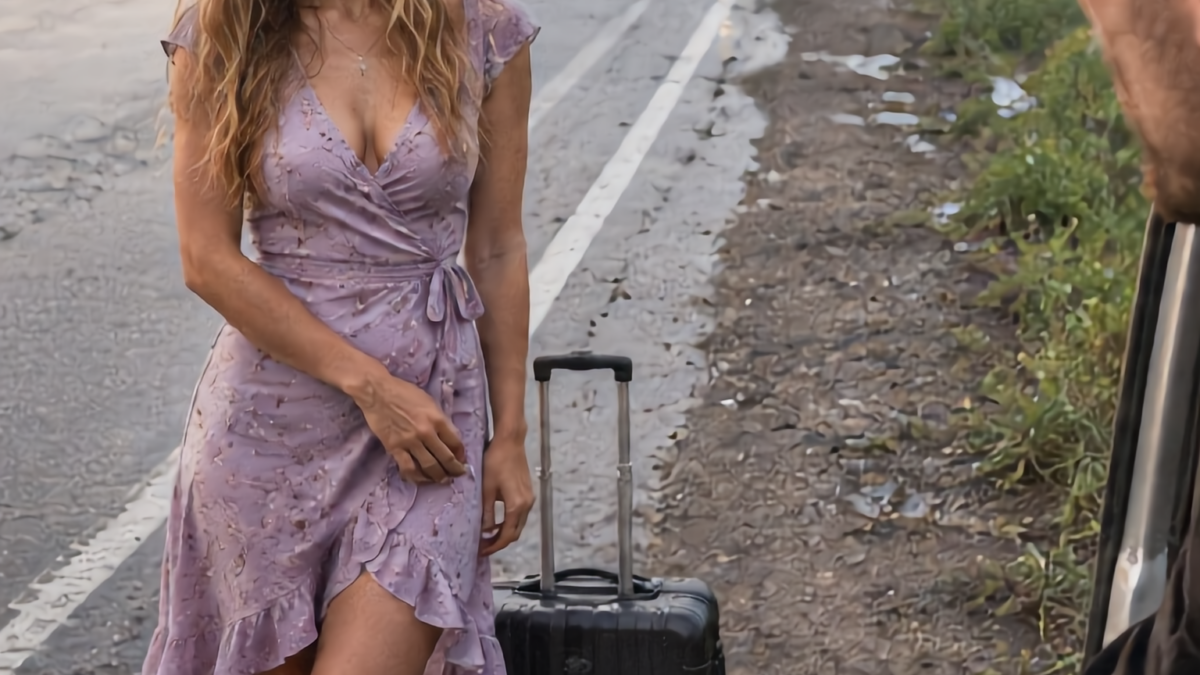
Part 1 — The Man Who Drove Past Twice
I drove past her twice before I stopped.
That needs to be said first, because every version of this story told at family gatherings makes me sound better than I was.
In those versions, I am the man who stopped.
The truth is, I was the man who kept driving twice and then discovered he couldn’t live with himself if he did it a third time.
It was 9:40 on a Tuesday night on Route 6 outside Halbrook.
Eleven miles of two-lane blacktop.
No streetlights.
Almost no shoulder.
Fence lines on both sides and long stretches without a house.
My headlights caught her for maybe two seconds.
A woman walking alone on the gravel.
Backpack.
Dark clothes.
No flashlight.
No reflective vest.
Nothing.
I passed her.
And immediately the machinery in my head began running.
She’s probably fine.
Somebody is coming for her.
Maybe her car is nearby.
You’re a strange man in a pickup at night.
Stopping could frighten her more than helping.
Keep going.
Respect her space.
It took maybe four seconds.
For years, I had called that kind of reasoning respectful.
I eventually learned that sometimes comfort puts on respectable clothes.
My name is Dean Whitlock.
I was thirty-three then and drove regional long haul out of Halbrook.
Four days out.
Three home.
Most weeks I spent more time inside a Peterbilt than I did in my own house.
That night I was off-duty, coming back from my brother’s place in my own truck.
Fourteen minutes after passing the woman, I reached my turn.
I slowed down.
Turn signal blinking.
Then I drove past it.
I wish I could tell you I had made a brave decision.
I hadn’t.
I simply turned around before I could argue myself out of it.
Several minutes later, I saw her again.
Same backpack.
Same steady walk.
She had made maybe half a mile.
This time my headlights caught her face.
She wasn’t crying.
Wasn’t waving cars down.
Wasn’t panicking.
She just looked determined.
And exhausted.
I passed her again.
That is the part everybody leaves out.
I drove another quarter mile before finally pulling onto the gravel.
Sat there with the engine idling.
Then I put the truck into reverse.
Hazards flashing, I backed down the shoulder until I was about sixty feet ahead of her.
I stopped.
Turned on the dome light.
Got out.
And stayed by the front of the truck.
Hands visible.
She stopped thirty feet away.
“Ma’am,” I called. “I’m not coming any closer.”
She didn’t answer.
“You need a ride? Or do you need me to call somebody?”
She looked at me.
Then the truck.
Then my license plate.
“Both, probably.”
Her voice was surprisingly steady.
“My phone’s dead. No signal anyway. My car’s four miles back.”
“Four miles?”
“I’m aware. I walked them.”
“What happened?”
“Alternator, I think. Everything went at once. I got it off the road as far as I could. Hazards were working when I left.”
“You left a note?”
“On the dash.”
That answer told me more about her than I understood at the time.
She had planned.
Even stranded.
Even alone.
She had done every responsible thing available before accepting the possibility that she might need somebody.
“My name’s Dean.”
“Tess.”
“There’s a fire station in Halbrook nine miles ahead. Sheriff’s substation farther in. Gas station too.”
She nodded.
“I can take you to any of them.”
She still didn’t move.
“Or you can sit in the truck bed if that feels safer. I’ll drive slow.”
That finally changed her expression.
Not quite a smile.
Close.
“You practiced this?”
“My sister used to walk home from late shifts.”
Something relaxed in Tess’s shoulders.
“There it is.”
“There what is?”
“Somebody taught you.”
She walked toward the truck.
Before getting in, she pulled out a phone that had apparently retained just enough battery for the camera.
She photographed my plate.
Right in front of me.
“Good,” I said.
She looked at me.
“I know it’s good. I wasn’t asking.”
That was Tess Rhodes.
I did not understand it yet.
I would.
Inside the truck, I handed her a sealed water bottle from the cooler behind my seat.
She examined the cap before taking it.
I noticed.
Didn’t comment.
We pulled back onto Route 6.
After about a mile I asked, “How long were you walking?”
“One hour, fifty minutes.”
I looked at her.
“You walked four miles in the dark for almost two hours?”
“My shoes aren’t designed for speed.”
“That’s not what I meant.”
“I know.”
“How many cars passed you?”
She looked out the passenger window.
“I stopped counting around thirty.”
Something hot moved through me.
“Thirty?”
“It’s a Tuesday.”
“Still.”
“You passed twice.”
That shut me up.
Not accusing.
Just factual.
After another mile I said, “You should be angry.”
“I was for forty minutes.”
“And then?”
“It stopped being useful.”
She held the water bottle between both hands.
“What am I supposed to do with thirty cars, Dean?”
“Be mad.”
“At who?”
“All of them.”
“Why?”
“Because they left you walking.”
“They did the same math you did.”
I glanced over.
She was still looking out the window.
“A woman gets into a strange man’s vehicle on a dark road and statistically that can go badly.”
“That is generous.”
“I’m a nurse.”
“That explains it?”
“Generous interpretations are ninety percent of nursing.”
“And the other ten?”
“Telling people things they don’t want to hear.”
She finally looked at me.
“I’m very good at that too, so don’t relax.”
I laughed.
We drove another mile.
Then she asked, “Do you want to know why I got in?”
“Yeah.”
“The sixty feet.”
I waited.
“You backed up so you were in front of me instead of beside me.”
She turned the bottle slowly.
“You didn’t roll your window down next to me. You got out and stayed by the hood.”
I hadn’t thought about it that precisely.
“And you left the dome light on.”
“So you could see the cab.”
“So I could see nobody else was inside.”
She nodded.
“People don’t accidentally do those things.”
“My sister.”
“Exactly.”
She took another drink.
“Somebody taught you.”
Tess was thirty-one.
ICU nurse at the county hospital.
She had been returning from a hospice visit two towns over when her eleven-year-old Corolla died.
I dropped her at the Halbrook fire station.
Her brother-in-law was on the way.
Before I left, I gave her the rest of the water and a sleeve of crackers from the door pocket.
She accepted because I said, “They’re always there.”
I didn’t know then how important those words would become.
The story should have ended there.
It didn’t.
At six the next morning, I drove back to Route 6.
Her Corolla was still there.
And I hated it.
Bad bend.
Fast traffic.
Too little shoulder.
So I hooked it up and towed it to Corbin’s repair shop in Halbrook.
I knew Corbin.
Left the car in his lot.
Then I called the hospital switchboard and left Tess a message.
She returned the call at two that afternoon.
“You moved my car?”
No hello.
“Morning.”
“You moved my car?”
“I towed it off Route 6.”
“Without asking.”
“Yes.”
“How much?”
“For what?”
“The tow.”
“Nothing.”
Silence.
“Tess, it was four miles and I have a hitch.”
“How much?”
“Nothing.”
Something changed in her voice.
Not anger.
Fear disguised as control.
“Dean.”
I stopped smiling.
“How much do I owe you?”
“You don’t owe me anything.”
“That’s the problem.”
I leaned against my kitchen counter.
“What does that mean?”
A hospital intercom sounded behind her.
“I’m not able to owe people.”
“That sounds exhausting.”
“It is.”
“Then send me what Corbin would charge.”
“Eighty dollars.”
“Fine.”
“I’m serious.”
“So am I.”
Another pause.
“I don’t want your eighty dollars.”
“I know.”
“Then why—”
“Because I’m not having this conversation on a nurse’s station phone.”
“That’s an impressive escalation from towing.”
“It’s the same conversation. You just don’t like where it goes.”
Silence.
Then, to my surprise:
“Dinner Friday?”
“Yes.”
“We split it.”
“Of course.”
“I mean it.”
“I know you do.”
The first three months with Tess were some of the happiest I had experienced in years.
They were also an education.
There were rules.
Nobody gave me a list.
I discovered them by breaking each one.
You did not buy things for Tess casually.
If she had bought the previous coffee, you could buy the next.
If not, no.
You did not fill her gas tank.
You did not grab a bag from her hands simply because it looked heavy.
You did not say, “Let me.”
Week two, she went to the restroom while we were getting coffee.
I paid for hers.
Four dollars.
She came back.
Saw the cup.
Stopped.
Then walked to the counter, bought me another coffee, and placed it in front of me.
“Tess.”
“We’re even.”
“I already have one.”
“We’re even.”
I learned.
Week four, I offered to change her windshield wipers.
“No.”
“Takes ninety seconds.”
“I know how long it takes.”
“I’m just saying—”
“I’ve changed my own wipers since I was nineteen, Dean.”
Something in that sentence closed my mouth.
Week six we were buying dog food for her sister’s mutt.
Tess lifted a forty-pound bag.
“Let me get that.”
She immediately put it down.
Right there in the aisle.
“What?”
“I need you to hear how that sounds.”
“Like I’m offering to carry dog food?”
“No.”
She looked at me.
“‘Let me’ sounds like I was doing it wrong.”
“That’s not what I meant.”
“I know.”
She picked up the bag again.
“I’m telling you what it does.”
“What am I supposed to say?”
“Ask.”
“Ask what?”
“‘Do you want a hand?’”
“That’s the difference?”
“That is the entire difference.”
She shifted the bag against her hip.
“If you ask, I get to answer.”
I have carried that distinction into almost every relationship I have now.
All because of a bag of dog food.
I learned why months later.
Tess’s mother died when Tess was nineteen.
Her father had left years earlier.
Her younger sister, June, was fourteen.
Tess kept the house functioning.
Got June through school.
Put herself through nursing training.
Worked nights.
Raised a teenager while barely past being one herself.
She did not tell the story that way.
If you asked, she said:
“We managed.”
I assembled the rest over time.
One evening in March, while folding laundry, Tess finally explained.
“When Mom died, people kept saying, ‘Call if you need anything.’”
She folded a shirt.
“About nine people.”
“What happened?”
“I called four.”
She matched two socks.
“Two didn’t answer. One sent me the number for a grief hotline.”
“And the fourth?”
“Came over and cried on my couch.”
I looked at her.
“I made her tea.”
She laughed once.
No humor in it.
“I was nineteen. June was fourteen and asleep in the next room.”
She folded another shirt.
“I figured out pretty quickly that asking usually cost more than whatever I was asking for.”
“That’s four people.”
“I know.”
“Out of nine.”
“Yes.”
“You were nineteen.”
“I am aware this was not scientifically rigorous.”
She looked at me.
“I’m telling you what it did. Not what it proved.”
That was Tess.
Exact even about her damage.
The strange breakthrough between us happened because of crackers.
I kept food in my truck.
Crackers.
Jerky.
Bottled water.
Driver habit.
One afternoon, Tess came with me to June’s house after working fourteen hours.
She opened the door pocket searching for a charging cable.
Found the crackers.
She ate half the sleeve without asking.
Then drank water from the cooler.
No hesitation.
No attempt to repay me.
I noticed immediately.
Because the crackers were not for her.
They existed before she arrived.
There was nothing to owe.
So I began stocking the truck differently.
Not obviously.
Never a gift.
Just a cooler that happened to contain water she liked.
A door pocket that happened to contain ginger candy after she once mentioned it helped when she had worked too long without eating.
Crackers.
Jerky.
Fruit sometimes.
I never said anything.
Neither did she.
She ate them.
That became the first uncomplicated way Tess allowed me to care for her.
Months later, June figured out what I was doing.
“Isn’t that exhausting?”
“No.”
“You’re secretly stocking a truck around her food preferences.”
“The exhausting version would be needing her to notice me doing it.”
June stared at me.
Then smiled.
“You might survive.”
In September, I drove Tess to June’s after a night shift.
Nine minutes onto the highway, she reached into the door pocket without looking, took a ginger candy, and kept reading something on her phone.
She didn’t register it as an event.
I spent the next forty miles ridiculously happy.
Three weeks later, same road, opposite direction, she fell asleep in the passenger seat.
Middle of a sentence.
Gone.
Head against the window.
Hands in her lap.
Tess slept for forty minutes.
I lowered the radio.
Took the Corbin exit slowly so the bump wouldn’t wake her.
At a traffic light she opened her eyes.
“Did I fall asleep?”
“Five minutes.”
She looked at the clock.
“Liar.”
Then she turned toward the window.
There was a small expression on her face.
Embarrassed.
Moved.
Afraid.
I did not make her talk about it.
At the time, I thought we were doing well.
Then people at the hospital heard about Route 6.
Nobody knows exactly how.
Halbrook is nine thousand people.
Corbin runs a repair shop and considers confidentiality a theoretical concept.
By October, the story circulating through the ICU was this:
Tess Rhodes had been stranded alone at night.
A trucker had rescued her.
Rescued.
That word did damage.
People were kind.
That made it worse.
Her charge nurse asked about “her hero.”
Somebody bought a card.
Eleven people signed it.
So glad you’re safe.
God was looking out for you.
Tess kept the card.
For reasons I only understood much later.
“Eleven people signed a card about the worst thing that happened to me in four years,” she said.
“And none of them ever asked how I got June through high school.”
There was more.
A nurse named Denise began quietly protecting Tess.
Hard admissions reassigned.
Difficult family meetings handled by someone else.
For twelve years Tess had been the nurse you sent into the worst room because she could handle it.
One broken alternator changed that in two weeks.
“She means well,” I said.
“I know.”
Tess looked exhausted.
“That’s why I can’t fight it.”
Over the next eleven days she drifted away from me.
Friday dinner got postponed.
Then not rescheduled.
Texts became practical.
I knew retreat when I saw it.
On day twelve I drove to her apartment.
Knocked.
She answered but did not invite me in.
“You’ve been avoiding me.”
“I’ve been working.”
“Tess.”
She looked at the floor.
Then finally said it.
“Everybody at that hospital thinks I’m a woman who got rescued.”
“That isn’t what happened.”
“I know exactly what happened.”
Her voice sharpened.
“My car failed. I walked four miles. I assessed a man who stopped sixty feet away and offered me the bed of his truck. I made a reasonable safety decision and accepted transportation.”
“Yes.”
“That’s what happened.”
She looked at me.
“That is not the story anymore.”
I said nothing.
“The story is that I was helpless and some good man saved me.”
“Tess—”
“And I can’t correct them without sounding ungrateful.”
Her eyes finally met mine.
“The longer we’re together, the more that version sets.”
That should have been when I asked:
What do you need from me?
Instead, I decided to fix it.
I thought I was being clever.
For two weeks, I made a point of going to the hospital where people could see Tess helping me.
I brought a DOT physical form and pretended I had questions.
Asked her about my mother’s medication list.
Stopped by the lobby to ask health questions I could easily have answered myself.
My plan was simple.
Rewrite the story.
Make Tess visibly the competent one.
I was proud of myself.
Until the third visit.
She held my DOT form.
Looked at it.
Then at me.
“You don’t need help with this.”
“I had a question.”
“You have been driving commercially for eleven years.”
“Tess—”
“You have had eleven DOT physicals.”
She set the form down.
“What are you doing?”
There was a version where I lied.
I didn’t.
“I’m trying to change the story.”
She stared at me.
“The hospital.”
I continued because I was already committed.
“If people see me coming here asking you for help, eventually the whole rescue thing—”
Tess closed her eyes.
When she opened them, I knew.
“So your solution…”
She spoke carefully.
“…to everybody treating me like somebody who needs managing…”
My stomach dropped.
“…was to manage it for me.”
There was nothing to say.
Because it was exactly what I had done.
Out of love.
Out of loyalty.
Out of a genuine desire to help.
And completely without her permission.
Tess picked up the form.
Handed it back.
“You know what the worst part is?”
“What?”
“I would have helped you.”
I frowned.
“If you had said, ‘Tess, I hate what they’re doing and I don’t know how to make it better,’ I would’ve had four ideas.”
She gave a tired laugh.
“This is literally most of my job.”
“I thought—”
“I know what you thought.”
She stepped closer.
“You didn’t ask me because asking would have required admitting you couldn’t solve it alone.”
She stopped.
Then something changed in her expression.
Recognition.
“Oh.”
“What?”
“That’s what I do.”
Neither of us spoke.
She almost smiled.
“Isn’t it?”
I could have spared her.
Instead I told the truth.
“Yes.”
She nodded.
“You should’ve said that four months ago.”
Then she walked back onto the unit.
And I stood in the hospital lobby realizing the two of us had spent our entire lives making the same mistake in opposite directions.
Tess refused to ask for help.
I refused to ask before giving it.
And neither of us yet understood what that was going to cost.
Part 2 — “I Need Help”
Tess called me at ten that night.
“I’m still angry.”
“I know.”
“I’m not gone.”
I closed my eyes.
“I know.”
“No, you don’t.”
She was right.
For six hours, I had been constructing the ending.
The slow withdrawal.
The polite texts.
The inevitable sentence.
You’re a good man, Dean, but…
“I need you not to do that thing where you decide I’ve left before I’ve left.”
I sat down.
“Okay.”
“I’m going to work tomorrow.”
“Reasonable.”
“You are not coming to the lobby with any forms.”
“Also reasonable.”
“Good night.”
“Tess?”
“What?”
“Thank you for calling.”
A pause.
“Don’t make it sentimental.”
Then she hung up.
November became our month of trying badly.
Knowing what is wrong with you does not automatically produce a replacement behavior.
Tess started saying things like:
“I’m telling you this because I need to complain. I do not want a solution.”
That helped.
I began saying:
“I have an idea. Do you want to hear it?”
That helped more.
It cost me more too.
Because offering a solution was automatic.
Asking permission required stopping.
There was one night in November that changed something important.
A patient coded on Tess’s unit.
Man in his forties.
Children.
It went badly.
She came to my house after shift.
No warning.
She walked into my kitchen, sat on the floor with her back against the dishwasher, and said nothing.
Old Dean would have asked questions.
Made tea loudly.
Touched her shoulder.
Found a job.
Instead, I made tea quietly.
Set a mug within reach.
Sat across from her on the floor.
And shut up.
Twenty minutes passed.
Eventually Tess looked at me.
“This.”
“What?”
“This is the thing.”
I knew.
So I said, “I know.”
“Don’t look pleased with yourself.”
“I am extremely pleased with myself.”
She laughed.
First time in eleven days.
Then December arrived.
And everything cracked.
June’s car transmission failed.
Tess paid for it.
Then the alternator repair on her own Corolla came due.
She had already been paying Corbin in installments.
Money tightened.
Tess took four extra shifts.
Then a fifth.
Sixteen-hour days became eighteen.
Some became twenty.
I watched.
I had enough money to solve the problem.
Easily.
That made doing nothing almost physically painful.
There were nights I sat with my checkbook open.
Eleven hundred dollars would have taken the pressure off immediately.
But I knew Tess.
If I paid Corbin behind her back, we were done.
If I slipped money into her account, we were done.
If I called June, probably done.
So I did the thing that felt most unnatural.
Nothing.
December second, I had a late layover at a truck stop on Route 6.
Eleven at night.
Cold enough that my breath showed.
I was doing a pre-trip inspection beneath sodium lights when a familiar Corolla entered the lot.
Tess parked.
Got out.
Walked toward me.
Hands deep in her coat pockets.
Her face was pale with exhaustion.
I put the flashlight down.
“What happened?”
She stopped maybe sixty feet away.
“I need help.”
I will never forget how she said it.
Not tearfully.
Not softly.
Like reading numbers from a chart.
Deliberate.
Controlled.
I took one step.
She raised a hand.
“I’m not finished.”
I stopped.
“I’ve been standing in my kitchen for two hours getting that sentence out.”
“All right.”
“There’s more.”
I waited.
“I need help, and I’m asking you specifically.”
Her jaw tightened.
“And I’m not going to pay you back immediately.”
The lot seemed incredibly quiet.
“I need you not to make this easy.”
I frowned.
“If you make it easy, then I won’t have actually done it.”
“What do you need?”
“Eleven hundred dollars.”
I nodded.
“A loan.”
“All right.”
“Written terms.”
“If you want.”
“Interest.”
“Tess.”
“Interest.”
I could hear her breathing.
“And you have to say you’ll hold me to it.”
I understood then.
She didn’t need me to erase the debt.
She needed proof that owing me would not become a different kind of relationship.
“Okay.”
She swallowed.
“That’s the money part.”
“There’s another part?”
“The worse part.”
“Say it.”
Her voice cracked.
“I don’t want to be alone in my kitchen at nine at night doing arithmetic anymore.”
Something in my chest folded.
She kept going.
“I’ve been alone since I was nineteen, Dean.”
Tears came.
Tess did not wipe them away.
“I’m tired.”
I didn’t move.
“I am so tired.”
Her voice broke again.
“And you’ve spent four months putting crackers and ginger candy where I could take them without asking.”
I stared at her.
“I noticed.”
She laughed once through the tears.
“I noticed in week five.”
“You never said anything.”
“I couldn’t.”
She looked at me across that parking lot.
“So I’m saying it now.”
My throat tightened.
“Thank you.”
There were approximately sixty feet between us.
Almost exactly what I had left between us the night on Route 6.
I understood suddenly that closing the distance without permission would turn this moment into another version of the same mistake.
So I asked.
“Do you want me to come closer?”
Tess laughed.
Half wrecked.
“You’re going to make me say that too?”
“Yes.”
She closed her eyes.
Then nodded.
“Come here.”
I crossed the lot.
What happened next was not careful.
Tess grabbed the front of my jacket before I had fully reached her.
She kissed me hard enough that I stumbled half a step.
She was crying.
I was probably crying too.
At some point the flashlight rolled away.
Neither of us cared.
That kiss did not feel like the beginning of something.
It felt like Tess setting down a weight she had been carrying since nineteen.
Later, in the cab of my truck, I pulled out a fuel receipt.
“Eleven hundred.”
“With interest.”
“Four percent.”
“That’s barely interest.”
“It’s my rate.”
“Dean.”
“Take it or leave it.”
She smiled.
“You said you’d hold me to it.”
“I will.”
We wrote the terms on the back of that receipt.
Payment schedule.
Interest.
Both signatures.
Midnight.
Truck stop.
Possibly the least romantic financial agreement ever created.
Tess repaid every dollar in seven months.
When she made the final payment, she made me sign again.
PAID IN FULL.
I kept the receipt.
After that, Tess began learning to ask the way somebody learns a second language late in life.
Correctly.
Slowly.
With concentration.
Sometimes hilariously.
She would appear in a doorway and announce:
“I am about to request assistance.”
Then ask me to reach something from a shelf.
Or:
“This is not an emergency and I am not in distress, but will you drive me to June’s?”
“Sure.”
“I’m practicing.”
“I know.”
I practiced too.
My favorite sentence became:
“Do you want help with that, or company while you do it?”
Tess eventually taught it to two junior nurses.
We spent Christmas at June’s.
June listened to the story.
Then looked at her sister.
“Oh, thank God.”
Tess frowned.
“What?”
“You have been unbearable since October.”
That was when I knew June and I would be fine.
The hospital eventually got bored of the roadside story.
Hospitals generate new stories constantly.
Denise stopped quietly protecting Tess after Tess finally told her:
“I appreciate what you’re trying to do. Give me my difficult patients back.”
It wasn’t clean.
Wasn’t dramatic.
But it worked.
By spring, Tess was herself again.
Or maybe something new.
Stronger in a different direction.
Not because she had become more self-sufficient.
She had always possessed more self-sufficiency than anyone needed.
Because she had begun to understand that accepting help did not automatically surrender control.
And I had begun to understand that helping somebody without allowing them a choice was not always generosity.
Sometimes it was simply control with kinder intentions.
In July, I asked Tess to marry me.
I chose Route 6.
Mile marker 47.
Exactly where I had finally pulled over two years earlier.
Getting her there required lying.
“I think the truck’s making a noise.”
“What kind?”
“Engine.”
“That is not a kind.”
“Just listen.”
I pulled over.
Tess got out.
Raised the hood.
Leaned over.
After thirty seconds she looked at me.
“There is nothing wrong with this truck.”
“No.”
“You lied about a mechanical failure.”
“Yes.”
She straightened.
“Dean, that is possibly the least romantic setup anyone has ever—”
Then she saw my face.
Stopped.
I had the ring in my hand.
My hands were shaking.
“Tess.”
She looked at the road.
Then at me.
“I drove past you twice.”
Her expression changed.
“I have thought about that almost every day for two years.”
“Dean—”
“I know I eventually turned around.”
I took a breath.
“But everything good in my life now exists because of the fourteen minutes between deciding to keep driving and deciding I couldn’t.”
Her eyes filled.
“I don’t want to be the man who keeps driving.”
I held out the ring.
“Not with you.”
She covered her mouth.
“Marry me.”
“Yes.”
Immediate.
No hesitation.
Then she threw both arms around my neck.
Her hands had engine grease on them from inspecting an engine that was not broken.
She got grease across my cheek.
Across the ring.
Across my shirt collar.
A Buick slowed while we were standing there.
The driver rolled down his window.
“You folks need help?”
Tess laughed into my shoulder.
I looked at her.
She looked at me.
Then she called back:
“No, thank you.”
A pause.
“We’re good.”
Part 3 — The Quarter Mile
We married the following September in June’s backyard.
Small.
About thirty people.
Denise came.
Corbin came and was specifically instructed not to tell stories involving customers.
My brother ignored that instruction completely.
June gave the shortest toast.
Two sentences.
“My sister spent twelve years making sure nobody ever had to stop for her.”
She raised her glass.
“Dean stopped anyway, then spent four months waiting for her to say he could come closer.”
Tess cried.
Denied it afterward.
The hospital story changed too.
Not because I changed it.
That mattered.
At the wedding, Denise found Tess in the kitchen.
Later, Tess told me what happened.
“I’ve been meaning to apologize,” Denise said.
“For what?”
“When the car thing happened, I started giving your hard cases to other nurses.”
“I know.”
“I thought I was helping.”
“I know.”
“I made a decision about you without asking.”
Tess could have done what old Tess always did.
Say:
It’s fine.
Meaning:
Never mention this again.
Instead she said:
“It wasn’t fine.”
Denise nodded.
“Thank you for telling me.”
Then Tess added:
“Give me the hard rooms back.”
The cooler is still behind the seat of my truck.
Different cooler.
The original cracked.
Same idea.
Water.
Crackers.
Jerky.
Ginger candy.
I still don’t announce what’s inside.
Tess still reaches into it without asking.
That remains one of my favorite things.
She keeps a cooler in her own car now.
Same supplies.
I noticed one afternoon.
“Since when?”
“Since whenever.”
“For you?”
She gave me a look.
“No.”
“Who’s it for?”
“Whoever ends up in the passenger seat.”
She closed the trunk.
“You never know.”
Then, two Novembers ago, Tess was driving home in heavy rain when she passed a teenager walking a bicycle with a flat tire.
Six miles from town.
She drove past.
Quarter mile.
Then turned around.
She told me that night while we washed dishes.
“I went past him.”
“I know.”
“You don’t know. You weren’t there.”
“I went past you twice.”
“That is not comforting.”
“It isn’t supposed to be.”
I handed her a plate to dry.
“Everybody gets a quarter mile.”
She looked at me.
“The question is what you do at the end of it.”
She had turned around.
Put the boy’s bicycle in her trunk.
Fed him crackers from the emergency box.
Drove him fourteen miles home.
His mother tried to give Tess forty dollars at the door.
And my wife—the woman who once tried to send me eighty dollars because she could not tolerate owing anyone for a four-mile tow—looked at that mother and said:
“No.”
The woman insisted.
Tess shook her head.
“Somebody did it for me.”
That is the version of the story I like best.
Not that I stopped.
I almost didn’t.
Not that Tess learned to accept help.
Sometimes she still struggles.
Not that I learned how to give it.
I still get things wrong.
The part that matters is the quarter mile.
That short distance between the person you have been and the person you still have time to become.
Sometimes you keep driving.
Sometimes you turn around.
And sometimes, if you are very lucky, someone who once needed you to stop becomes the person who stops for somebody else.








