I stood at the altar surrounded by a thousand white roses, waiting for the woman I thought I would spend the rest of my life with.
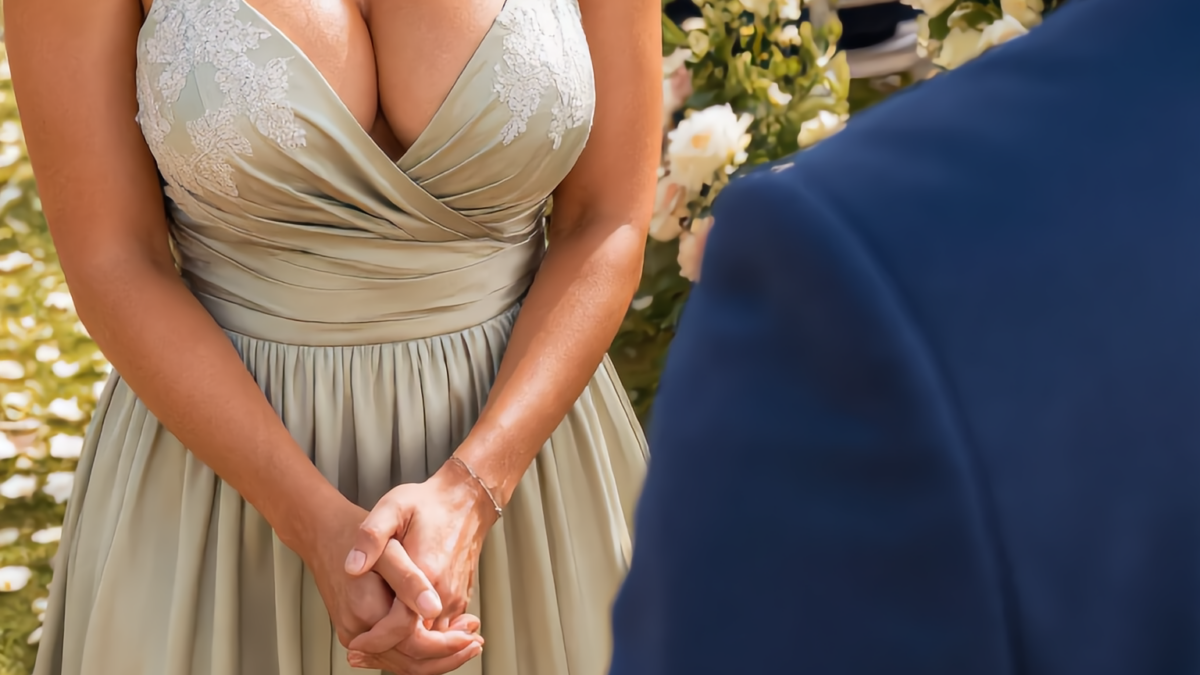
PART 1 — THE WOMAN WHO NEVER WALKED DOWN THE AISLE
The church bells were still ringing when I understood that my bride was not coming.
At first, I refused to believe it.
There are certain truths the mind rejects because accepting them would require an entirely different version of reality.
That morning, my reality contained one thousand white roses.
It contained polished oak pews filled with relatives and old friends.
It contained sunlight pouring through stained-glass windows, scattering red and gold across the stone floor.
It contained a string quartet playing the song Serafina had chosen six months earlier because she said it sounded like the beginning of something permanent.
And at the center of all of it stood me.
Thirty-two years old.
Wearing a dark suit my father had helped me choose.
Waiting for the woman I had loved for three years to walk toward me.
Five minutes passed.
Then seven.
Then ten.
The violinists finished the processional and looked uncertainly at one another.
Whispers spread through the church.
Someone coughed.
A baby began crying three rows from the back.
I kept staring at the wooden doors.
Any second, I thought.
Any second they would open.
Serafina would appear.
There would be some ridiculous explanation about a torn dress or missing earring or malfunctioning zipper. Everyone would laugh later. We would tell the story at anniversaries.
Remember when you made me wait fifteen minutes at the altar?
I could almost hear her laughing.
Then I saw her mother.
Mrs. Valez was standing beside the entrance to the side corridor.
And she was crying.
Not the delicate tears mothers cry at weddings.
She was covering her mouth with one trembling hand while Serafina’s father held her shoulders.
That was when something cold began spreading through my chest.
The wedding planner hurried toward me.
“Callan.”
I barely heard her.
“Where is she?”
The woman stopped.
Her expression answered before she did.
“I think Maribel should explain.”
Then Serafina’s younger sister stepped through the side door.
Maribel had been the maid of honor.
She wore a pale blue dress Serafina had chosen herself. Her dark hair was pinned loosely behind her head, though several strands had fallen free.
She was carrying a bouquet of white lilies.
Or what remained of one.
Her fingers had crushed the stems so tightly that several flowers hung broken against her wrist.
But I barely noticed.
I was looking behind her.
“Where’s Serafina?”
Maribel stopped in front of me.
Her eyes were red.
“Callan…”
“Where is she?”
She looked down.
And I knew.
“No.”
“I’m sorry.”
“No.”
“She left.”
The church around us seemed to disappear.
“What do you mean, left?”
“Through the service entrance.”
“Where?”
“I don’t know.”
“You were with her.”
“Yes.”
“So where did she go?”
“She wouldn’t tell me.”
I stared at her.
“You’re her sister.”
“I know.”
“Then call her.”
“I have.”
“Call again.”
“Callan—”
“Call her again.”
My voice echoed through the church.
Everyone heard it.
Maribel flinched.
That was when I noticed the folded piece of paper in her hand.
I looked at it.
Then at her.
“What is that?”
She hesitated.
I grabbed it.
The note was written on stationery from the bridal suite.
Serafina’s handwriting.
Only one sentence.
I’m sorry. I can’t marry you.
Nothing else.
No explanation.
No accusation.
No goodbye.
I read it twice.
Then a third time.
Somewhere behind me, my father said my name.
I didn’t answer.
I looked at the flowers.
At the candles.
At the wedding cake visible through the reception-room doors.
At nearly two hundred people who had traveled from four states to celebrate the beginning of a marriage that apparently had never existed anywhere except inside my own head.
Humiliation arrived before grief.
It burned through me.
Then anger.
Then something worse.
Confusion.
Because only twelve hours earlier, Serafina had called me.
She had told me she loved me.
She had said she couldn’t wait to see me.
I remembered smiling into the darkness of my apartment while holding the phone against my ear.
Tomorrow, I had told her, everything begins.
Now tomorrow had arrived.
And everything had ended.
I walked away from the altar.
“Callan,” Maribel said.
I kept walking.
She followed me through a side corridor and into the small courtyard behind the church.
The music had stopped.
I loosened my tie.
“Did you know?”
Maribel froze.
I turned toward her.
“Did you know she was going to leave?”
“No.”
“But you knew something.”
She didn’t answer.
“Maribel.”
Her face crumpled slightly.
“I knew she was afraid.”
“Afraid of what?”
“Marriage.”
I laughed once.
There was no humor in it.
“She planned a wedding for eleven months.”
“I know.”
“She chose the house with me.”
“I know.”
“She picked names for children.”
“I know.”
“Then what exactly are you telling me?”
Maribel swallowed.
“For the last few weeks, she kept saying she felt trapped.”
The word struck harder than I expected.
“Trapped.”
“Not by you.”
“That’s convenient.”
“Callan—”
“Did she say that?”
“No.”
“Then don’t protect me.”
“I’m not.”
“Did she love me?”
Maribel’s silence lasted too long.
I looked away.
That hurt more than the note.
“She did,” Maribel said quickly. “I believe she did.”
“You believe.”
“She loved you. But loving you and being ready for the life she promised you weren’t the same thing.”
“Why didn’t she tell me?”
“Because she was afraid you would hate her.”
I looked toward the stained-glass windows.
“She found a more efficient method.”
Maribel wiped tears from her face.
“I tried to make her talk to you.”
“When?”
“For weeks.”
“And when she refused?”
“I thought she’d go through with it.”
“Exactly.”
She stared at me.
“What was I supposed to do? Destroy my sister’s wedding because she was scared?”
“Maybe.”
“I didn’t know she would run.”
“But you knew I was walking toward a marriage with someone who wasn’t sure she wanted it.”
The accusation landed.
Maribel lowered her head.
“Yes.”
That single word severed something between us.
I walked past her.
She caught my wrist.
“Callan, wait.”
I pulled away.
“I can’t look at you right now.”
“I understand.”
“No. You don’t.”
Her eyes filled again.
“You’re right.”
I should have left.
Instead, maybe because I was angry enough to want somebody else to hurt, I said, “How could all of you stand there and watch me make a fool of myself?”
Maribel went completely still.
“All of us?”
“You knew. Maybe her mother knew. Maybe everyone knew except me.”
“That isn’t true.”
“Then what is true?”
For several seconds, she said nothing.
Then her expression changed.
It was subtle.
But I saw it.
Fear disappeared.
Something else replaced it.
Resolve.
“There’s something I need to tell you.”
“Not today.”
“It has to be today.”
“No, it doesn’t.”
“Yes.”
Her voice was shaking.
“Because after today, I probably won’t have the courage.”
I stared at her.
Maribel stepped closer.
“I have loved you for almost two years.”
I thought I had misunderstood her.
“What?”
“I never told you.”
She spoke faster now, as though the words had been trapped for too long.
“I never touched you. I never flirted with you. I never tried to interfere. You loved my sister, and she loved you, and that was enough. So I stayed out of it.”
I stepped back.
“Stop.”
“I need you to know.”
“Your sister just abandoned me at our wedding.”
“I know.”
“And you’re telling me you love me?”
“I’m not asking you for anything.”
“This is insane.”
“I know how it sounds.”
“No. You don’t.”
“I do.”
“Then why say it?”
Her voice dropped.
“Because when Serafina told me this morning that she couldn’t do it, I realized something terrible.”
I stared at her.
“I was relieved.”
Maribel covered her mouth as if ashamed of the confession.
“I hated myself for it. I still do.”
I didn’t know what to say.
She lowered her hand.
“For one second, Callan, I thought about what it would be like if you weren’t hers anymore.”
“Maribel.”
“I know.”
“No.”
“I’m not asking you to choose me today.”
“There is no choice.”
“I know.”
“Then stop.”
She nodded.
But before turning away, she whispered the sentence I would remember for the rest of my life.
“If one day you can look at me and see me—not her sister, not the woman standing here after Serafina left—just me…”
Her eyes held mine.
“I would marry you.”
My breath caught.
Maribel’s voice broke.
“But only if you’re willing.”
I walked away without answering.
By sunset, the wedding had been dismantled.
The caterers packed untouched food into vans.
The florist removed hundreds of roses.
My mother cried in the parking lot.
My father put one hand on my shoulder and said nothing.
That silence saved me.
I couldn’t survive sympathy.
Over the next six months, I tried to erase the entire Valez family from my life.
I moved out of the apartment Serafina and I had shared while renovating our house.
I stopped answering mutual friends.
I boxed up photographs.
I returned wedding gifts.
The house remained mine because I had bought it before our engagement.
But I couldn’t live there.
Not yet.
The place contained too many ghosts.
So I stayed in a one-bedroom apartment across town and spent nearly every waking hour working.
I was a landscape architect.
Before the wedding, I had loved creating beautiful places.
Afterward, work became anesthesia.
I designed parks, courtyards, rooftop gardens.
I chose trees that would bloom ten years after I planted them.
I planned beauty for strangers while refusing to imagine anything good in my own future.
Sometimes I visited the house.
Mostly for the garden.
Behind it stood the young maple tree I had planted the previous spring.
Serafina and I had once talked about children playing beneath it.
After she left, I nearly cut it down.
One Sunday morning I stood beside it with a pruning saw.
I couldn’t do it.
The tree hadn’t betrayed anyone.
So I kept it.
Winter arrived early that year.
Then my father had a minor heart attack.
He survived.
The doctors said his prognosis was good.
But hospitals strip away illusions.
For three nights I slept in a chair beside his bed.
On the fourth morning, when I finally went home, two grocery bags sat outside my apartment.
Soup.
Coffee.
Bread.
Fruit.
My father’s favorite tea.
There was no note.
But I knew.
I called Maribel for the first time in six months.
She answered after one ring.
“Callan?”
“Did you leave groceries?”
Silence.
“Yes.”
“Why?”
“I heard about your father.”
“From who?”
“My mother.”
“You didn’t have to do that.”
“I know.”
“Then why?”
“Because hospitals are terrible places to remember to eat.”
I closed my eyes.
“Maribel.”
“I don’t expect anything.”
“I know.”
“I won’t bother you again.”
She hung up before I could answer.
My father recovered.
Life continued.
Then, in late February, a storm tore across the county.
Rain fell for twelve straight hours.
Branches shattered power lines.
Half the cedar fence behind my house collapsed.
When I arrived the next morning, I found three flower beds destroyed and the young maple leaning at an angle.
I stood in the mud staring at it.
For some reason, that nearly broke me.
Not the wedding.
Not the apartment.
Not the returned gifts.
The tree.
I grabbed a shovel.
I worked for twenty minutes before hearing footsteps.
Maribel appeared through the broken gate.
She wore old jeans, muddy boots, and a rain jacket.
“What are you doing here?”
She held up a pair of work gloves.
“Helping.”
“I didn’t ask.”
“No.”
“How did you know?”
“Your father.”
I almost laughed.
“You two have apparently formed an intelligence network.”
“He’s surprisingly easy to bribe with lemon pie.”
Despite myself, I smiled.
It was the first time she had seen me smile since the wedding.
Something changed in her face.
She noticed.
But she didn’t mention it.
She simply picked up the second shovel.
We worked for five hours.
She didn’t discuss Serafina.
She didn’t mention her confession.
She didn’t ask about my grief.
She just stayed.
When the maple was upright again, we tied it to two stakes.
I stepped back.
Maribel wiped mud from her cheek.
“Think it’ll survive?”
“I don’t know.”
“That’s not a very inspiring answer from a landscape architect.”
“Trees don’t care whether we’re inspired.”
She laughed.
I had forgotten her laugh.
Serafina’s laugh had always been bright and musical.
Maribel’s was quieter.
Warmer.
I hated myself for noticing the difference.
“You should go,” I said.
The smile vanished.
“Okay.”
She gathered her gloves.
“Maribel.”
She stopped.
“Thank you.”
Her expression softened.
“You’re welcome.”
Then she looked toward the maple.
“Callan… there’s something else.”
My stomach tightened.
“What?”
She stared at the ground.
For the first time all day, she looked frightened.
“Serafina called me last night.”
I said nothing.
“She’s coming home.”
Every muscle in my body went rigid.
“When?”
Maribel lifted her eyes to mine.
“Tomorrow.”
The wind moved through the damaged garden.
A broken branch fell somewhere behind us.
And suddenly the wound I had spent six months trying to close ripped open all over again.
Because I realized something I had never been willing to admit.
Part of me still wanted to see Serafina.
And another part of me was terrified of what that would do to the woman standing in front of me.
PART 2 — THE DIFFERENCE BETWEEN MEMORY AND LOVE
Serafina came to my house at four o’clock the next afternoon.
I knew the exact time because I had been staring at the clock since noon.
I told myself I didn’t care.
I reorganized tools in the garage.
I answered emails.
I trimmed branches that didn’t need trimming.
At 3:57, I was standing at the kitchen window.
At 4:02, a gray sedan stopped outside.
Serafina stepped out.
For six months, I had imagined this moment.
Sometimes I pictured screaming at her.
Sometimes I imagined refusing to open the door.
On my worst nights, I imagined her asking forgiveness, throwing her arms around me, and somehow restoring the life we’d lost.
But when I saw her walking toward the house, I felt none of those things.
I felt tired.
She looked different.
Her hair was shorter.
She wore jeans and a cream-colored sweater.
No makeup.
No jewelry except the small silver bracelet her grandmother had given her.
For a moment, I saw the woman I had fallen in love with.
Then I saw the empty church.
I opened the door before she knocked.
“Hi,” she said.
“Hi.”
Neither of us moved.
“Can I come in?”
I stepped aside.
She noticed immediately that the house had changed.
The photographs were gone.
So were the curtains she’d chosen.
The blue armchair she loved had been moved into storage.
The space no longer looked like the beginning of our marriage.
It looked like mine.
Serafina swallowed.
“I wasn’t sure you’d see me.”
“I wasn’t sure either.”
We sat across from each other at the kitchen table.
For several seconds, neither spoke.
Then she said, “I’m sorry.”
I laughed under my breath.
Her face tightened.
“I know that isn’t enough.”
“No.”
“I don’t think anything will ever be enough.”
“Probably not.”
She nodded.
There was no argument in her.
That made it harder.
“Why did you come?”
“Because I owed you the truth.”
“You owed me that six months ago.”
“I know.”
“Actually, you owed me the truth before I stood in front of two hundred people waiting for you.”
“I know.”
“Stop saying that.”
She looked down.
“Then tell me what you want me to say.”
“I want to know why.”
Serafina stared at her hands.
“When you asked me to marry you, I was happy.”
“Clearly.”
“I was.”
Her voice cracked.
“I loved you. I still care about you deeply.”
“But?”
“But the closer the wedding got, the more terrified I became.”
“Of me?”
“No.”
“Of marriage?”
“Of disappearing.”
I frowned.
She struggled for the words.
“You had a picture of our future.”
“We both did.”
“No.”
That stopped me.
Serafina looked up.
“You had a picture. And I kept agreeing with it.”
I felt anger rising.
“The house?”
“Your dream.”
“The garden?”
“Mostly yours.”
“Children?”
She looked away.
That answer was worse than words.
“You told me you wanted children.”
“I thought I did.”
“You thought?”
“I wanted to want everything you wanted.”
I stood.
“Do you understand how cruel that sounds?”
“Yes.”
“You let me build a future around answers you didn’t mean.”
“I meant them when I said them.”
“That’s impossible.”
“No, it isn’t.”
She stood too.
“I loved making you happy, Callan. Every time you described our future, you looked so certain. And I loved being part of that certainty.”
“But you weren’t.”
“No.”
The room went quiet.
“Why didn’t you tell me?”
“Because every person in my life was excited for us. My parents. Your parents. Our friends. You.”
“So you ran.”
“Yes.”
“On the wedding day.”
Tears appeared in her eyes.
“Yes.”
“Do you know what that did to me?”
“I think about it every day.”
“No. You don’t get to say that like your guilt equals my humiliation.”
“You’re right.”
“People looked at me like I had been defective somehow. Like there had to be a reason my bride couldn’t go through with marrying me.”
“I never told anyone it was because of you.”
“You didn’t tell anyone anything.”
Serafina flinched.
I immediately regretted the cruelty.
But not enough to apologize.
Then she said something unexpected.
“Maribel tried to stop me.”
I froze.
“What?”
“That morning.”
“She told me she didn’t know you were going to run.”
“She didn’t.”
Serafina shook her head.
“She thought I was going to walk down the aisle and destroy both our lives.”
I sat again.
“Explain.”
“She begged me to tell you the truth. She told me that marrying you out of fear would be worse than humiliating everyone by canceling.”
I remembered accusing Maribel of protecting her sister.
All of you watched me make a fool of myself.
Shame crawled through me.
Serafina looked toward the back garden.
“She was furious with me.”
“I know.”
“Do you?”
I looked at her.
Serafina hesitated.
“She loves you.”
My jaw tightened.
“She told me.”
“At the wedding?”
“Yes.”
Serafina closed her eyes.
“Oh, Maribel.”
“What?”
“Nothing.”
“What?”
She shook her head.
“She has loved you longer than you realize.”
I didn’t want to hear it.
“That’s between me and her.”
Serafina studied my face.
Something passed through her expression.
Understanding.
“You’re starting to love her.”
“No.”
The answer came too quickly.
Serafina almost smiled.
It wasn’t mocking.
It was sad.
“I know you, Callan.”
“You knew me so well you left me at an altar.”
“I deserved that.”
She stood.
I expected anger.
Instead, she walked toward the door.
“I’m leaving again.”
I looked up.
“For how long?”
“I don’t know. Maybe permanently.”
“Where?”
“Seattle. I found work there.”
I nodded.
At the door, she turned back.
“I didn’t come to ask you to forgive me.”
“Good.”
“I came because I didn’t want you spending another year thinking you failed me.”
My throat tightened.
“You didn’t.”
She opened the door.
“I failed to tell you who I really was because I was afraid you wouldn’t love that person.”
I stared at her.
Then she added quietly, “Maribel never does that.”
The door closed behind her.
For a long time, I sat alone.
That evening, I drove to Maribel’s apartment.
She opened the door wearing pajama pants and an oversized sweater.
Her eyes widened.
“Callan?”
“You lied to me.”
Her expression changed.
“About what?”
“You told me you should have warned me.”
“I should have.”
“Serafina said you begged her to tell me.”
Maribel looked away.
“That doesn’t change anything.”
“It changes something.”
“Callan—”
“Why did you let me blame you?”
She crossed her arms.
“Because you needed someone who was still there.”
The answer disarmed me.
“What?”
“Serafina was gone. You couldn’t yell at her. You couldn’t demand answers. You couldn’t tell her how much she’d hurt you.”
“So you volunteered?”
“No.”
She looked exhausted.
“But when you were angry with me, at least you weren’t alone.”
I had no answer.
Maribel stepped into the hallway and closed the apartment door behind her.
“You shouldn’t be here.”
“Why?”
“Because you just saw her.”
“So?”
“So whatever you’re feeling right now isn’t reliable.”
“That’s a hell of a thing to say.”
“It’s true.”
“I came here to apologize.”
“Then apologize.”
“I’m sorry.”
She blinked.
“Okay.”
“For blaming you.”
She nodded.
“For avoiding you.”
“That part was probably wise.”
“For thinking the worst of you.”
“You were grieving.”
I stared at her.
“And thank you.”
Her expression softened.
“For what?”
“For not trying to use any of this.”
She looked almost offended.
“Callan.”
“I know.”
“No, I don’t think you do.”
She stepped closer.
“I love you. That’s exactly why I would never want you because you’re broken enough to say yes.”
The sentence hit me in the chest.
Maribel continued.
“If you ever choose me, I need it to be when you could walk away and be completely fine without me.”
“That’s a pretty difficult standard.”
“Good.”
Something unexpected happened then.
I laughed.
A real laugh.
Maribel smiled.
And for one dangerous second, I wanted to kiss her.
She must have seen it in my face.
Her smile disappeared.
We stood inches apart.
I could hear her breathing.
She whispered, “Don’t.”
“Why?”
“Because you saw Serafina today.”
“That doesn’t mean—”
“It means today isn’t ours.”
Those four words stayed with me.
Today isn’t ours.
I stepped back.
“Good night, Maribel.”
“Good night, Callan.”
Three months passed.
Then another three.
Maribel and I became something neither of us named.
Friends was too simple.
Lovers would have been dishonest.
We had dinner sometimes.
We visited my father.
We rebuilt the garden.
Maribel hated mushrooms, loved old mystery novels, sang terribly in the car, and could not reverse into a parking space without turning a three-point maneuver into a military operation.
I discovered these things slowly.
They mattered because none of them belonged to Serafina.
The more I knew Maribel, the less I compared them.
One June evening, almost a year after the wedding, we sat beneath the maple tree.
New leaves covered its branches.
The storm damage was barely visible.
Maribel leaned against the trunk.
“You saved it.”
“We saved it.”
She smiled.
I looked at her.
Really looked.
For the first time, I understood why she had been so patient.
She hadn’t been waiting for me to stop loving Serafina.
She had been waiting for me to discover who I was after Serafina.
There was a difference.
“Maribel.”
“Hmm?”
“Do you still mean it?”
Her smile faded.
“Mean what?”
“What you said at the church.”
Color drained from her face.
“Callan.”
“Do you?”
She looked toward the garden.
“Yes.”
My heart began beating harder.
“Even now?”
“Yes.”
I moved closer.
“But I’m not asking you to marry me.”
She blinked.
“Good.”
I laughed.
“That was fast.”
“You terrified me.”
“I’m asking if you’ll have dinner with me.”
“We have dinner all the time.”
“No.”
She stared.
I took her hand.
“I’m asking if you’ll go on a date with me.”
Maribel stopped breathing.
“A real one?”
“A real one.”
“No pity?”
“No.”
“No rebound?”
“No.”
“No pretending I’m someone else?”
I squeezed her fingers.
“Especially that.”
Tears filled her eyes.
Then she smiled.
“Friday?”
“Friday.”
She leaned toward me.
Then stopped.
“So… can I kiss you?”
I thought about the woman who had refused to kiss me six months earlier because the moment didn’t belong to us.
And I knew.
Now it did.
“Yes.”
Our first kiss happened beneath the maple tree.
It wasn’t dramatic.
There was no music.
No audience.
No white roses.
Just evening sunlight, warm air, and the quiet realization that sometimes the beginning you never planned becomes the beginning you should have waited for.
PART 3 — THE WEDDING WE CHOSE
Dating Maribel was nothing like loving Serafina.
At first, that frightened me.
Then I understood why.
With Serafina, I had always been racing toward the future.
The house.
Marriage.
Children.
Anniversaries.
The next step.
With Maribel, we learned to stay where we were.
We had terrible dates.
Our second ended with food poisoning.
Our fifth involved a flat tire in the rain.
On our first weekend trip, I discovered she snored when exhausted, and she discovered I became irrationally angry when hotel curtains failed to close completely.
We argued.
That mattered too.
Maribel disagreed openly.
If she hated an idea, she said so.
If I made assumptions about what she wanted, she corrected me.
Once, after I began discussing where we might live someday, she interrupted me.
“Callan.”
“What?”
“You just designed our entire kitchen without asking whether I want to live in your house.”
I froze.
Old fear returned instantly.
“Do you not?”
“I don’t know.”
That answer would once have terrified me.
Instead, I nodded.
“Okay.”
She studied me.
“Okay?”
“Think about it.”
A smile appeared.
“Look at you growing emotionally.”
“Don’t ruin the moment.”
She kissed my cheek.
A year later, Maribel moved into the house.
Not because it had once been meant for Serafina.
Because together, we had changed it.
Maribel painted the kitchen green.
We turned one bedroom into her office.
She planted lavender beside the porch.
And beneath the maple tree, we placed a wooden bench.
Two years after our first date, I asked her to meet me there just before sunset.
When she came outside, she immediately narrowed her eyes.
“Why are you wearing a jacket?”
“I own jackets.”
“You hate that jacket.”
“I do not hate this jacket.”
“You said it makes you look like a divorced accountant.”
“That is not relevant.”
Her eyes widened.
“Oh my God.”
I laughed.
“Maribel.”
She covered her mouth.
I knelt.
There were no guests.
No musicians.
No flowers except those growing naturally in the garden.
I held out a small ring.
“Two years ago, you told me you would marry me if I was willing.”
She was already crying.
“I remember.”
“I wasn’t willing then.”
“I know.”
“I was angry. Humiliated. Lost.”
She nodded.
“And you never tried to fix me.”
Her tears fell.
“You just stayed close enough that I could find my own way back.”
I looked toward the maple branches above us.
“This tree was supposed to represent one future.”
Maribel followed my gaze.
“It survived losing that future.”
I looked at her again.
“So did I.”
She pressed both hands over her mouth.
“I don’t want you because somebody else left.”
My voice shook now.
“I don’t love you because you rescued me.”
I stood and took her hand.
“I love you because you challenge me. Because you’re honest when honesty is inconvenient. Because you make terrible coffee and steal my pillows and refuse to pretend that love means wanting all the same things.”
She laughed through tears.
“And because when I imagine growing old now…”
I smiled.
“I don’t imagine a house or a garden or some perfect picture.”
I touched her cheek.
“I imagine you.”
Maribel cried openly.
“So, Maribel Valez…”
I held up the ring.
“Are you willing?”
She laughed.
That warm, quiet laugh I had first relearned in a storm-damaged garden.
“Yes.”
Then she kissed me before I could put the ring on her finger.
Our wedding happened the following spring.
Small.
Forty-two guests.
No cathedral.
No enormous reception.
Just the garden.
My father walked slowly with a cane but refused to sit during the ceremony.
Maribel’s parents cried.
The young maple had grown tall enough to cast shade over half the chairs.
There was one person missing.
Serafina.
Three days before the wedding, a letter arrived from Seattle.
Maribel asked whether I wanted to read it.
I did.
Dear Callan,
I don’t know whether I have any right to write to you on a week that should belong completely to you and Maribel.
But there is something I want you both to know.
For a long time, I believed leaving that church was the cruelest thing I had ever done.
Maybe it was.
I hurt you.
I embarrassed my family.
And I left Maribel standing in the middle of damage she didn’t create.
I will always regret that.
But I no longer regret refusing to marry you.
Not because you would have been a bad husband.
You would have been a wonderful one.
That was part of what made me so afraid.
I knew you would give everything to the life we were building.
And somewhere deep inside, I knew I could not do the same.
You deserved the truth sooner.
So did Maribel.
So did I.
She told me months ago that you were together.
I cried.
Not because I wanted you back.
Because for the first time, I understood that the story didn’t end when I left.
It simply stopped being my story.
Please tell my sister that I love her.
Please tell her I am proud of her for loving you honestly in the way I was too afraid to.
And Callan…
Thank you for eventually allowing me to become something other than the worst thing I ever did to you.
I hope you both build something beautiful.
Serafina.
When I finished, Maribel was crying.
I folded the letter.
“Are you okay?”
She nodded.
“Are you?”
I looked toward the maple tree.
“Yeah.”
And I meant it.
On our wedding day, I stood beneath that tree.
There was no fear this time.
No uncertainty hiding beneath beautiful decorations.
When Maribel walked toward me, she didn’t look like someone stepping into another woman’s place.
She looked entirely, unmistakably herself.
Halfway down the aisle, she started crying.
Then I started crying.
My father whispered loudly enough for everyone nearby to hear, “Both of you need to get yourselves together.”
People laughed.
Maribel reached me.
I took her hands.
“You came.”
She raised an eyebrow.
“That joke is in extremely poor taste.”
I laughed.
Then our officiant began.
We didn’t promise perfection.
We didn’t promise never to disappoint each other.
We promised honesty.
Even uncomfortable honesty.
We promised to ask instead of assume.
To speak instead of hide.
To choose each other not because we were afraid of losing one another, but because freedom had made the choice meaningful.
And when I finally kissed my wife, the applause sounded different from the applause I had imagined years earlier.
Because this time, I understood something I hadn’t understood when I first stood waiting at an altar.
A wedding does not make love true.
A beautiful house does not make a future certain.
Promises spoken because people are afraid to disappoint each other are not stronger than doubt.
Sometimes love fails not because someone is cruel, but because two people are desperately trying to force themselves into the wrong future.
And sometimes the person who remains beside you after that future collapses is not there to replace what you lost.
Maribel never replaced Serafina.
That would have been impossible.
Serafina had belonged to one chapter of my life.
She taught me how dangerous assumptions could become.
She taught me that love could be sincere and still not be enough to make two people right for each other.
Maribel taught me something else.
She taught me that being chosen freely was worth more than being promised forever out of fear.
Years later, whenever people asked how we met, Maribel always looked at me with the same mischievous expression.
“It’s complicated,” she would say.
I usually answered, “Her sister abandoned me at the altar.”
Maribel would elbow me.
People would laugh.
But occasionally, late in the evening, after our guests had gone and the house was quiet, we would sit together beneath the maple tree.
By then it had grown enormous.
Its branches stretched over the garden.
One autumn evening, our daughter collected red leaves beneath it while Maribel rested her head against my shoulder.
I thought about the younger man who had planted that tree.
He had imagined children playing beneath it.
He had imagined a wife beside him.
He had imagined a life filled with love.
In a strange way, almost everything he dreamed about eventually happened.
Just not in the way he expected.
Maybe that’s what second chances really are.
They aren’t opportunities to recreate the life that broke.
They are permission to stop trying.
To accept that some doors close because we were never meant to spend our lives standing behind them.
To understand that grief and gratitude can eventually occupy the same heart.
And to recognize that sometimes the greatest surprise isn’t discovering that life can continue after everything falls apart.
It’s discovering that what grows from the ruins can become more honest, more deliberate, and more beautiful than anything we originally planned.
Maribel squeezed my hand.
“What are you thinking about?”
I watched our daughter chase another falling leaf.
“The wedding.”
Maribel groaned.
“Which one?”
I smiled.
“The one that happened.”
She rested her head against me again.
“Good answer.”
Above us, the maple leaves moved softly in the evening wind.
For years, I had thought of that tree as proof of everything I had lost.
Now I understood what it had been trying to teach me all along.
Roots survive storms.
Branches grow in new directions.
And sometimes, after the season you were certain would destroy you…
life begins again.








