The first sound was **glass shattering across the laboratory floor**.
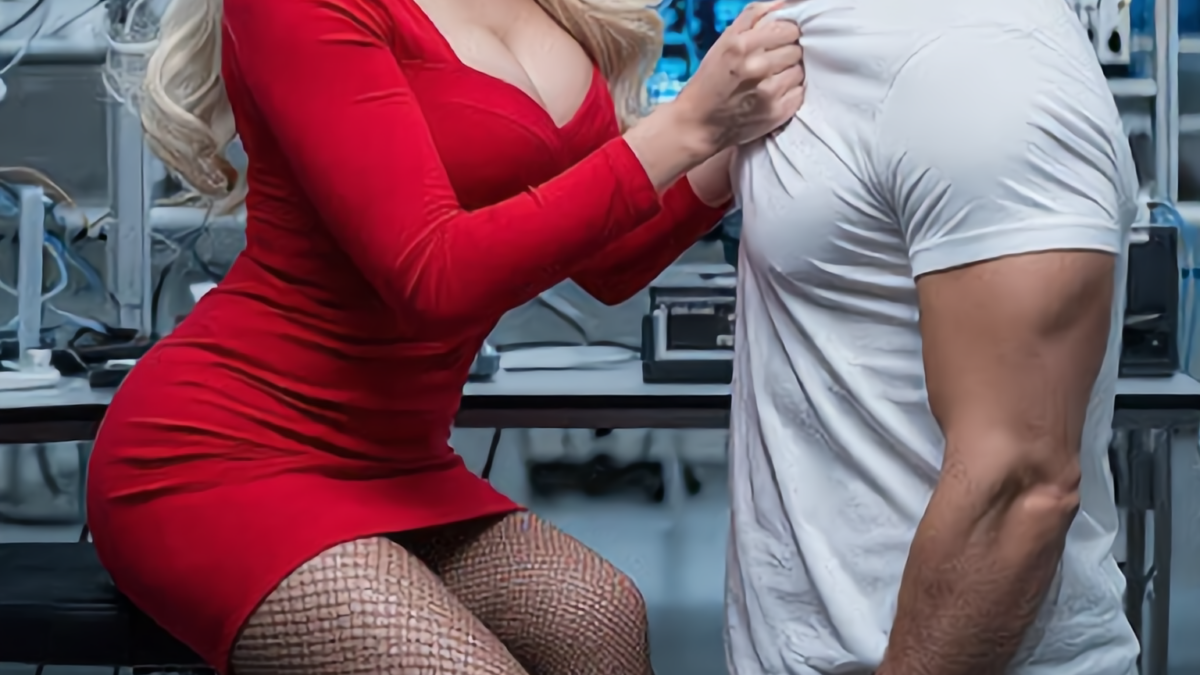
Part 1
The first sound was glass breaking.
The second was screaming.
By the time anyone understood what was happening, Dr. Aurelia Wren was already crossing the laboratory with a heavy metal instrument clenched in her hand.
And she was heading directly toward a terrified twenty-six-year-old researcher.
Sienna Veil backed into a stainless-steel workstation.
“I didn’t take it.”
Her voice shook.
“I swear I didn’t.”
Aurelia didn’t slow down.
“You lying little thief.”
Then a man stepped between them.
Calder Voss had been standing near the ventilation controls only seconds earlier.
Forty-one years old.
Single father.
Laboratory safety specialist.
Quiet enough that most people barely noticed when he entered a room.
But there was something very few of his coworkers knew about him.
Before Calder spent his days checking emergency valves and chemical storage cabinets, he had spent nearly a decade serving as a military medic.
And when Aurelia raised the metal instrument, the part of him that had spent years learning how to keep frightened people alive suddenly woke up.
“Put it down,” Calder said.
Aurelia stared at him.
“Get out of my way.”
“Not until you put it down.”
Around them, twelve researchers stood frozen.
Nobody moved.
Nobody breathed.
Aurelia lifted the instrument.
Then she lunged.
What happened next lasted less than thirty seconds.
But before the afternoon was over, one career would be destroyed, another would be hanging by a thread, and a young scientist would discover that the person trying to protect her had just become the easiest person in the building to blame.
Three hours earlier, Calder’s biggest problem had been a faulty pressure sensor.
He preferred problems like that.
Machines were honest.
A valve either worked or it didn’t.
An alarm either sounded or it failed.
People were more complicated.
Calder had learned that lesson long before he came to work at Halcyon Biomedical Research Center.
At forty-one, he had deliberately built a life around predictability.
He woke at 5:40 every morning.
Packed two lunches.
One for himself.
One for his eight-year-old daughter, Mara.
At 6:30, he braided her hair badly enough that she usually complained.
At 6:45, he tried again.
At 7:10, they left their small townhouse.
At 7:35, he walked Mara through the gates of Brookfield Elementary.
Only after he watched her disappear through the school doors did Calder drive to Halcyon.
That routine mattered to him.
Predictability mattered.
Because for a long time, his life had contained very little of it.
Calder had enlisted at twenty-one.
He eventually trained as a combat medic and spent years working in environments where ordinary days could turn catastrophic in seconds.
He had seen things he rarely discussed.
He had treated strangers whose names he never learned.
He had held pressure against wounds while people prayed.
He had learned to speak calmly while everything around him suggested panic.
Then, at thirty-one, he came home.
He married Mara’s mother, Lena.
For a few years, Calder believed the hardest part of his life was behind him.
Then Lena died in a highway collision caused by a driver who fell asleep at the wheel.
Mara was four.
Calder was thirty-seven.
And suddenly, the man who had spent years keeping people alive couldn’t save the person he loved most.
For months afterward, he barely remembered how he survived.
He remembered cereal boxes on the kitchen counter.
Tiny shoes beside the front door.
Mara crawling into his bed at two in the morning.
He remembered her asking when Mommy was coming home.
He remembered having no answer that could possibly make sense to a four-year-old.
Eventually, Calder left contract medical work entirely.
He wanted quiet.
No sirens.
No helicopters.
No emergencies arriving without warning.
Halcyon Biomedical seemed perfect.
The research center occupied six floors of a glass-and-steel building surrounded by maple trees and carefully landscaped gardens.
The most dangerous things Calder expected to deal with were laboratory spills, improperly stored chemicals, malfunctioning ventilation systems, and scientists who believed safety regulations did not apply when they were close to a breakthrough.
Then he met Dr. Aurelia Wren.
Everyone at Halcyon knew her name.
At forty-six, Aurelia was considered one of the most important biomedical researchers in the country.
She had spent twelve years developing a treatment known internally as L-47, an experimental therapy designed to help patients with a rare degenerative neurological disorder.
If L-47 succeeded, Halcyon expected international recognition.
There were already whispers of major pharmaceutical partnerships.
Academic journals were waiting for trial results.
Investors followed every announcement.
And Aurelia was at the center of everything.
She was brilliant.
Nobody questioned that.
She could look at data for ten seconds and recognize inconsistencies others missed after hours of analysis.
She remembered every experimental variable.
She demanded precision.
She expected excellence.
Unfortunately, she also expected obedience.
Junior researchers became silent when she entered rooms.
Technicians rehearsed explanations before speaking to her.
One scientist transferred departments after Aurelia publicly humiliated him for mislabeling a sample tray.
The administration knew.
Everyone knew.
But L-47 was worth hundreds of millions of dollars if successful.
So Aurelia’s behavior was usually explained with the same three words.
Pressure.
Passion.
High standards.
Calder disliked those explanations.
He had worked around people under real pressure.
Pressure revealed character.
It did not excuse cruelty.
Still, Calder kept his opinions private.
His job was safety.
Not politics.
Then Aurelia began changing.
It happened gradually.
First came the late nights.
Aurelia started remaining in the facility long after her team had gone home.
Then came the locked doors.
Twice, Calder discovered that she had disabled automatic access to a secondary analysis room.
When he asked why, Aurelia told him the work was confidential.
“Confidentiality doesn’t override emergency access.”
“It does when people are incapable of respecting boundaries.”
“Fire doesn’t care about boundaries.”
She stared at him.
Calder stared back.
Eventually she restored the access system.
After that, she treated him like an inconvenience.
Calder didn’t mind.
He’d been disliked by more intimidating people.
The incident that truly concerned him happened three weeks before the attack.
At 8:20 one evening, Calder was checking an emergency shower when he heard something crash inside Aurelia’s office.
He knocked.
No answer.
He knocked again.
“Dr. Wren?”
“Go away.”
Her voice sounded strange.
Unsteady.
Calder opened the door.
Aurelia was standing beside her desk.
Papers covered the floor.
A computer monitor had been knocked sideways.
Her face was pale.
“Are you injured?”
“No.”
“Do you need medical assistance?”
“I said no.”
Her hands were shaking.
Calder noticed.
Aurelia noticed him noticing.
Her expression hardened.
“Leave.”
Calder left.
The next morning, he submitted a confidential wellness and safety report.
He did not accuse Aurelia of misconduct.
He documented what he had observed.
Two days later, the report came back marked:
No immediate intervention required.
Calder read the sentence twice.
Then he saved a copy.
His military years had taught him one rule he never ignored.
If something felt wrong, document it.
That Tuesday, something felt very wrong.
Calder noticed Sienna shortly after lunch.
She stood beside workstation seventeen, sorting through printed data sheets.
Usually, Sienna moved quickly.
She was one of Aurelia’s junior researchers and had the nervous energy of someone who constantly worried she wasn’t working fast enough.
That afternoon, she barely moved.
Her face was pale.
Calder walked over.
“You all right?”
Sienna jumped.
“I’m fine.”
“That’s convincing.”
She attempted a smile.
It failed.
Calder lowered his voice.
“What happened?”
“Nothing.”
“Sienna.”
She looked toward Aurelia’s private office.
Then back at Calder.
“I think I made a mistake.”
“What kind?”
“I don’t know.”
That answer concerned him.
“Start there.”
Sienna swallowed.
“Last night Dr. Wren asked me to compare the latest L-47 response data with the previous quarterly analysis.”
“Okay.”
“The numbers didn’t match.”
“How badly?”
She hesitated.
“Enough.”
Calder wasn’t a research scientist, but he understood tone.
“Did you ask her about it?”
“Yes.”
“And?”
“She told me I used the wrong dataset.”
“Did you?”
“I don’t think so.”
Sienna opened a folder.
Several graphs were highlighted.
“The published response rate says sixty-eight percent.”
Calder looked at her.
“And the raw data?”
“Fifty-one.”
That was not a rounding error.
Sienna’s fingers trembled.
“I checked three times.”
“Who else knows?”
“Nobody.”
“Keep it that way for now.”
Sienna stared at him.
“You think something’s wrong?”
“I think you should preserve what you found and follow the reporting procedure.”
“I work directly for her.”
“That doesn’t change the procedure.”
“You don’t understand.”
Calder almost laughed.
“I understand being afraid of a supervisor.”
“No, you don’t understand Aurelia.”
Sienna’s voice became smaller.
“My mother is sick.”
Calder knew that much.
Sienna cared for her mother, who had advanced kidney disease.
“My insurance is through this job. My mother’s supplemental care depends on what I earn here.”
Calder’s expression softened.
“If I lose this position—”
“Reporting a data discrepancy shouldn’t cost you your job.”
“Shouldn’t.”
One word.
It said everything.
Calder glanced toward Aurelia’s office.
“Make a copy of your notes.”
“I already did.”
“Good.”
“And don’t confront her alone.”
Sienna nodded.
Calder returned to his inspection.
Twenty minutes later, an alarm appeared on his tablet.
Secure archive access irregularity.
He frowned.
The archive stored controlled research files and signed experimental documentation.
Calder wasn’t responsible for research integrity, but he was responsible for physical access systems.
He walked downstairs.
The electronic lock showed no visible damage.
He checked the access record.
Sienna Veil.
13:08.
Calder looked at his watch.
1:47.
Something was wrong.
At 1:08, Sienna had been in the cafeteria.
He knew because Calder had passed her while replacing an emergency exit sensor.
He checked the system again.
The credential was definitely hers.
He called Sienna.
“Where are you?”
“Lab three.”
“Stay there.”
“What happened?”
“I said stay there.”
Calder inspected the lock housing.
The reader panel had been manually opened.
Someone with technical knowledge had bypassed part of the authentication sequence.
His stomach tightened.
Inside the archive, cabinet C-14 was unlocked.
One folder was missing.
L-47 toxicity reports.
Calder stood completely still.
Then he called security.
Before he could finish explaining, hurried footsteps approached.
Aurelia entered.
Sienna was behind her.
Two other researchers followed.
Aurelia pointed at the open cabinet.
“You.”
She looked directly at Sienna.
“What did you do?”
Sienna froze.
“I didn’t do anything.”
“Your access code opened this room.”
“I wasn’t here.”
“Then apparently your security badge learned to walk.”
“Aurelia,” Calder said, “the access panel was tampered with.”
She turned.
“Stay out of this.”
“That isn’t happening.”
“This is a research integrity matter.”
“It’s also a security matter.”
Aurelia stepped toward Sienna.
“What did you take?”
“Nothing.”
“Where is the toxicity report?”
Sienna’s face changed.
“I don’t know.”
“You were asking questions about the response data this morning.”
Calder watched both women.
Sienna whispered, “How did you know that?”
Silence.
Aurelia’s eyes shifted.
Just slightly.
But Calder saw it.
“So that’s what this is?” Sienna asked. “You think I found something?”
“Don’t be absurd.”
“You knew I was checking the response rate.”
“Because I assigned you to check it.”
“No. You told me I used the wrong data.”
Aurelia’s jaw tightened.
Security had not arrived yet.
Calder wondered what was taking them so long.
Then Aurelia said something that changed the room.
“Search her station.”
Sienna stared at her.
“What?”
“You heard me.”
“You can’t just—”
“I can protect twelve years of research from an employee trying to steal it.”
Sienna looked at Calder.
He could see panic taking over.
“Don’t touch anything,” he said.
Aurelia spun toward him.
“Excuse me?”
“Security should document the workstation before anyone searches it.”
“This is my laboratory.”
“Evidence doesn’t belong to you.”
Aurelia stared at him.
For one moment, Calder saw something beneath the anger.
Fear.
Not the fear of losing research.
The fear of discovery.
Aurelia pushed past him.
They followed her back toward lab three.
By then, several researchers had noticed the confrontation.
Sienna’s workstation sat near the far window.
Aurelia opened a drawer.
Calder moved forward.
“Stop.”
Too late.
Aurelia pulled out a blue research folder.
Everyone went silent.
Sienna’s face drained of color.
“No.”
Aurelia opened it.
L-47 TOXICITY ANALYSIS.
The missing file.
Sienna shook her head.
“No. No, that wasn’t there.”
Aurelia looked around.
“I want her removed from the building.”
“I didn’t take that!”
“Security!”
“I didn’t!”
Sienna reached for the folder.
Aurelia jerked it away.
Sienna grabbed the corner.
The folder tore.
Pages scattered across the laboratory.
“Look what you’ve done!” Aurelia screamed.
“I didn’t put it there!”
“You’re finished.”
Sienna backed away.
“My mother—”
“I don’t care about your mother.”
The words landed harder than the shout.
Something changed in Sienna’s face.
Calder stepped between them.
“Enough.”
Aurelia’s eyes moved to him.
“You have interfered with me for the last time.”
“Security can determine what happened.”
“I already know what happened.”
“No. You’ve decided what happened.”
Aurelia’s voice lowered.
“Move.”
“No.”
She took another step.
“I said move.”
“And I said no.”
Then Sienna whispered from behind him.
“Calder.”
He heard fear in her voice.
Aurelia reached toward the workstation.
Her hand closed around a heavy stainless-steel calibration handle.
Calder’s body became completely still.
“Aurelia.”
She turned toward Sienna.
“Put it down,” Calder said.
Aurelia’s breathing was fast.
“You think you can destroy everything I’ve built?”
Nobody answered.
“I gave twelve years to this treatment.”
Her hand tightened.
“Twelve years.”
Sienna was crying now.
“I didn’t steal anything.”
“You’re lying.”
Aurelia moved.
Calder stepped into her path.
The metal instrument came up.
His training returned without invitation.
He didn’t think about combat.
He thought about distance.
Hands.
Balance.
The terrified people behind him.
He shifted aside from the first swing and guided Aurelia’s arm away.
She stumbled against a workstation.
Glass crashed to the floor.
Someone screamed.
“Back up!” Calder ordered.
Researchers moved away.
Aurelia grabbed his coat and pulled.
Calder freed himself and moved between her and Sienna again.
“Stop.”
She swung a second time.
Calder intercepted the movement, controlled her wrist, and forced the instrument from her hand.
It hit the floor.
Aurelia tried to strike him with her free hand.
Calder restrained her only long enough to stop her from reaching the broken glass.
“No!”
She screamed.
“Let me go!”
“Stop fighting.”
“You attacked me!”
“Stop.”
Security officers burst through the doors.
Calder immediately released her and stepped backward with his hands visible.
Aurelia collapsed to the floor.
For several seconds, she stared at him.
Then her expression changed.
Not fear.
Calculation.
She looked at the security officers.
“He attacked me.”
The room erupted.
“That’s not true,” Sienna said.
Aurelia pointed at Calder.
“He assaulted me in my own laboratory.”
Security separated everyone.
Calder did not argue.
He had learned years earlier that after chaos came procedure.
Statements.
Evidence.
Cameras.
Facts.
Facts would protect him.
He believed that.
For the next hour.
Then the director of security entered the interview room.
His name was Marcus Hale.
He placed a tablet on the table.
“Mr. Voss.”
Calder looked up.
“We reviewed the footage.”
“Then you saw what happened.”
Marcus didn’t answer immediately.
That was the first warning.
“The camera covering laboratory three lost its primary feed twenty-two seconds before the physical confrontation.”
Calder stared at him.
“What?”
“The system switched to a secondary camera.”
“Fine. What does that show?”
Marcus rotated the tablet.
Grainy video filled the screen.
The angle was terrible.
Aurelia stood partly hidden behind Calder.
Sienna was blocked by a workstation.
The video showed Calder moving toward Aurelia.
Then it showed them struggling.
From that angle, it was impossible to see the metal instrument clearly.
Impossible to see the first swing.
Impossible to see the moment Aurelia lunged toward Sienna.
Calder felt something cold settle in his stomach.
“What happened to the primary camera?”
“We’re investigating.”
“Check the archive camera.”
“We did.”
“And?”
Marcus folded his hands.
“The archive footage from 12:54 until 1:21 has been deleted.”
Calder stared at him.
That was the exact period surrounding the stolen file.
Marcus continued.
“Your safety credentials allow access to the camera control system.”
“So do seven other people.”
“Correct.”
“Then check the logs.”
“We did.”
Calder waited.
Marcus’s eyes met his.
“The deletion was performed using your credentials.”
For the first time all afternoon, Calder had no answer.
Marcus continued quietly.
“Dr. Wren says you have been harassing her for weeks. She says you became obsessed with proving she was violating safety regulations.”
“That’s ridiculous.”
“She also says you encouraged Sienna Veil to challenge her research.”
Calder stood.
Marcus raised a hand.
“Sit down.”
“I’m not sitting here while—”
“Calder.”
Something in Marcus’s voice stopped him.
“This has become bigger than a workplace altercation.”
Calder slowly sat.
Marcus removed another document.
“The missing L-47 report was found in Ms. Veil’s workstation.”
“It was planted.”
“Can you prove that?”
“Not yet.”
“And footage that might have shown how it got there was erased using your credentials.”
Calder looked at the wall.
For years, he had built his life around stability.
Around being home for Mara.
Around becoming the father she could depend on.
Now one afternoon had placed everything at risk.
“What happens now?”
Marcus hesitated.
“You’re suspended pending investigation.”
Calder closed his eyes.
“With pay?”
“No.”
His stomach dropped.
Mortgage.
School expenses.
Health insurance.
Mara.
“When can I leave?”
“After your access badge is surrendered.”
Calder removed the badge from his belt.
He placed it on the table.
Then Marcus said, “There’s one more thing.”
Calder looked up.
“Police may want to speak with you about the assault allegation.”
Calder stared at him.
Outside the interview room, the research center continued operating as though nothing had happened.
Machines hummed.
Lights glowed.
Elevators opened and closed.
But as Calder walked toward the exit without his badge, employees avoided his eyes.
Some had already heard.
Others whispered.
Sienna stood near the lobby.
Her face was pale.
“I’m sorry.”
Calder stopped.
“You have nothing to apologize for.”
“They’re suspending me too.”
He nodded.
“Don’t sign anything without reading it.”
“What are we going to do?”
Calder looked through the glass doors.
Mara would be waiting for him in less than an hour.
He had no idea how he was going to explain any of this.
Then his phone vibrated.
Unknown number.
He answered.
“Calder Voss?”
“Yes.”
The voice belonged to a woman.
Quiet.
Nervous.
“I work in Halcyon’s data integrity department.”
Calder stepped away from the lobby.
“Who is this?”
“I can’t tell you yet.”
“Then why are you calling?”
A pause.
“Because the security team is looking at the wrong footage.”
Calder’s pulse changed.
“What are you talking about?”
“The camera files weren’t simply deleted.”
She lowered her voice.
“They were replaced.”
Calder stopped walking.
“Replaced with what?”
“Copies designed to make it look like your credentials erased them.”
He looked back toward the building.
“Can you prove that?”
Another pause.
“Yes.”
Hope rose.
Then vanished with her next sentence.
“But if Dr. Wren discovers I found the original files, she’ll know exactly where they are.”
Calder tightened his grip on the phone.
“Where?”
The woman whispered:
“On a server nobody was supposed to remember existed.”
Then the line went dead.
Part 2
Calder stood outside Halcyon for nearly a minute with the silent phone against his ear.
He called the number back.
Disconnected.
He tried again.
Nothing.
Sienna watched him from several yards away.
“What happened?”
Calder lowered the phone.
“I don’t know yet.”
That evening, he drove home with both hands tight around the steering wheel.
He rehearsed explanations for Mara.
None sounded right.
How did a father explain suspension from work to an eight-year-old?
How did he explain that someone had attacked him and somehow he might still be considered responsible?
How did he tell her that the stability he’d promised could disappear because of something he couldn’t control?
When Calder entered the house, Mara was sitting at the kitchen table surrounded by crayons.
She looked up.
“You’re early.”
“Yeah.”
She smiled.
“Did you get fired?”
Calder froze.
Mara burst out laughing.
“I’m kidding.”
Calder didn’t.
Her smile faded.
“Dad?”
He put down his keys.
“Something happened at work.”
“Are you hurt?”
That was her first question.
Not what happened.
Not why.
Are you hurt?
Calder sat beside her.
“No.”
“Then it’s okay.”
He wished adult life were that simple.
“They told me not to come back for a little while.”
“Why?”
“Something happened in the laboratory. Somebody got angry.”
“At you?”
“Partly.”
“What did you do?”
Calder considered lying.
Then he remembered how children learned trust.
Slowly.
From thousands of small moments.
“I stopped someone from hurting another person.”
Mara frowned.
“So why are you in trouble?”
“That’s a very good question.”
She studied him.
“Did you hit anyone?”
“No.”
“Did you yell?”
“I told people to move away.”
“That’s not yelling-yelling.”
Despite himself, Calder smiled.
“No.”
Mara returned to her drawing.
After several seconds, she said, “Then they’ll figure it out.”
Calder looked at her.
The absolute confidence in her voice nearly broke him.
“I hope so.”
The next morning, he received notice of an internal inquiry.
By noon, the police requested a voluntary interview.
Calder contacted an attorney before answering questions.
Military service had taught him not to confuse innocence with protection.
Sienna called that afternoon.
“They searched my work email.”
“They’ll search everything.”
“They think I stole the file.”
“You didn’t.”
“That doesn’t matter if they can make it look like I did.”
Calder heard exhaustion in her voice.
Then something else.
“What aren’t you telling me?”
Silence.
“Sienna.”
“I copied the data.”
His posture changed.
“What data?”
“The raw L-47 results.”
“Where?”
“I shouldn’t tell you.”
“Then don’t.”
“I put them on an encrypted drive.”
Calder closed his eyes.
“Why?”
“Because I knew something was wrong.”
“Does Aurelia know?”
“I don’t think so.”
“Where is it?”
“Safe.”
“Keep it that way.”
“But if the numbers prove she manipulated the research—”
“They may prove something. They may also be incomplete. Don’t assume.”
Sienna sounded frustrated.
“You’re still defending her?”
“No. I’m defending facts.”
Calder knew what anger could do to judgment.
He had seen it too many times.
“We don’t decide the conclusion first and then look for evidence.”
Sienna became quiet.
“That’s what she did to me.”
“Exactly.”
Two days passed.
No call came from the anonymous woman.
Then, at 11:17 Thursday night, Calder received an email.
No message.
Only an address.
A public library.
9:00 a.m.
Calder arrived the next morning.
The woman waiting near the rear entrance was younger than he expected.
Early thirties.
Dark glasses.
Nervous hands.
“My name is Priya Nand,” she said. “Systems integrity.”
“You’re the one who called.”
She nodded.
“Why me?”
“Because I watched the secondary footage.”
“And?”
“I saw you release Dr. Wren the moment security entered.”
“That doesn’t prove what happened before.”
“No.”
Priya looked around.
“But I also reviewed your original safety report from three weeks ago.”
Calder frowned.
“That report was confidential.”
“Nothing in a digital system is truly invisible to the people maintaining it.”
“What did you find?”
“Aurelia accessed the administrative portal twelve minutes after your report was filed.”
“She shouldn’t have had permission.”
“She didn’t.”
Priya took a breath.
“I started checking older system anomalies.”
They sat at a table in the library’s quietest corner.
Priya opened a laptop.
“The building used to run a redundant surveillance backup before Halcyon upgraded two years ago.”
“Used to?”
“Officially.”
She typed.
“The old storage server was never completely disconnected.”
Calder leaned closer.
“So the cameras still mirrored to it.”
“Some of them.”
“The archive?”
Priya nodded.
“And lab three?”
Another nod.
Calder’s heart beat faster.
“Show me.”
Priya hesitated.
“If I do this, I’m involved.”
“You already are.”
“I have two children.”
That stopped him.
She stared at the keyboard.
“My husband lost his job last year. Halcyon is our health insurance.”
Calder understood immediately.
The same weapon.
Not violence.
Dependence.
Aurelia’s power didn’t come only from her position.
It came from knowing how much people had to lose.
“You don’t owe me anything,” Calder said.
Priya looked surprised.
“If you walk away, I won’t blame you.”
“But then she wins.”
“Maybe.”
“You could lose your job.”
“So could you.”
“I already did.”
“Suspended isn’t fired.”
“Not yet.”
Priya studied him.
“Why are you so calm?”
Calder almost laughed.
“I’m not.”
He thought of Mara sleeping upstairs while he had spent half the night calculating how long his savings could cover expenses.
“Calm and frightened aren’t opposites.”
Priya stared at him.
Then she opened the first video.
Archive corridor.
Timestamp: 1:02 p.m.
Sienna was nowhere in sight.
At 1:06, Aurelia appeared.
She looked over both shoulders.
Then she used an administrator credential.
The archive door opened.
At 1:12, Aurelia emerged carrying a blue folder.
Calder felt his jaw tighten.
“There.”
Priya nodded.
“Keep watching.”
Aurelia disappeared toward laboratory three.
The next camera captured her entering through a side door.
Sienna’s station was unattended.
Aurelia opened the lower drawer.
Placed the folder inside.
Closed it.
Then left.
Calder stared at the screen.
“That’s enough.”
“No.”
Priya’s voice had changed.
“It isn’t.”
She opened another file.
Two weeks earlier.
Aurelia entering a data processing suite after midnight.
Another.
Nine days earlier.
Another.
Five weeks earlier.
“What am I looking at?”
“Repeated unauthorized access.”
“To what?”
“Trial databases.”
Calder felt cold.
Priya opened a system audit.
Rows of numbers filled the screen.
“Someone altered L-47 outcome classifications.”
Calder wasn’t a statistician.
Priya pointed.
“Patients with severe adverse responses were moved from the primary analysis group into an exclusion category.”
“Can that be legitimate?”
“Under some protocols, yes.”
“Was it legitimate here?”
“Not according to the approved study design.”
Calder stared at her.
“Meaning?”
Priya swallowed.
“Meaning Sienna’s fifty-one percent result may have been closer to the truth.”
The research had been manipulated.
But still something didn’t make sense.
“Why frame Sienna?”
“Because Sienna accessed the raw dataset.”
“How would Aurelia know?”
Priya hesitated.
“Employee monitoring.”
Calder’s expression darkened.
“She was watching her computer?”
“Apparently.”
Calder leaned back.
Twelve years of research.
Millions of dollars.
Patients waiting for hope.
Investors expecting results.
And a frightened scientist trying desperately to control a collapsing lie.
“Why sell anything to another company?” Calder asked.
Priya stared.
“What?”
“Sienna thinks this is about manipulated data. But the missing file was a toxicity report. Aurelia could have destroyed it. Instead, she framed Sienna for stealing it.”
Priya’s face changed.
“You think there’s something else.”
“I think people usually hide one thing with another.”
They contacted Calder’s attorney.
Within hours, copies of the preserved footage and audit records were transferred to legal counsel.
By afternoon, Halcyon’s board had been notified.
That should have ended everything.
Instead, the situation became more dangerous.
At 4:40, Priya called.
Her voice was shaking.
“Someone accessed the backup server.”
“From where?”
“I don’t know.”
“Are the files safe?”
“I copied them.”
“Then leave.”
“I’m still at Halcyon.”
“Priya.”
“I need the financial access logs.”
“Why?”
“Because you were right.”
Calder stood.
“About what?”
“There is something else.”
He heard keys clicking.
Then silence.
“Priya?”
“Oh, God.”
“What?”
“Aurelia wasn’t only altering data.”
Priya’s breathing changed.
“She’s been exporting research.”
“To whom?”
“I can’t tell. There are coded payment references.”
“Stop. Leave now.”
“Wait.”
“Priya.”
“There’s another name.”
Calder felt dread.
“What name?”
She whispered it.
“Martin Kessler.”
Calder knew the name.
Everyone at Halcyon did.
Martin Kessler was the company’s executive vice president for research partnerships.
The man responsible for overseeing Aurelia.
The same executive who had dismissed Calder’s original safety complaint.
Before Calder could respond, he heard a door open through the phone.
Priya stopped breathing.
A man’s voice spoke somewhere near her.
“What are you doing in here?”
The call ended.
Calder was already moving.
He called security.
Then the police.
Then Priya again.
No answer.
He drove toward Halcyon but stopped two blocks away when his attorney called.
“Do not enter that building.”
“Priya is inside.”
“Police are already responding.”
“She’s there because of me.”
“No. She’s there because she found evidence.”
Calder gripped the steering wheel.
Every instinct told him to go inside.
Every lesson he’d learned told him not to make himself part of the emergency.
So he waited.
It was one of the hardest things he had ever done.
Twenty-three minutes later, Priya called.
“I’m okay.”
Calder closed his eyes.
“What happened?”
“Kessler found me.”
“And?”
“Security arrived before he could take the laptop.”
“Did he touch you?”
“No.”
“Threaten you?”
“He told me I’d never work in science again.”
Calder breathed out.
“Can you leave?”
“Police are interviewing everyone.”
“Good.”
Priya became quiet.
Then she said, “Calder?”
“Yeah?”
“There’s something you need to know.”
“What?”
“Kessler wasn’t helping Aurelia cover up the research.”
Calder waited.
“He was paying her.”
The investigation exploded.
Over the next forty-eight hours, Halcyon’s internal problem became a criminal inquiry.
Financial records showed that Aurelia had transferred proprietary L-47 research through intermediaries connected to an overseas pharmaceutical competitor.
Kessler had authorized hidden consulting payments.
In exchange, experimental information had been exported months before Halcyon planned to release it.
But selling research wasn’t the only fraud.
L-47 had not performed as well as Aurelia publicly claimed.
Some participants had experienced neurological complications.
Instead of halting the program, Aurelia reclassified troubling outcomes.
Kessler approved revised analyses because the company was negotiating a major partnership.
Sienna discovered the inconsistency accidentally.
That made her dangerous.
So Aurelia decided to discredit her before she could speak.
There was one problem.
Calder stepped between them.
Five days after his suspension, Calder returned to Halcyon.
Not as an employee.
As a witness.
The boardroom was crowded.
Attorneys.
Investigators.
Compliance officers.
Corporate directors.
Aurelia sat at one end of the table.
For the first time since Calder had known her, she looked small.
Not physically.
Something inside her had collapsed.
Kessler had already been placed on administrative leave.
Sienna sat beside her attorney.
Priya sat across from them.
Calder entered last.
Aurelia looked at him.
Her face tightened.
“This is because of you.”
Nobody spoke.
Calder pulled out a chair.
“No.”
Aurelia laughed bitterly.
“You couldn’t leave it alone.”
“You attacked someone.”
“You provoked me.”
“You planted evidence.”
“You were trying to destroy my work.”
Calder looked directly at her.
“Your work destroyed itself.”
Her expression broke.
“You have no idea what I sacrificed.”
“Twelve years.”
Aurelia stopped.
Calder remembered her shouting it in the lab.
“Twelve years,” he repeated. “You told us.”
Her eyes filled.
“I gave up everything.”
“That doesn’t make the data true.”
“You think science is clean?”
Aurelia leaned forward.
“You think discoveries happen because everyone follows perfect rules? Investors disappear. Trials fail. Funding gets cut. Patients die waiting while committees debate.”
Sienna stared at her.
“So you lied?”
Aurelia turned.
“I protected the project.”
“You blamed me.”
“You were going to ruin it.”
“I found numbers.”
“You found numbers you didn’t understand!”
“I understood them well enough that you had to frame me.”
Aurelia went silent.
Then Calder noticed something.
Her anger was gone.
What remained was terror.
Not terror of prison.
Not even of losing her career.
Terror of discovering that twelve years of sacrifice had produced something she could no longer recognize.
Calder knew that feeling.
He knew what it was like to build your identity around saving people.
And then fail.
But there was a difference.
Pain explained choices.
It did not erase responsibility.
Aurelia looked at him.
“You think you’re better than me because you stayed calm.”
Calder shook his head.
“No.”
“You put your hands on me.”
“Because you were trying to hurt someone.”
“You could have hurt me.”
“Yes.”
Her eyes narrowed.
“But I didn’t.”
Silence.
Calder leaned back.
“That’s the difference you’re still refusing to understand.”
The investigation continued for hours.
By evening, Aurelia was escorted from Halcyon.
Her access was revoked.
Her laboratory was sealed.
Professional licensing authorities were notified.
Federal investigators took possession of relevant files.
Kessler resigned before the board could terminate him.
Aurelia did not get that opportunity.
She was dismissed for research misconduct, violence in the workplace, evidence tampering, and unauthorized disclosure of proprietary information.
Her career had collapsed.
But Calder felt no satisfaction watching her leave.
Sienna joined him near the window.
“I thought I’d feel happy.”
“You don’t?”
“No.”
“Neither do I.”
“Why?”
Calder watched Aurelia cross the parking lot surrounded by attorneys.
“Because stopping someone isn’t the same as enjoying their fall.”
Sienna looked at him.
“Would you do it again?”
He thought about Mara.
The mortgage.
The days without income.
The police interview.
The fear.
Then he remembered Sienna backing against the workstation while Aurelia approached her.
“Yes.”
That evening, Calder finally received an official message from Halcyon.
Suspension rescinded.
All back pay restored.
His safety report had been validated.
The company requested a meeting regarding his return.
Calder read the email twice.
Then Mara ran into the room.
“Dad!”
He quickly closed the laptop.
“What?”
“I need you.”
There was urgency in her voice.
His old instincts activated.
“What happened?”
She held up a sheet of paper.
“My volcano looks terrible.”
Calder stared.
Red crayon covered half the page.
He laughed so suddenly that Mara looked offended.
“This is serious.”
“I’m sorry.”
“Mrs. Bell said presentation matters.”
Calder sat beside her.
“All right. Let’s save the volcano.”
And for the first time in days, the crisis in his life became exactly the size an eight-year-old thought it should be.
Part 3
Halcyon expected Calder to return immediately.
He didn’t.
The company president personally called him.
“We want you back.”
Calder stood in his kitchen making pancakes while Mara searched for a missing shoe.
“I haven’t decided.”
There was a pause.
“We’ve cleared you completely.”
“I know.”
“We’re restructuring the compliance division.”
“Good.”
“We’d like you to help lead it.”
Calder stopped flipping the pancake.
“What?”
“Director of Laboratory Safety and Response.”
Calder looked toward the hallway.
Mara shouted, “Found it!”
Then immediately shouted, “Wrong shoe!”
The president continued.
“You saw the warning signs before leadership did.”
“I reported them.”
“Yes.”
“And leadership ignored them.”
Another pause.
“Yes.”
Calder appreciated the answer.
“We need people willing to say uncomfortable things.”
“You already had them.”
“I’m sorry?”
“Sienna said something. Priya said something. I said something.”
He turned down the stove.
“You didn’t need better employees. You needed leadership willing to listen to the employees you already had.”
Silence.
Then the president said, “That’s fair.”
Calder returned two weeks later.
He accepted the position under three conditions.
Safety complaints could no longer be closed by the department they involved.
Junior staff needed an independent reporting channel.
And any employee temporarily removed during a good-faith safety investigation would retain base pay until preliminary facts were established.
Halcyon agreed.
Sienna returned too.
The first morning back, she stood outside laboratory three for almost a minute before entering.
Calder found her there.
“You okay?”
“No.”
“Good answer.”
She smiled weakly.
“I keep seeing it.”
“Aurelia?”
“The metal bar. The glass.”
Calder nodded.
“That may happen for a while.”
“Does it stop?”
He considered the question carefully.
“Sometimes.”
“And when it doesn’t?”
“You learn that remembering something isn’t the same as being back inside it.”
Sienna looked at him.
“Military?”
“Yeah.”
They entered the laboratory together.
L-47 survived the scandal.
But not unchanged.
The manipulated results were discarded.
Independent teams repeated major portions of the research.
Some early claims disappeared completely.
The treatment was less miraculous than Aurelia had promised.
But it was not worthless.
Under new leadership, researchers discovered that a smaller group of patients appeared to benefit significantly.
Development continued.
Slower.
More cautiously.
More honestly.
For Sienna, that mattered.
“My mother used to tell me science is supposed to be patient,” she said one evening.
“People aren’t very good at patient.”
“No.”
She smiled.
“But maybe the work has to be.”
Months passed.
Halcyon became quieter again.
Not because people were afraid.
Because the crisis was finally becoming history.
Priya received a promotion within systems integrity.
Sienna became part of an independent research team.
Calder learned that management involved fewer broken valves and far more meetings than any reasonable person should endure.
Mara found this hilarious.
“So you’re the boss now?”
“No.”
“Do people have to listen to you?”
“Sometimes.”
“Then you’re the boss.”
“That’s not how it works.”
“It is at school.”
One Friday afternoon, Mara visited the facility for a family science program.
She wore oversized protective goggles and a white coat that reached her knees.
Calder found her staring at a microscope.
Sienna stood beside her.
“I can see cells!”
Mara shouted.
“Inside voice,” Calder said automatically.
“I CAN SEE CELLS QUIETLY!”
Sienna laughed.
Calder shook his head.
Across the laboratory, he noticed a scratch on the floor.
A thin mark where the shattered glass container had fallen months earlier.
Most people would never see it.
Calder did.
For several seconds, the laboratory disappeared.
He remembered Aurelia’s face.
The raised instrument.
Screaming.
Then Mara slipped her hand into his.
“Dad?”
He looked down.
“You went quiet.”
He smiled.
“I’m okay.”
She studied him.
Mara had inherited Lena’s eyes.
Sometimes that still hurt.
“Is this where the bad thing happened?”
Calder glanced at Sienna.
She looked surprised.
He had never told Mara exactly where.
“Yeah.”
Mara looked around.
“It doesn’t look scary.”
“No.”
“What happened?”
Calder crouched beside her.
“A person became very angry and tried to hurt somebody.”
“And you stopped her.”
“Yes.”
“Did you use army stuff?”
Sienna turned away, pretending not to listen.
Calder smiled.
“A little training.”
Mara considered that.
Then she asked the question he hadn’t expected.
“Were you scared?”
Calder could have said no.
He knew the version children liked.
Heroes weren’t afraid.
Heroes marched into danger confidently.
But that was never true.
“Yes.”
Mara frowned.
“Really?”
“Really.”
“Then how did you do it?”
Calder looked across the laboratory.
Several young researchers were working where Aurelia once commanded the room.
Nobody flinched when supervisors walked past.
Nobody whispered.
Nobody appeared frightened to ask questions.
“Being brave doesn’t mean you’re not scared.”
Mara waited.
“It means fear doesn’t get to choose what kind of person you become.”
She thought about that for a long time.
Then she nodded.
“Can I see the freezer?”
Calder laughed.
“Absolutely not.”
“Why?”
“Because it costs more than our house.”
“That’s not a reason.”
“It’s the best reason.”
That night, Mara gave him a drawing.
A man stood beneath a bright yellow sun beside a small girl.
The man wore an enormous helmet and appeared to have six fingers.
Calder smiled.
“Is that me?”
“Obviously.”
“Why do I have six fingers?”
“I made a mistake.”
“Fair.”
Mara climbed onto the couch beside him.
“I made you a soldier.”
Calder became quiet.
“I haven’t been a soldier for a long time.”
“I know.”
“Then why?”
“Because you said you learned how to help people there.”
Calder looked at the drawing again.
For years, he had treated his military life like a room whose door should remain closed.
He remembered the good people.
He also remembered pain.
Noise.
Loss.
Helicopters crossing dark skies.
Patients asking questions he couldn’t answer.
He had believed leaving the military meant leaving that version of himself behind.
But perhaps people weren’t divided so neatly.
The young medic.
The grieving husband.
The exhausted single father.
The safety specialist.
The man who stood between Aurelia and Sienna.
They were not separate people.
They were chapters.
And perhaps healing did not mean erasing earlier chapters.
Perhaps it meant understanding what they had taught you.
A few weeks later, Sienna received a young investigator award from a national neurological research foundation.
The award came with a financial prize.
She donated part of it to establish emergency childcare grants for single parents working in laboratories and clinical research.
Calder discovered this because Halcyon sent a company-wide announcement.
He immediately called her.
“You didn’t have to do that.”
“I know.”
“Then why?”
Sienna became quiet.
“The afternoon Aurelia accused me, I thought my life was over.”
“You would have been cleared eventually.”
“You don’t know that.”
Calder couldn’t argue.
Sienna continued.
“I was scared about my career. I was scared about my mother. I was scared nobody would believe me.”
She paused.
“And then you stood there.”
Calder looked out his office window.
“I just happened to be closest.”
“No.”
Her voice became firm.
“Lots of people were close.”
He said nothing.
“You’re the one who moved.”
That sentence stayed with him.
Lots of people were close.
Only one moved.
A year after the incident, Calder was asked to speak at Halcyon’s annual safety conference.
He almost refused.
He hated stages.
But Mara insisted.
“You should do it.”
“Why?”
“Because you’re always telling me to do things I’m scared of.”
“That’s different.”
“No, it isn’t.”
The logic was unfortunately excellent.
So Calder stood before several hundred employees.
Behind him was a screen containing no dramatic photograph of the confrontation.
No video of Aurelia.
No heroic title.
Just four words.
SAFETY REQUIRES HUMAN COURAGE.
Calder looked at the audience.
Then he began.
“Most disasters don’t start with explosions.”
The room became quiet.
“They start with a person noticing something small.”
He thought about Aurelia’s trembling hands.
The disabled access system.
Sienna’s inconsistent numbers.
His ignored report.
“A strange log entry. A changed number. A coworker behaving differently. A procedure someone decides doesn’t matter today.”
He paused.
“The difficult part usually isn’t seeing the warning sign.”
He looked toward Sienna.
Then Priya.
“The difficult part is speaking when everyone around you has reasons to stay quiet.”
He did not mention his military record.
He did not talk about disarming Aurelia.
He did not describe himself as heroic.
Instead, he talked about systems.
About listening.
About protecting whistleblowers.
About refusing to let prestigious titles become shields against accountability.
Then, near the end, he said something he had learned long before Halcyon.
“Strength is often misunderstood.”
The room remained still.
“We imagine strength as the ability to overpower another person.”
Calder shook his head.
“Most of the time, that is the easiest form of power.”
He remembered holding Aurelia’s wrist.
Remembered realizing he could have hurt her.
Remembered choosing restraint.
“Real strength is control.”
He looked at the audience.
“It is knowing what you are capable of and choosing only what is necessary.”
After the speech, employees approached him.
Some thanked him.
Some shared stories about times they had been afraid to speak.
One young technician waited until almost everyone else had left.
“I reported something yesterday.”
Calder looked at him.
“What?”
“Nothing major.”
“That’s not what I asked.”
The technician smiled nervously.
“A storage violation.”
“Good.”
“My supervisor was annoyed.”
“Probably.”
“I almost took the report back.”
Calder nodded.
“But I didn’t.”
“Good.”
The technician left.
Calder remained alone for a moment.
Then he noticed Mara standing near the back of the auditorium.
She had attended with Sienna.
She was smiling.
“What?” Calder asked when she reached him.
“You said I couldn’t yell in a laboratory.”
“Correct.”
“But you talked really loud in here.”
“That’s what microphones do.”
She narrowed her eyes.
“Convenient.”
He laughed.
Mara hugged him.
Calder rested his chin gently on her hair.
For years, he had worried that his daughter would eventually see the parts of his past he wanted hidden.
The nightmares.
The memories.
The years spent around violence.
He worried she would someday think those things defined him.
But Mara understood something Calder had taken much longer to learn.
A person’s past did not determine what they would do with the future.
Training could teach someone to injure.
Or it could teach restraint.
Pain could make someone cruel.
Or it could make them recognize pain in others.
Authority could be used to silence frightened people.
Or it could be used to protect them.
Aurelia had been brilliant.
Her intelligence had never been the problem.
The problem was that eventually she became convinced that her work mattered more than the people performing it.
She began protecting results instead of truth.
Protecting reputation instead of patients.
Protecting ambition instead of human beings.
And the moment Sienna became a threat to that ambition, Aurelia stopped seeing her as a young researcher with a sick mother and a future.
She saw an obstacle.
Calder had spent years in environments where human beings could easily become statistics.
He had learned never to allow that.
Months became years.
The scandal gradually disappeared from the news.
Legal cases concluded.
Professional journals corrected the scientific record.
Aurelia never returned to biomedical research.
Kessler was permanently removed from executive leadership in the industry.
Halcyon survived.
So did L-47.
Under independent oversight, a safer and more limited version eventually advanced into larger clinical trials.
No miracle headlines.
No inflated promises.
Just careful progress.
Sienna became one of the scientists leading that work.
On the wall beside her new office, she kept a small framed sentence.
Not a scientific quotation.
Not something from a famous professor.
Four simple words:
SOMEONE HAS TO MOVE.
Years later, when Mara was old enough to understand the full story, she asked her father one evening:
“Do you think you ended Aurelia’s career?”
Calder looked surprised.
“No.”
“But everyone says what happened in the lab exposed her.”
“It started the investigation.”
“So you did.”
Calder shook his head.
“Aurelia ended her own career.”
“Because she attacked you?”
“Before that.”
Mara waited.
“Every time she changed data because the truth was inconvenient.”
He counted softly.
“Every time she frightened someone into silence. Every time she decided the rules were for less important people. Every time she protected her reputation instead of the work.”
He looked at his daughter.
“The attack was only the moment everyone could finally see what had already been happening.”
Mara considered that.
“Then what did you do?”
Calder smiled.
“I was standing in the right place.”
She rolled her eyes.
“Dad.”
He laughed.
“Okay.”
He thought about it.
“I refused to move out of the way.”
Mara smiled.
That answer satisfied her.
And perhaps that was the truth of the entire story.
Calder Voss did not become a hero because he knew how to fight.
His military training had given him skills.
But skills alone meant nothing.
What mattered was what he chose to do with them.
When he possessed the power to hurt, he chose restraint.
When silence would have protected his job, he reported what concerned him.
When a frightened young woman stood alone against someone far more powerful, he refused to step aside.
And when an institution wanted to move past the scandal quickly, he forced it to learn something from what happened.
Sienna kept her future.
Priya found the courage to reveal the truth.
Patients received honest science instead of manufactured hope.
Mara learned that courage was not loud.
And Calder finally understood that the man he had been during his military years had never truly disappeared.
Nor did he need to.
Because there are many ways to protect another person.
Sometimes it means treating a wound.
Sometimes it means sounding an alarm.
Sometimes it means telling an uncomfortable truth.
And sometimes it means standing between someone frightened and someone dangerous and calmly saying:
No farther.
If this story touched your heart, share it with someone who believes that true strength is measured not by how much harm a person can cause, but by how much harm they are willing to prevent.
And remember this:
The most powerful person in the room is not always the one who shouts the loudest.
It is not always the one with the highest title.
And it is certainly not always the person everyone fears.
Sometimes the strongest person is the one who has every ability to hurt someone…
and chooses instead to protect them.








